


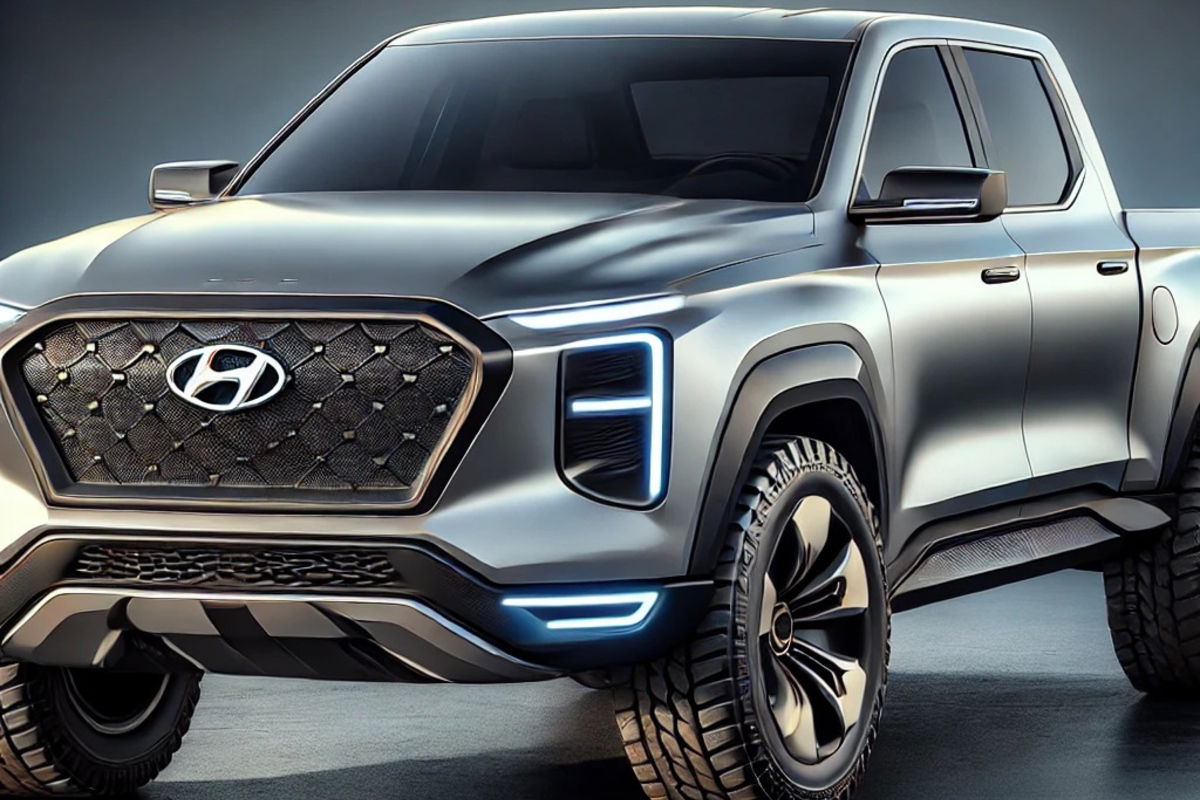

Hyundai’s long-awaited ute could be built in South East Asia, which would ensure an even playing-field with its direct rivals, specifically the Thai-built Ford Ranger and Toyota HiLux.
While no plans have been revealed to the public yet, Hyundai continues to push full steam ahead on the ute project and is working on several possible options, both out of Asia and the US; where Hyundai has a partnership with General Motors.
The plan is still to target a launch by 2028, but this date is not confirmed and Hyundai Australia chief operating officer, Gavin Donaldson, admitted that the timeframe is flexible.
“It’s still a work in progress,” he said. “I want to reiterate what [Hyundai Australia president and CEO] Don [Romano] has said previously, I love to be able to say, ‘Yeah, got it done. Here’s the home run. No doubt about it.’ Strategically it’s still a work in progress. It’s probably moving more towards another couple years from now. It is still in consideration of working in collaboration in the US.”

One recent change that may have a big impact on the ute plans is Romano’s promotion to take on the roles as president of Asia Pacific for Hyundai Motor, while retaining his Australian job. This means Romano is splitting time between Sydney and Jakarta, which creates a direct connection between Australia’s needs for a ute and the potential for low-cost manufacturing in Thailand or elsewhere in South East Asia.
Asked if this opened the door for the ute to be built in South East Asia, Donaldson gave an open-ended answer.
“ I think it does,” he said. “I think, and I’m conscious how I say this because we get fantastic support out of Korean factories, they’re the key for us, right? But at the same time, being in the Asian corridor, we have other alternatives that we need to look at. And you’re right, there are other factories that produce. Once it comes into play, there’s always going to be a demand. So therefore the ability to make the ute in multiple fractions could be an option [or] it may not be an option.”
Romano has made adding a ute to Hyundai’s line-up his priority during his tenure in Australia. He confirmed it was his goal in his first meeting with local media, after years of local executives dodging the question and remaining non-committal.

However, the challenge for Hyundai is to join the ute market at a time when it is becoming increasingly crowded and there is some uncertainty over the best powertrain strategy. Previously, Romano and his local team have indicated that some form of hybrid powertrain, most likely a range-extended electric vehicle, is the best option. This would pit Hyundai against the popular BYD Shark 6, while also creating a potentially unique proposition compared to the market-leading Ford and Toyota.
This would be critical as the ute market has slowed in total growth, leaving an influx of new competitors to fight the established order for an increasingly divided share of the sales pie. But Donaldson is unfazed by the suggestion that Hyundai runs the risk of being too late to the party, so to speak, and insists it’s necessary for the brand’s overall growth.
“ I still think you need to have a ute. It still plays an important part of your portfolio,” he explained. “Now, what the volume will be in the long-term, I can’t answer the question. But it’s 20 per cent of the market, so you’re not participating in one in five cars being sold, right. Then the secondary part out of it… is it also makes it a second car in the driveway easier to sell. And if you have a product portfolio like Hyundai does it actually will compliment all the other vehicles that we do have. So I think it gives us volume opportunities from that point-of-view. I think when you also have a ute it gives you opportunities from a dealer network point-of-view, from a finance point-of-view, aftersales point-of-view, accessory.
“So for us, we are not walking away from ute. We still want ute.”








Discussion about this post