




Tightening emissions regulations in Europe have for years seen carmakers reduce engine capacities in a bid to cut down CO2 output, but the odd few big engines remain.
Mercedes-Benz has stood by its V8s heading into the future, and now BMW development head Dr Joachim Post says the German brand won’t kill off V12s, at least not for its luxury marque Rolls-Royce.
“We can fulfil Euro 7 with some optimisation in the exhaust system – with things like the catalysts – so that’s why we have a big advantage in that Euro 7 is not that high an investment for us,” Post told Autocar, specifically referring to the V12 available in the Rolls-Royce lineup.
Currently, the Rolls-Royce Phantom, Ghost and Cullinan are all powered by a twin-turbo 6.75-litre V12 engine, made exclusively for Rolls-Royce by BMW.

While BMW itself previously sold V12 engine-powered vehicles, the previous-generation 7 Series was the last model to feature one, which was sent off with a special edition called “The Final V12”, based on the M760Li xDrive.
A return to V12s could still be on the cards, as Post told Autocar that BMW’s next-generation engine lineup will include everything from four- to 12-cylinder engines, though just what car one could be shoehorned into remains to be seen.
BMW has arguably read the market the best out of the luxury German brands, with Post telling Motor1 last year that it had record sales of not only EVs but also V8s in 2024.
“We want to give the customer the best car, and they can decide what kind of powertrain they want. Not get a new car only if they choose an EV, an old car if they want a combustion engine,” Dr Post told the outlet in October.

“The world is different; last year [2024], we had the most sales of [premium] EVs, and at the same time, record high sales for eight-cylinder engines.”
Last year, BMW M CEO Frank van Meel told Autocar the performance brand won’t ditch its iconic sixes and V8s, and there’s no chance of seeing three- or four-cylinder hybrids.
“The six-cylinder in-line engine is our legacy, and the V8 has got a long history in racing, so we intend to keep going,” Van Meel said.
“I couldn’t imagine putting a four-cylinder in an M5.”
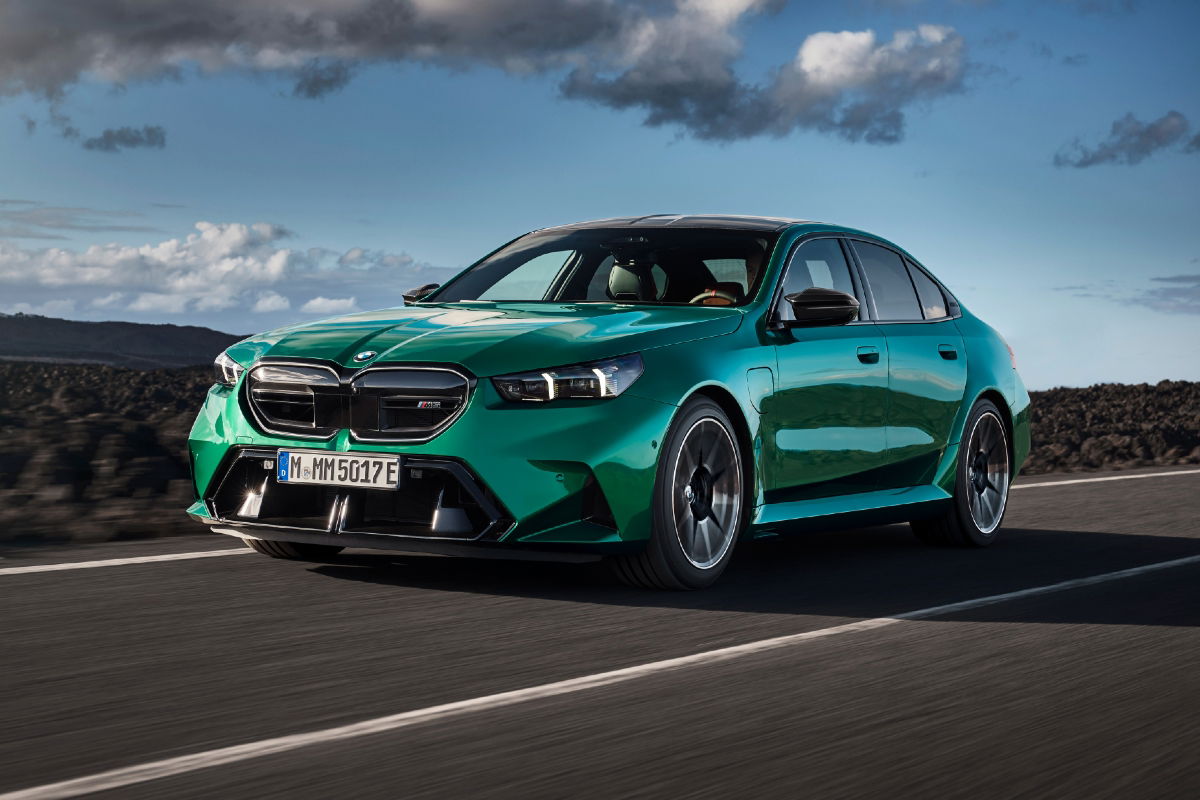
Of course, electrification has become increasingly important for BMW to keep engines alive, with the M5 becoming its first ‘legacy’ model to go plug-in hybrid, with the latest version of the super sedan (and wagon) getting electrical assistance for its twin-turbo 4.4-litre V8.
At the time, Van Meel added “the challenge was not so much to make an engine that is EU7 compliant”.
“The whole story is about driving with lambda one [when the air-fuel ratio for combustion is perfectly matched] so you have to keep that, and there’s no cooling. Normally, if you are in high-performance situations, you cool using the fuel.
“With EU7, that’s impossible, so you need to find different ways of avoiding temperature build-up.
“The combustion process has to be improved in regards to heat build-up and also the cooling, and those are the challenges. Of course you can [reduce] performance to avoid this temperature increase, but you don’t want to – that’s where we started.
“The new balance of performance is that we drive lambda one, but we don’t want to lose performance.”






Discussion about this post