




It’s a tale as old as racing; motorsports impacts production cars, and it’s that advanced level of learning Ford wants to use to its advantage.
Returning as an engine supplier – to both Red Bull and Racing Bulls – for the first time since 2004, Ford rejoins the Formula 1 paddock amid a big rules shakeup, aimed at making the electrical side of the hybrid V6 powertrains as crucial as ever.
Though it’s easy to dismiss this as little more than a marketing exercise, Ford CEO Jim Farley told Motor1 there is a tangible connection between the hybrid power units in Formula 1 and the Blue Oval’s future products.
“What’s interesting is that in the 1960s and ’70s with the [Ford-Cosworth] DFV, it was all about [the] powertrain,” Farley said.

“Now the transferability of F1 tech has nothing, almost nothing, to do with the [internal combustion] powertrain.
“Formula 1 has the most advanced vehicle control software for hybrid systems, which we’re now putting across our business, including performance hybrids, work hybrids, hybrids with exportable power. It gives you the ability to learn about software control for hybrids like no other sport.
“We want to offer predictive failure components, and Formula 1 can give us that, plus high-discharge batteries.
“That’s very important for performance hybrids in the future, as Ford rolls out our enthusiast and off-road hybrid systems. It’s really the tech transfer.”

Ford has been one of the slower movers in the global market to introduce hybrid vehicles, though its popular F-150 pickup is the best-selling hybrid in the US, after the company gave it price parity with the equivalent petrol-only version.
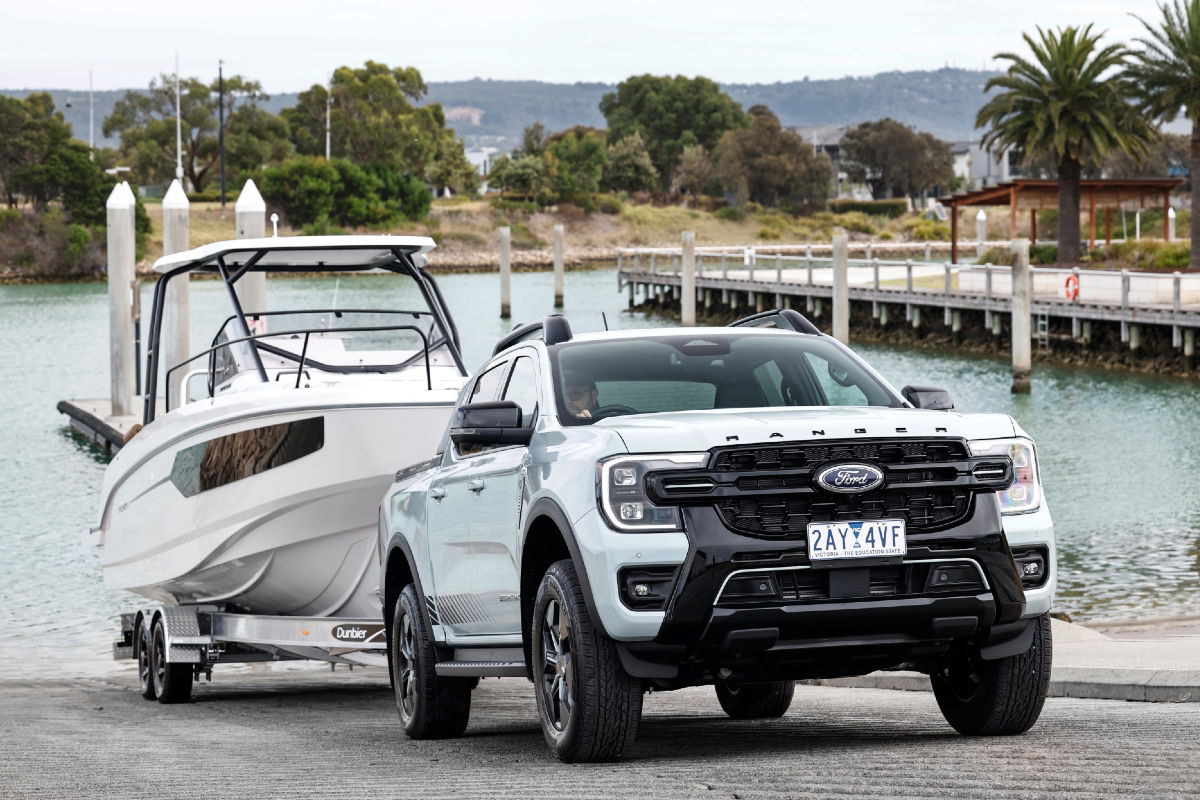
In Australia, Ford’s hybrid lineup is currently limited to the Ranger and Transit Custom plug-in hybrids, with the brand offering no traditional ‘series’ hybrids to local customers.
Last week, insiders told the Wall Street Journal Ford is discussing with BYD the prospect of buying batteries for its hybrid models.
The report alleged the batteries would be used on Ford products not made in the US – likely due to high tariffs on Chinese products – and instead power hybrids made in other Ford factories around the world.
It followed Ford last month announcing it’d take a huge US$19.5 billion (A$29.4 billion) hit on changing course for its future EV plans.
This centred around scrapping multiple EV projects, including a second-generation F-150 Lightning, cancelling a planned electric van for Europe, replacing the E-Transit with a petrol and hybrid-powered van, and replacing its upcoming ‘BlueOval City’ EV hub with pickup production.
At the time of the announcement, Ford said it expects 50 per cent of its global vehicle sales to be electrified vehicles – encompassing hybrids, extended-range EVs and EVs – by 2030, representing a significant jump above the 17 per cent figure in 2025.







Discussion about this post