




We’re nearing four decades since the first Mazda MX-5 was launched, but the iconic sports car icon is still in its fourth generation, currently 11 years into production.
A long-awaited successor to the ND MX-5 has been rumoured to be just around the corner for the past few years, however global regulations haven’t been able to kill off the popular two-door just yet.
Previous reports – such as those from Japan’s Best Car magazine – have claimed the upcoming ‘NE’ MX-5 will find a twin in the new-generation Toyota GR86, and be powered by a 2.0-litre or 2.5-litre engine (the latter coming from chief technical officer Ryuichi Umeshita speaking to US outlet Road & Track).
Now, more hints about the NE Mazda MX-5 have emerged thanks to Dutch publication AutoRAI, which spoke to Christian Schultze, Mazda Europe’s director of research and operations.
Schultze dismissed any prospect of the next MX-5 becoming an EV, reflecting woes experienced by other brands such as Porsche who have struggled to engineer an electric version of its popular sports cars.
“If we’re bound to a fully electric MX-5 in the future, that will be a serious engineering challenge,” he said.
“Everyone knows how much a battery weighs. Relative to the total weight of an MX-5, a battery pack can easily account for half the vehicle’s weight. And precisely that low weight is one of the absolute core values of the MX-5.
“The MX-5 has always been a lightweight sports car. That’s not a marketing term, but a fundamental principle of development. As soon as you add hundreds of kilos of battery weight, you have to drastically compensate in other areas.
“This requires very clever designs, new materials, and different packaging. You really have to delve deep into the technical toolbox to preserve the car’s character.”
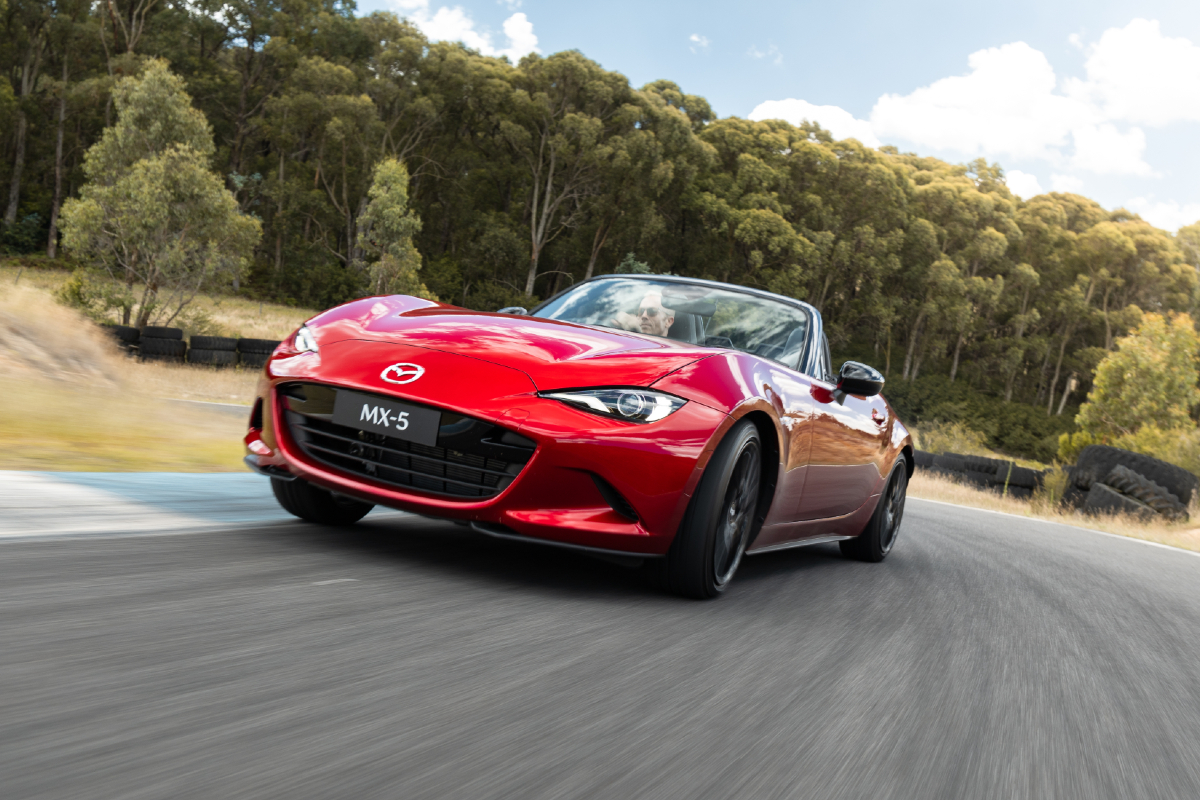
“I honestly hope that in the future we can offer an MX-5 that is electrified, but not fully electric. That could be a solution, for example, where you combine a relatively light form of electrification with CO₂-neutral fuel. This way, you maintain the light weight and direct character, while working towards emissions reduction.”
While the new MX-5 could still be fitted with a 2.5-litre engine, Schultze mulled whether this would be counter-intuitive to the ethos of the model.
“The real question is: what do you need that 2.5-liter engine for? Is it for the extra torque? Is it for better emissions? Or is it primarily attractive because it’s a larger engine? We want a lightweight engine.
“A 2.5-litre is by definition heavier than a 1.5- or 2.0-litre. Extra weight up front directly affects balance and steering response. These are precisely the elements that make the MX-5 so special. So it’s not an easy choice.”
Ultimately, it’s likely the MX-5 will go hybrid, even if Schultze also doesn’t think this would be a direct fit for what the vehicle has come to be known for.
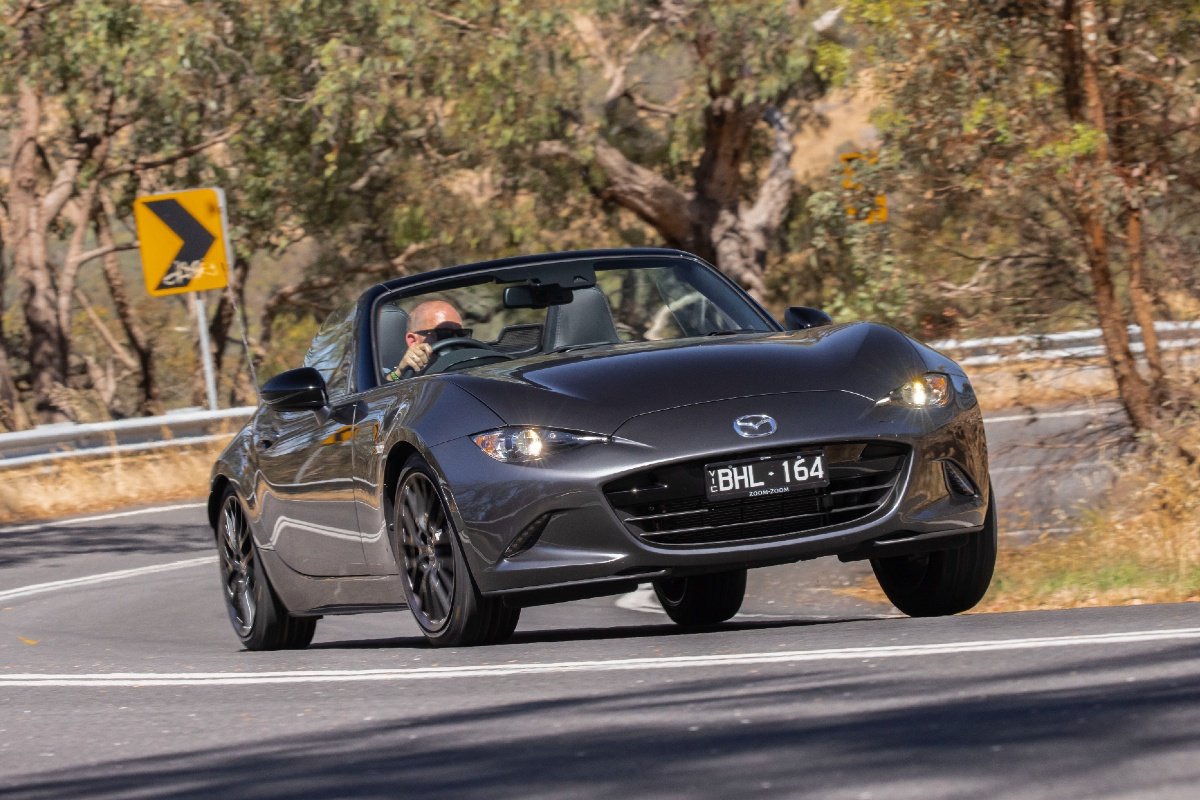
“Many forms of hybridisation are possible. These days, you see sports cars using hybrid technology purely for extra power. That’s an interesting development, but it doesn’t automatically align with the MX-5’s philosophy.
“The MX-5 isn’t about maximum horsepower. You don’t need extreme power to experience driving pleasure. Even with a relatively small engine, you can have a tremendous amount of fun. hybridisation would therefore only be interesting if it contributes to efficiency or regulatory compliance, without compromising weight and character.”
With Europe repealing its ban on new petrol and diesel cars by 2035 and the US winding back penalties for emissions, it seems more likely than ever that the MX-5 still has a long road ahead of it, with Schultze adding Mazda wants to “keep this iconic car alive for as long as possible”.
“The MX-5 is an essential part of our brand DNA. As long as we can maintain its core values – lightweightness, balance, and pure driving pleasure – we will continue to look for solutions to future-proof the MX-5.”








Discussion about this post