




Suzuki Australia has ordered an internal review of its Fronx small SUV’s safety credentials after a potentially deadly seatbelt failure occurred in an ANCAP crash test.
ANCAP – which assesses a vehicle’s safety against certain criteria for Australia and New Zealand – today announced the Fronx had received a one-star result, following poor performances across a broad range of tests.
The result came off the back of the Suzuki Fronx only just reaching ANCAP’s 40 per cent one-star threshold for its child occupant protection, with the organisation noting the “key body regions of both the 10-year-old and 6-year-old child occupants [test dummies]” received zero points, having experienced “high head acceleration and excessive neck tension”.
More broadly, the Fronx failed to meet ANCAP’s top-shelf five-star score across any of the five criteria, having received one star for adult occupant protection, three stars for its safety assist systems, and four stars for vulnerable road user protection.

A vehicle’s overall star rating is based on its worst result, hence the Fronx’s one-star score.
However, ANCAP noted the Fronx suffered from a failed rear passenger seatbelt retractor during its full width frontal test, leading to the dummy becoming unrestrained and impacting the front seat.
While the Fronx was set to score zero points for the full-width frontal test due to its poor performance prior to the failure, an uncontrolled seatbelt release can cause further and potentially life-threatening damage to a rear occupant.
In announcing the one-star result and the seatbelt retractor failure, ANCAP said it had reported the fault to “Australian and New Zealand vehicle safety regulators”, with the local division being the Australian Government’s Department of Infrastructure, which handles Australian Design Rules (ADR) compliance.
“The seatbelt component failure is rare and serious,” ANCAP CEO Carla Hoorweg said in a media release.

“ANCAP exists to give consumers confidence, and when our tests reveal results of this nature, we will act in their best interest by communicating our findings promptly and transparently.
“What concerns us is that this particular vehicle could have been purchased by an ordinary consumer, and in an on-road crash this failure could have had serious consequences for the person sitting in the back seat.
“ANCAP’s view is that adult and child passengers should not travel in the rear seats of the Suzuki Fronx until the reason for the failure has been determined and relevant rectifications have been carried out.
“Consumers expect, and deserve, vehicles that meet the fundamental standards of occupant protection. We are calling on Suzuki to act quickly and decisively to ensure that all affected vehicles are identified and rectified without delay.”

In response to ANCAP’s findings, Suzuki Australia published an extensive media release, saying it has contacted its headquarters in Japan to “fully understand the ANCAP testing outcomes”.
“Suzuki Australia acknowledges the recent ANCAP assessment of the 2025 Fronx Hybrid and is taking decisive action, including a thorough investigation, as customer safety is non-negotiable and remains Suzuki’s highest priority across Australia and New Zealand,” the brand said.
“Suzuki Australia has elevated the review of this assessment to a matter of immediate focus and is working directly with Suzuki Motor Corporation in Hamamatsu, Japan, and Suzuki New Zealand to fully understand the ANCAP testing outcomes. This review is being progressed with urgency and at the highest levels of the organisation.
“A thorough and disciplined investigation is underway, and Suzuki will take any actions required to uphold our safety standards and the trust our customers place in our brand.
“Suzuki firmly believes in learning from local testing and regulatory feedback as part of our continuous improvement philosophy. These assessments are treated seriously and play an important role in strengthening vehicle safety, performance, and reliability across our markets.

“The Fronx Hybrid was developed with the aim of being a vehicle that meets the safety standards of Australia and New Zealand, and has been certified as such, providing safety and peace of mind for our customers.
“Suzuki aims to meet the necessary safety standards in the markets where our vehicles are sold, from the design and manufacturing stages. We consistently prioritize safety and strive to improve safety technologies from multiple perspectives.
“Suzuki Australia remains in close and ongoing engagement with ANCAP, the Australian Government Department of Infrastructure […] and our global headquarters to ensure full alignment, clarity, and timely communication.
“Suzuki will continue to prioritise this matter and will provide further updates as soon as appropriate, reinforcing our commitment to transparency, accountability, and the safety of Suzuki owners and drivers throughout Australia and New Zealand.”
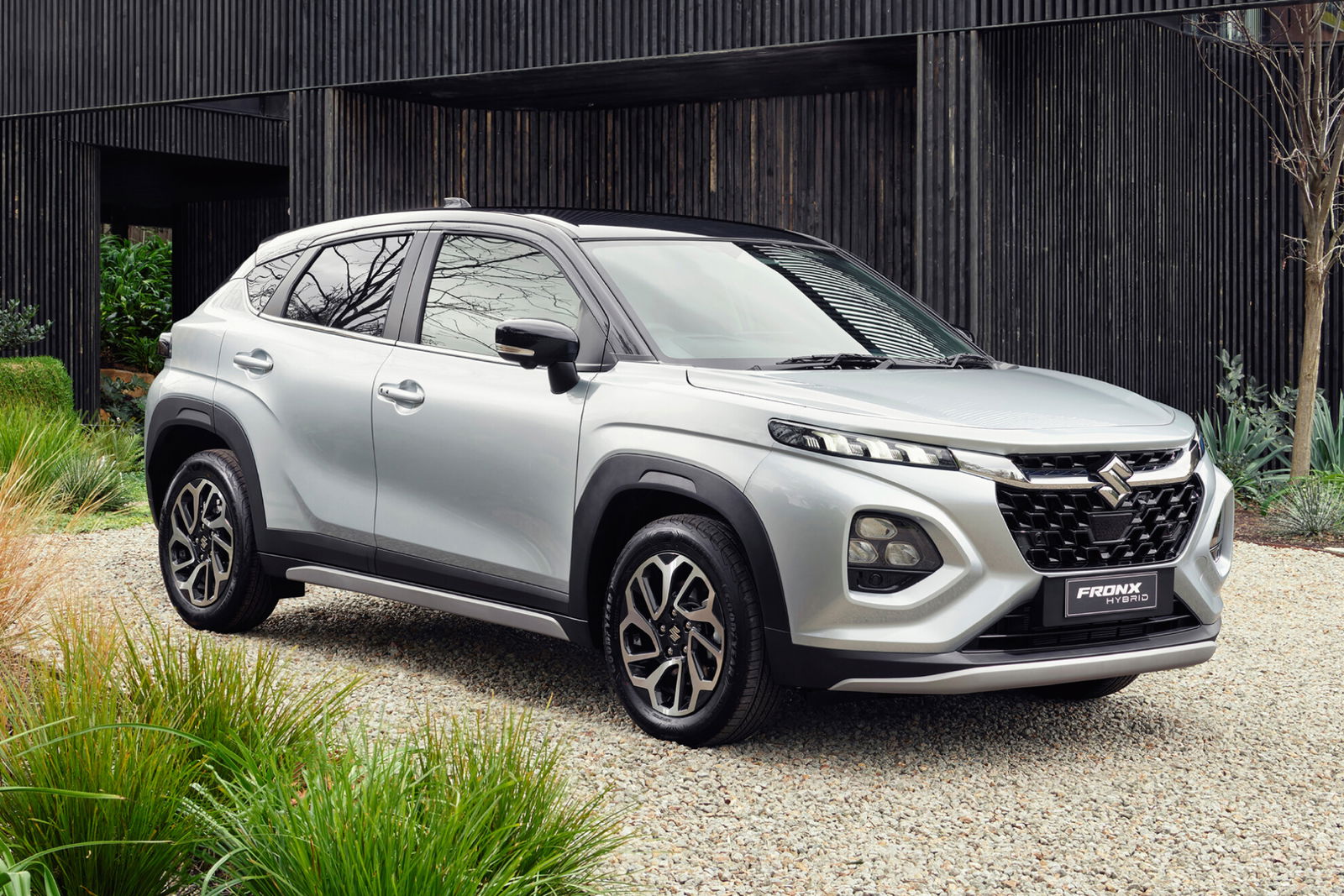
Approximately 1300 examples of the Suzuki Fronx have been delivered to Australian customers in 2025, following its mid-year launch. It is exclusively made in India.
It represents the second major misstep from Suzuki this year in Australia, after the brand had to axe multiple models – including the popular three-door Jimny – due to them not being compliant with then-incoming ADRs regarding autonomous emergency braking performance.
The finding also marks the second time ANCAP or its sister organisation Euro NCAP have uncovered a serious component failure in a tested vehicle recently, after the MG3’s driver’s seat slid forward by 111.5mm on the centre console side in a collision during European testing.
This led to more than 10,500 examples being recalled in Australia to resolve what Euro NCAP at the time called a “fundamental weakness”.







Discussion about this post