


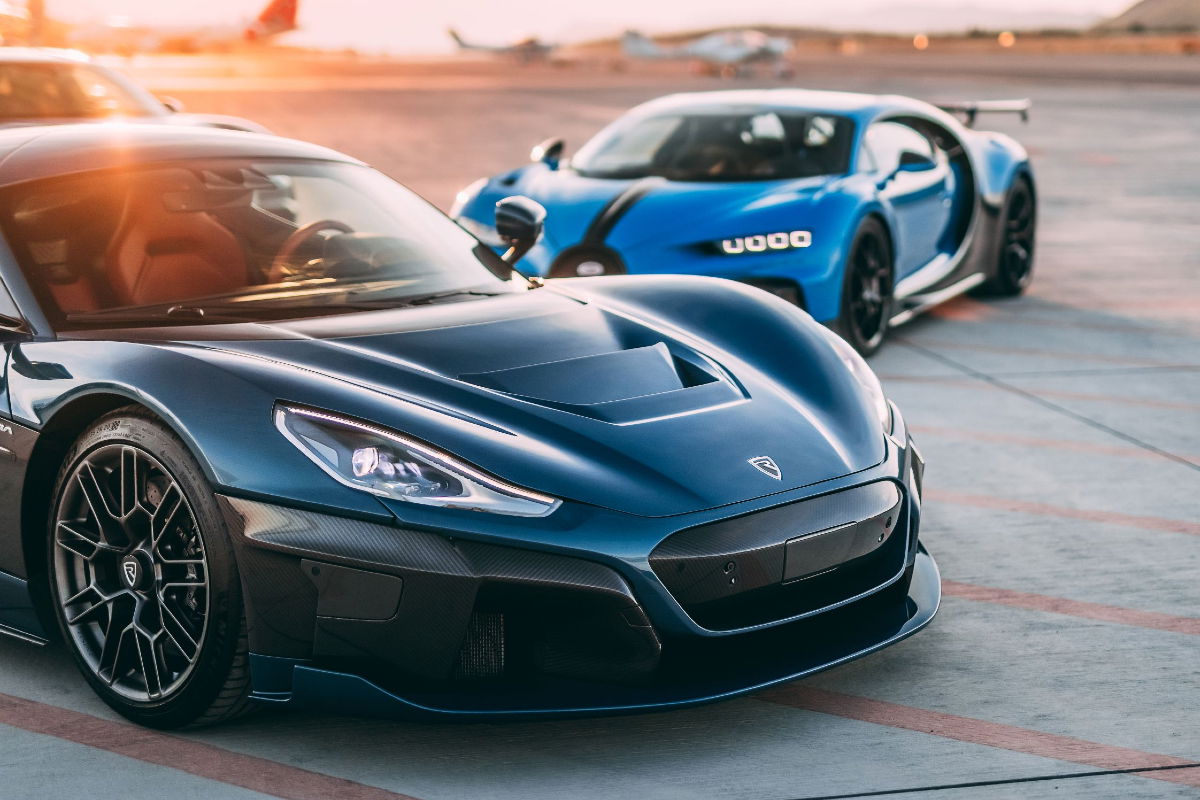

Born out of a dream of founder Mate Rimac, the Croatian hypercar brand has been the byword in EV technology this decade, headlined by its Nevera.
The two-seat electric hypercar quickly became one of the world’s fastest vehicles, and an even more hardcore variant – the R – earlier this year set 24 speed records in a single day.
But it hasn’t all been smooth sailing. Rimac has been clear that it’s struggled to sell all 150 planned examples of the Nevera, despite its current list of customers including the likes of former F1 world champion Nico Rosberg.
Now it seems like there will be no second album, with Rimac Technology chief operating officer, Nurdin Pitarevic, telling the UK’s Autocar it’s unlikely there will be another vehicle after the Nevera.
Instead, Rimac through its Rimac Technology division is focusing on making better parts for other OEMs, focusing on hybrids and EVs.
Already it has BMW, start-up CEER and Porsche listed as some of its customers, as it works on new e-axles and even solid-state batteries.
In the case of the solid-state batteries, Pitarevic has already made clear Rimac’s intention for the technology to launch in a Bugatti around 2030, bringing its flagship technology for one of the world’s most revered brands.
Rimac took a controlling stake in Bugatti back in 2021, forming a joint venture – simply titled Bugatti-Rimac – which it has a 55 per cent share of, with the remaining 45 per cent held by Porsche.
In October, Mate Rimac told Automotive News he intends to buy Porsche out of the joint venture, potentially removing the Volkswagen Group from Bugatti’s ownership structure for the first time since 1998 when the modern version of the brand was founded.
Already, Rimac’s impact on Bugatti is being felt. The new Tourbillon hypercar has replaced the quad-turbo W16 engine from the Chiron with a naturally aspirated V16 plug-in hybrid powertrain, using PHEV technology developed by the Croatian firm.







Discussion about this post