




Is bigger better when it comes to utes?
Because if it is, then the GWM Cannon Alpha PHEV (plug-in hybrid) should be a best-seller. As it is, it remains a growing challenger in the ute market, appealing to those looking for both size and efficiency.
What makes it so interesting is that it’s one of only three PHEV utes on sale in Australia at the time of publication, alongside the BYD Shark 6 and Ford Ranger Hybrid, but it’s physically larger than either of them.

Measuring 5445mm long and 1991mm wide, the Cannon Alpha is one of the larger-than-average utes that have started to arrive from China in recent years. In simple terms, the Cannon Alpha is bigger than the Ranger but smaller than Ford’s F-150, so it’s a specific size matched only by fellow Chinese utes, the LDV Terron 9 and MG U9.
But GWM’s decision to introduce a plug-in hybrid powertrain sets it apart from all of its competition and makes it a unique proposition.
Powered by a 2.0-litre four-cylinder turbocharged petrol engine paired to an electric motor, the Cannon Alpha makes a punchy 300kW of power and 700Nm of torque but can sip just 1.7L/100km of fuel. That’s, in part, thanks to its 37kWh battery providing 115km electric-only driving range.
However, the big size isn’t just for show, the Cannon Alpha can also tow up to 3500kg, although the payload is limited to just 685kg.
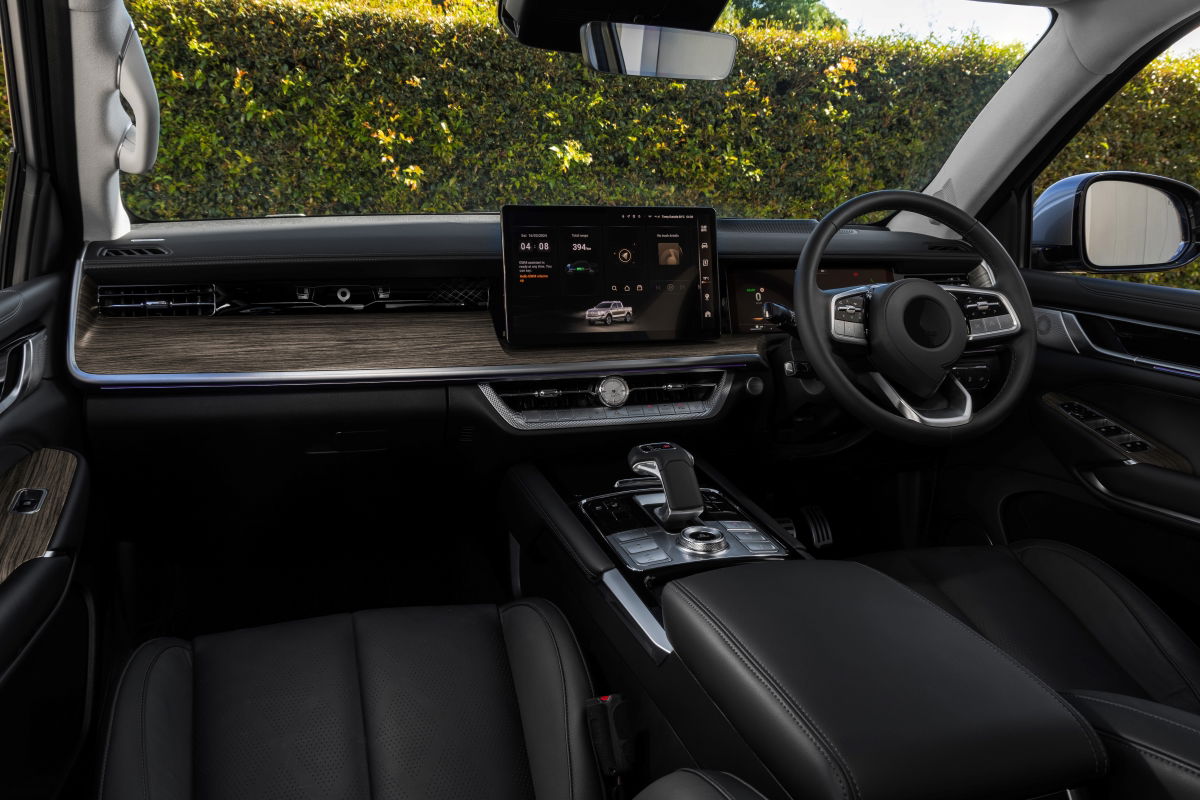
The extra size really comes into its own in the cabin, with a spacious front and second row that makes it either a roomy car for up to five workers or the family – whichever one suits your ute needs at the time.
It’s not the nicest cabin you’ll find in a ute today, the Kia Tasman sets the benchmark for its quality design and finish, with GWM still needing to learn a few more lessons when it comes to presentation. It’s by no means bad, it just looks and feels a little cheap in places.
GWM could also make it more user-friendly by adding some physical switchgear, such as a volume controller, so that you don’t have to always use the touchscreen. It’s a large screen, which is fairly intuitive to use, but having all the key controls on a touchscreen is simply not the easiest and safest way.

While the Cannon Alpha has a selectable four-wheel-drive system, our test drive was limited to the urban jungle. But it performed admirably on the road, in large part because it has coil springs in the rear suspension rather than the conventional leaf springs. This provides a better, more compliant unladen ride.
What also helps the driving experience is having 700Nm to draw on, which makes the Cannon Alpha feel far more sprightly than you’d expect such a big ute to feel.
Notably, the Cannon Alpha has managed to climb up the famous Beer O’Clock Hill in Queensland, albeit with some aftermarket all-terrain tyres. But it does demonstrate it has some genuine off-road ability, so it’s not a show pony.
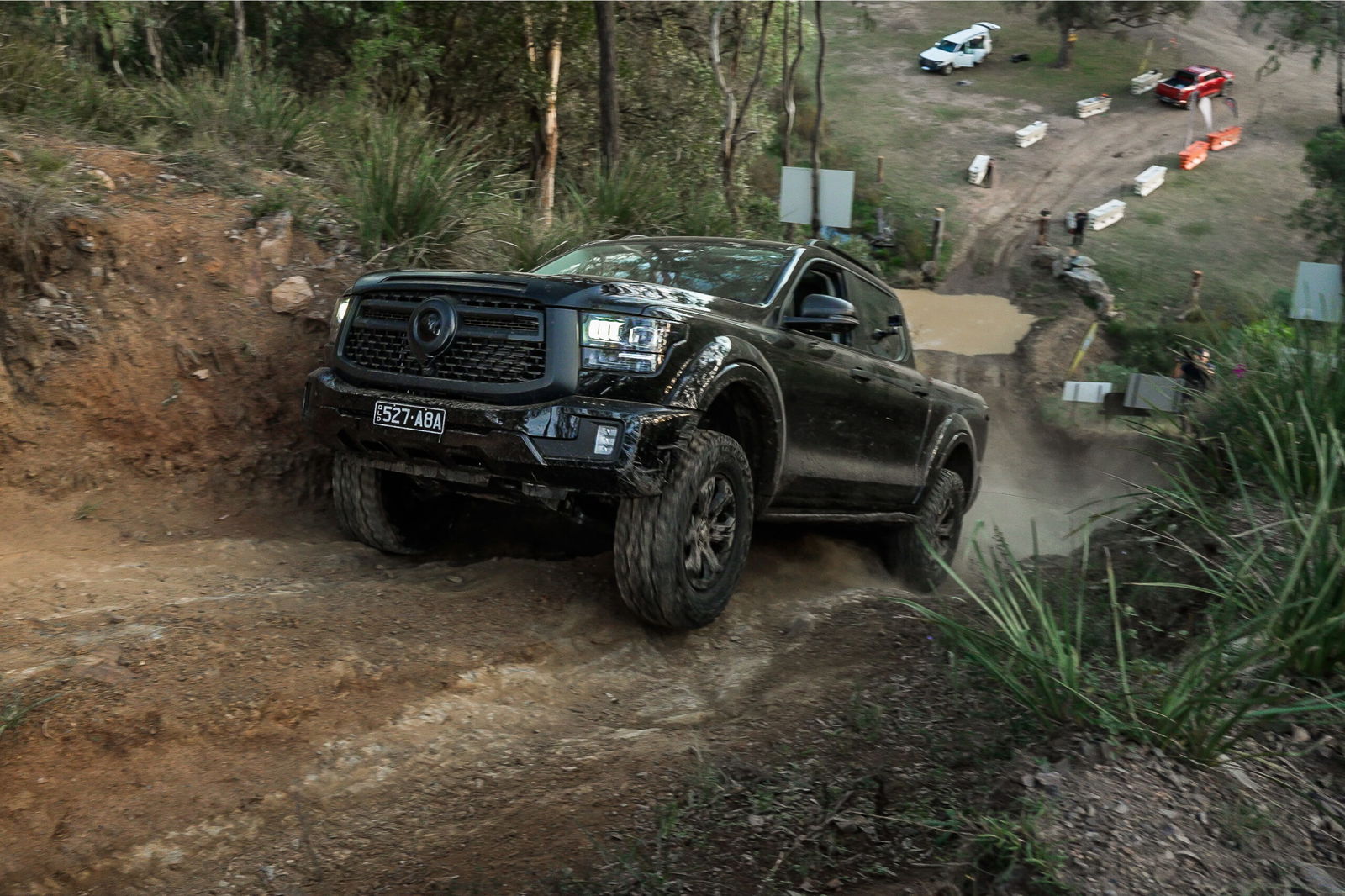
In terms of overall driving experience, it could still do with some polish to match the Ranger Hybrid and Shark 6, but that’s why GWM has hired former Holden engineer Rob Trubiani. He is leading a team of engineers to tailor all GWM products to the unique conditions in this country.
Once that comes on stream, BYD and Ford should be worried.
Although, with the Cannon Alpha PHEV priced from just $59,990 plus on-road costs, or from $61,490 drive-away (depending on state), it should already have the competition concerned because it’s one of the most under-rated utes on sale today. Nothing else can offer its combination of size and efficiency, so if GWM can put it on more people’s radar, it could become a hit.







Discussion about this post