




Toyota just won’t let its hydrogen-fuelled dreams die, this week announcing it wants to further develop fuel cell technology with two big players in the heavy vehicle market.
Daimler Truck (makers of Mercedes-Benz, Freightliner, Western Star and Fuso trucks) and the Volvo Group (responsible for Volvo, Mack and Renault trucks), already have a joint venture, cellcentric, which Toyota has signed a non-binding Memorandum of Understanding to join.
Split between equal shareholding, a joint press release said “the combination of the parties’ complementary experience and know-how will support and advance their joint objective to develop, produce and commercialise fuel cell systems for heavy-duty vehicles and other heavy-duty applications with comparable requirements”.
According to the brands, a potential partnership would result in joint development and production of fuel cell unit cells, while the trio would also create “linked architecture and control elements with the aim of creating competitive products based on the technologies of both companies”.

“By combining Daimler Truck and Volvo’s extensive commercial vehicle expertise with Toyota’s fuel cell development, production technology, and manufacturing experience the aim is to further strengthen cellcentric’s technological advantage and market competitiveness,” the media statement said.
“It is intended that cellcentric will be the joint centre of competence that develops, produces and commercialises fuel cell systems for heavy-duty on- and off-road transport and other heavy-duty applications with comparable requirements.
“Furthermore, through collaboration with industry associations and partners across the entire hydrogen value chain, the partners aim to actively support the development of hydrogen supply and infrastructure in the early stages.
“Daimler Truck, Volvo and Toyota have positioned hydrogen as one of the key energy sources to decarbonise transport and will advance technological innovation in fuel cell systems through cellcentric thereby contributing to the realisation of a hydrogen society.”

Toyota says it’ll “participate in a capital increase in cellcentric by investing in the company”, while Daimler and Volvo will “continue to compete independently in all other areas of their respective businesses”.
The Japanese giant has remained committed to hydrogen, as it continues to produce the Camry-sized Mirai which is powered by hydrogen fuel cells.
However, most of its recent focus has centred on using the world’s most abundant element as a combustible replacement for petrol and diesel.
In 2021 it started racing a version of the pre-production GR Corolla in Japan’s Super Taikyu series, with its turbocharged three-cylinder engine running on hydrogen gas. In 2023, that car was upgraded to run on liquid hydrogen, and completed a demonstration lap at Le Mans.
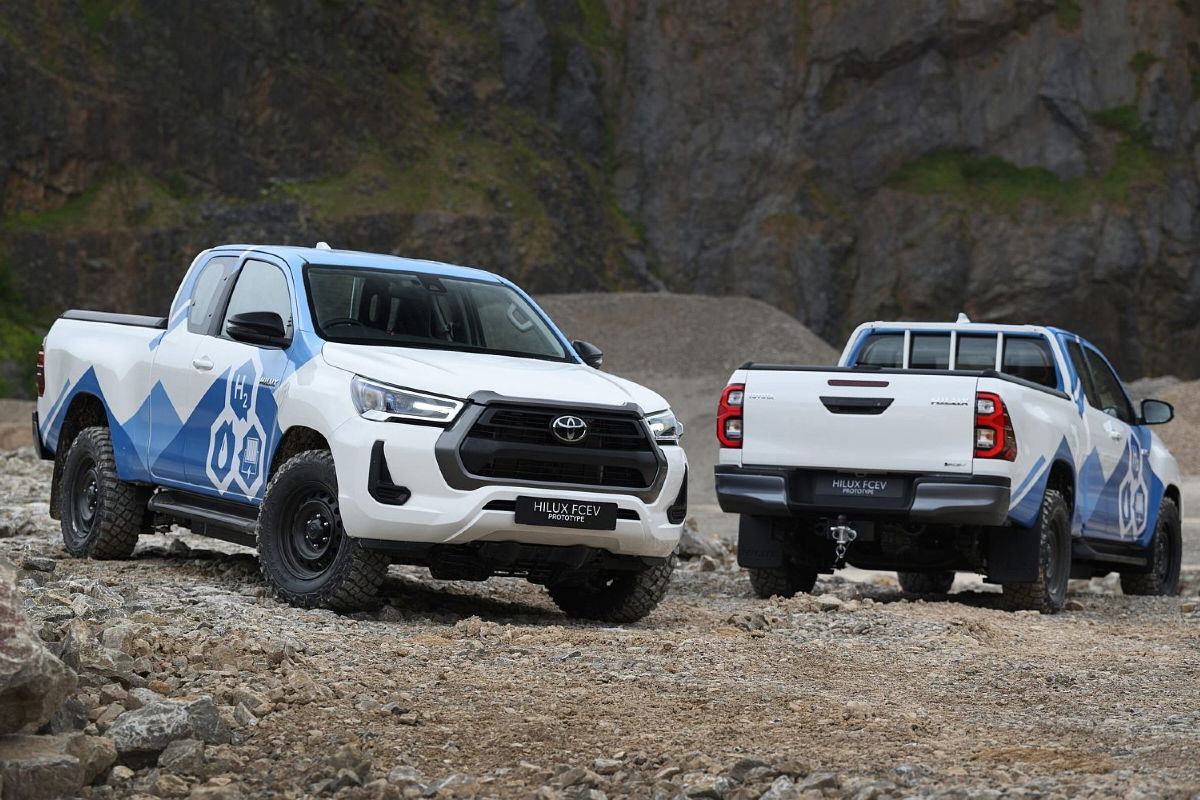
The investment in hydrogen technology for heavy transport comes at odds with the passenger and commercial vehicle market, which continues to turn its back on the tech.
Earlier this year, Honda and General Motors, two of the world’s largest carmakers, announced they would discontinue production of a jointly developed hydrogen fuel cell system by the end of 2026. Honda will continue to develop its own systems.
Last year, Dutch automotive conglomerate Stellantis in July announced it would end development of FCEVs, citing a lack of demand and infrastructure.






Discussion about this post