
I’ve never driven a car more fun than this
As a fan of lightweight, analogue sports cars, it makes no sense that the 2.5 tonne Ford Ranger Raptor makes me smile as wide as it does.

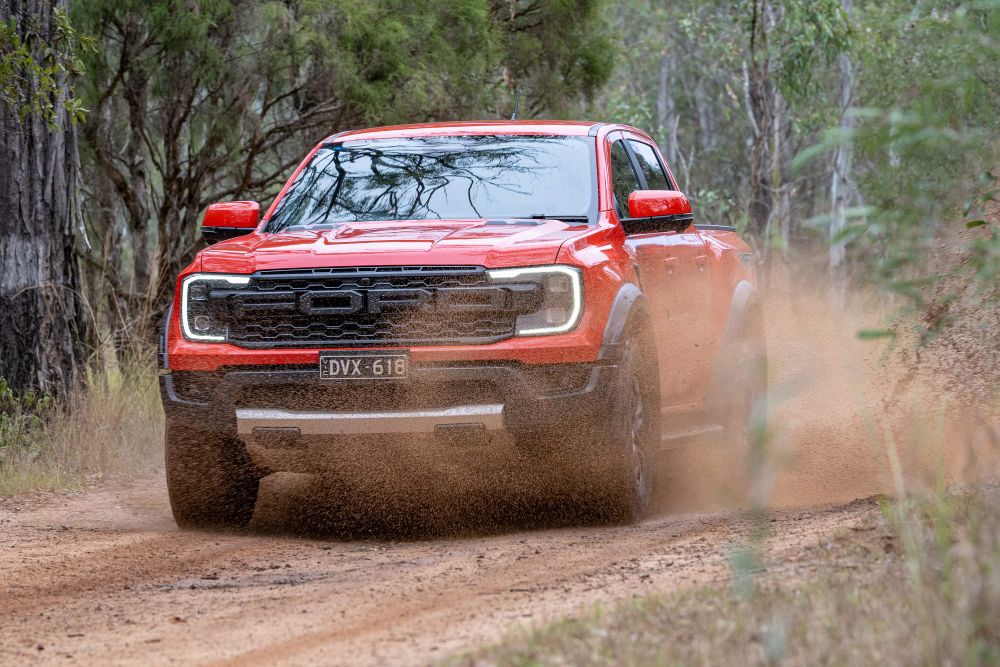
The definition of performance vehicles has gone through big changes in recent times.
From previously being exclusive to hot hatches, coupes and even the odd convertible, the formula for fun used to be low-slung, analogue and maybe an engine which outpaces the rest of the car.
So what business does a Ford Ranger Raptor have with ‘Ford Performance’ badging throughout? As it turns out, quite a lot.
Ford’s first iteration of the Ranger Raptor was a decent showing, though its turbo-diesel engine meant it didn’t have the bite to match the bark of its wide wheel-arches, off-road tyres and lifted suspension.
That changed with the introduction of the ‘next-gen’ Raptor, following the launch of the most recent generation of Ford Ranger in 2022.
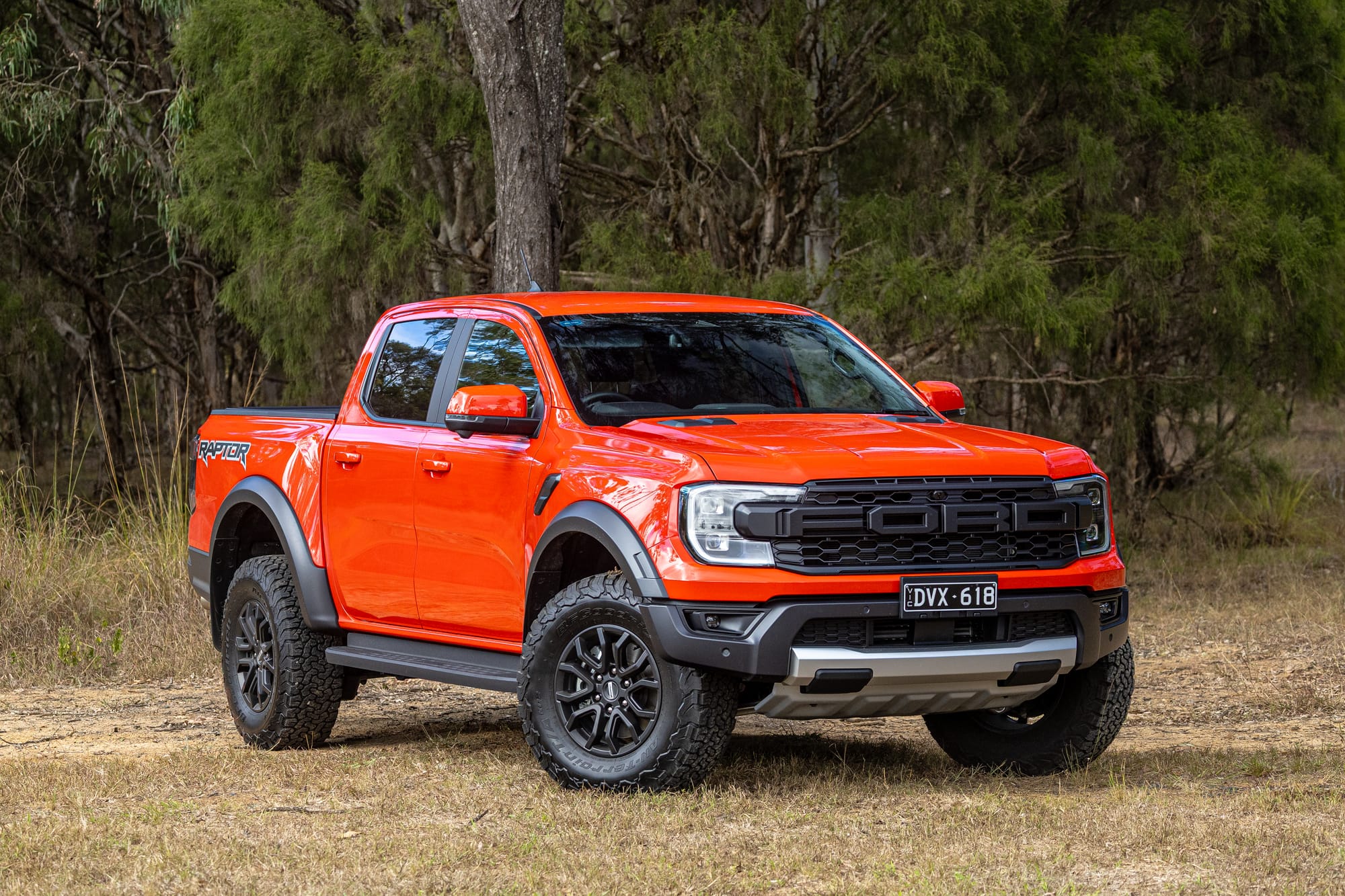
Deciding to occupy a spot in the market by itself, Ford shoehorned a twin-turbo 3.0-litre V6 petrol engine under the bonnet, capable of producing 292kW and 583Nm – or simply enough to out-muscle the famed Falcon XR6 Turbos and XR8s of yesteryear.
The engine is the undeniable heart of the Ranger Raptor, but it isn’t alone in doing the heavy lifting as to why the recipe is such a good one.
Its full-time, selectable four-wheel drive system (carried over from the majority of the turbo-diesel Ranger lineup) is stellar, as is the 10-speed automatic transmission.
But to earn the Ford Performance badge, there are other factors, such as the Fox racing 2.5-inch live valve suspension, an electronic locking front differential, a tough steel bash plate, and of course wide BF Goodrich K02 all-terrain tyres.
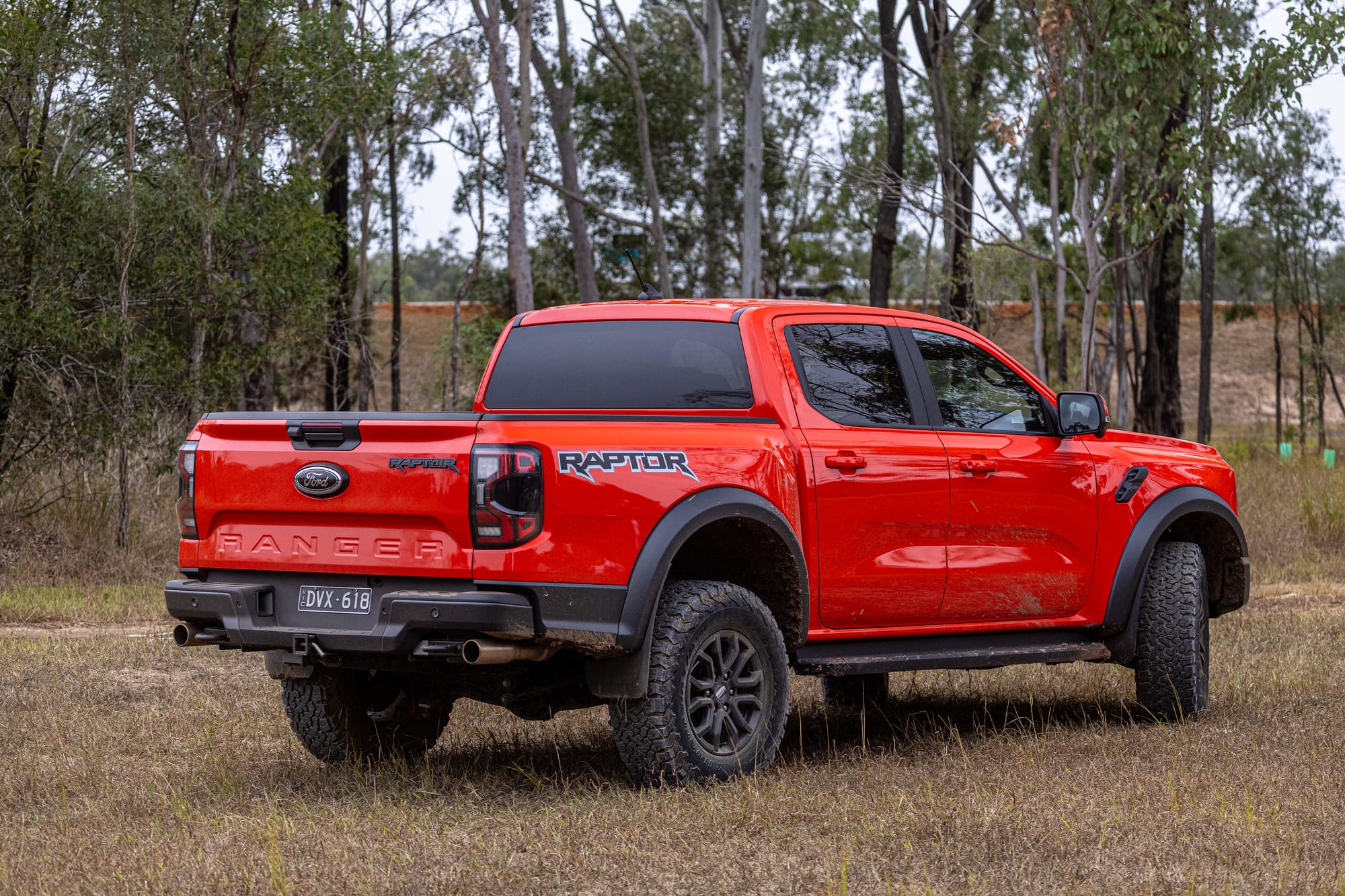
All these ingredients come together to create a vehicle that is better than the sum of its parts, and one that’s even better on paper than you’d initially believe.
Prior to driving the Ranger Raptor, I’d only heard from former owners who raved about it, saying just how fun it is both on the road and off it. All of them glossed over the reduced braked towing capacity, which at 2500kg is 1000kg less than the turbo-diesel Raptor.
They also all looked past the circa-720kg payload capacity, again down significantly on the more workhorse-focused versions of the Ranger. The allegations of the Raptor being the car for the construction site boss to take his jetski to the coast were hard to beat.
But with a dirt track out the back of Queensland Raceway at my disposal, it soon became clear why none used the word ‘overrated’ to describe the ute.
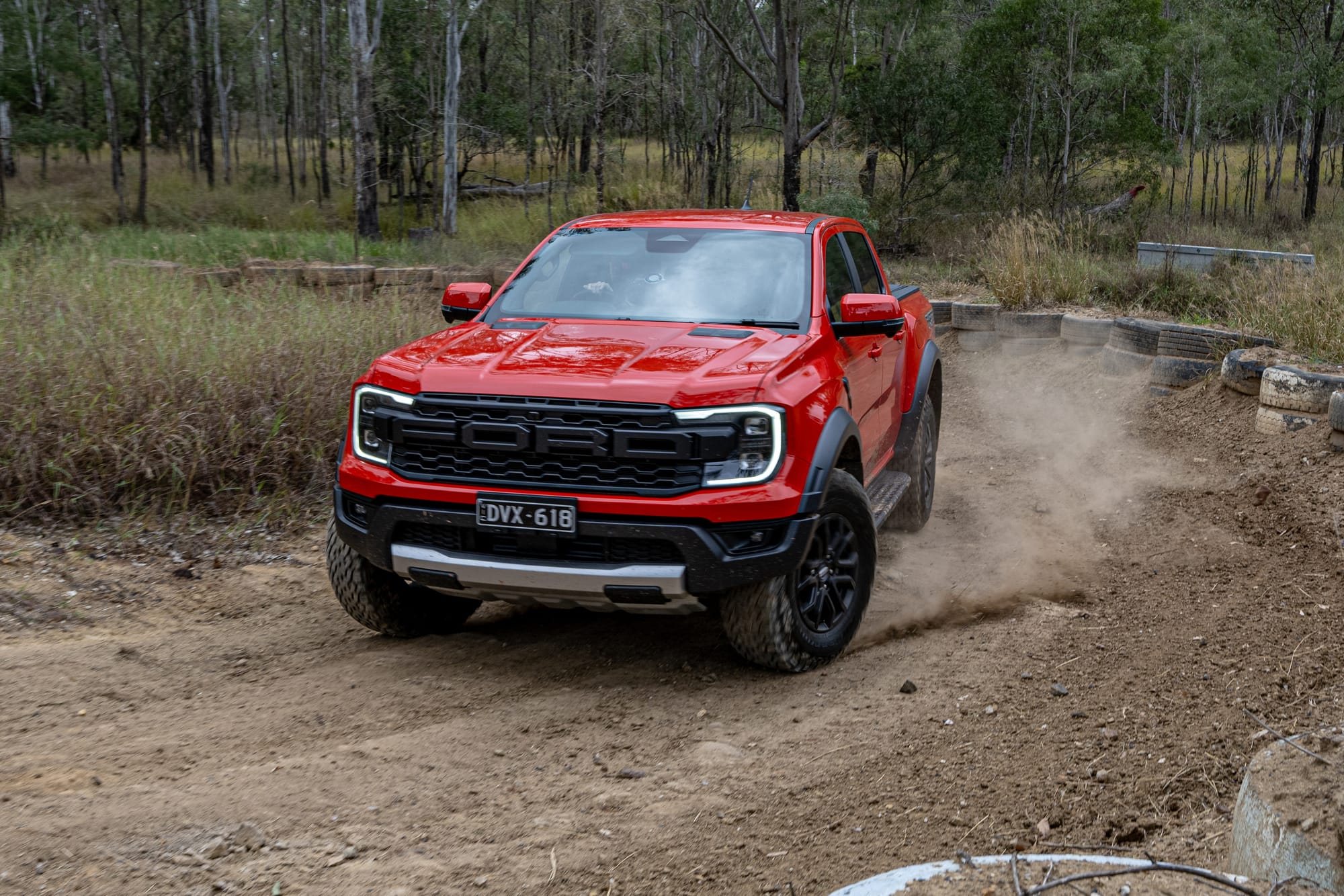
More akin to a side-by-side racing track than a rally stage, QR’s dirt circuit is narrow enough for the Raptor to feel even more like the 2.1-metre wide, 2.5-tonne beast it is, but its equipment under the skin does a lot to cover up its porky posture.
Even in its standard drive mode it soaks up bumps like a rally car, can always find traction and stop on a dime, despite protests that the K02s should’ve been swapped out for the newer, better K03s by now.
Wind it up in ‘Baja mode’ – or maybe Finke mode, as it should be called in Australia – and this is a car which comes alive, its exhaust shouting to make room for this behemoth.
Pushing it at speed, you’re aware of its size, but the engineer’s calibrations of the steering, braking system and related electronic nannies try to make sure you don’t feel it. For a car which weighs more than double an MX-5 with two passengers, it is surprisingly chuckable.
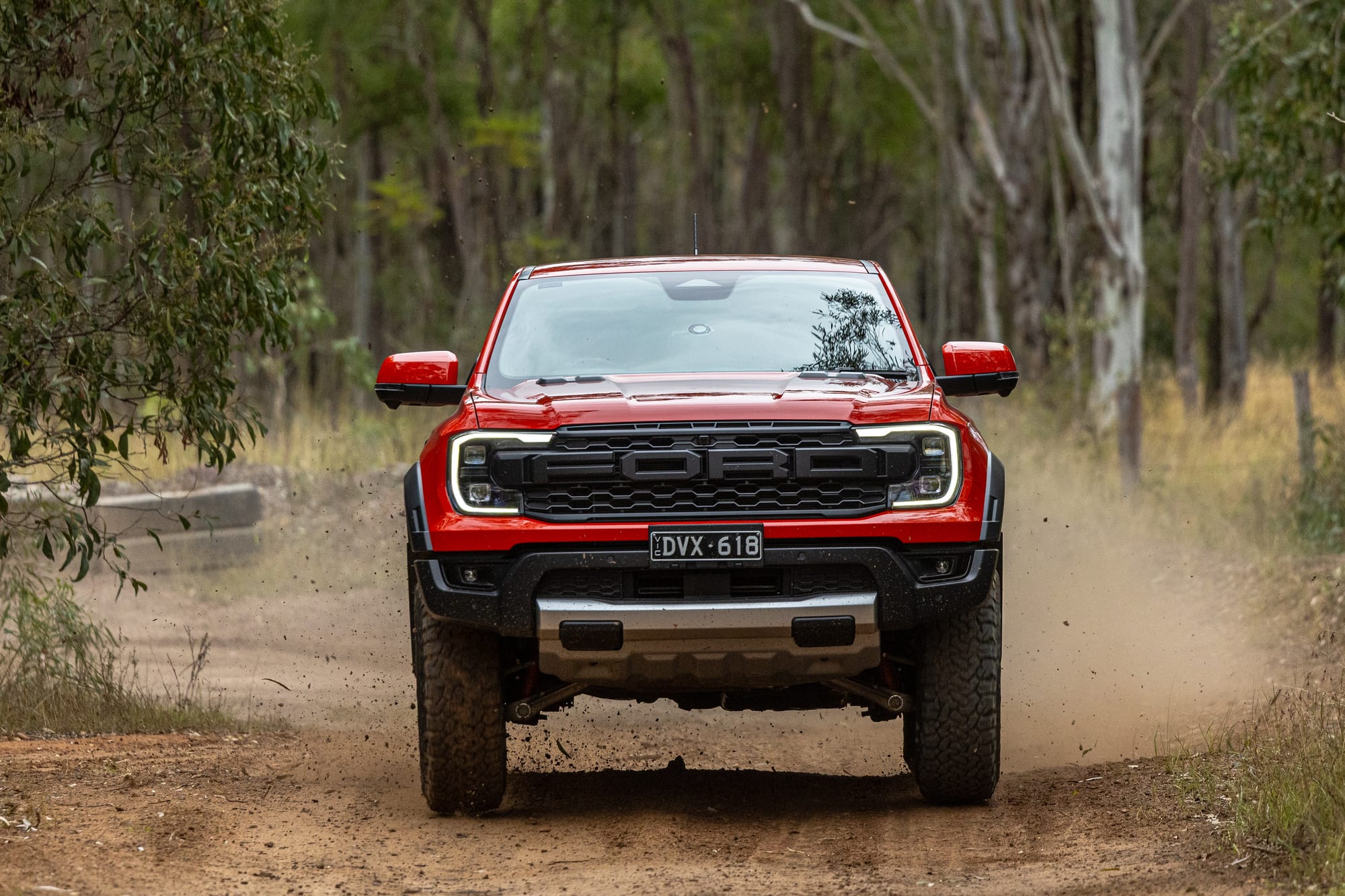
Likewise, those Fox shocks handle bumps and ruts with ease, keeping the body and suspension composed so the next lot can be quickly soaked up and dealt with.
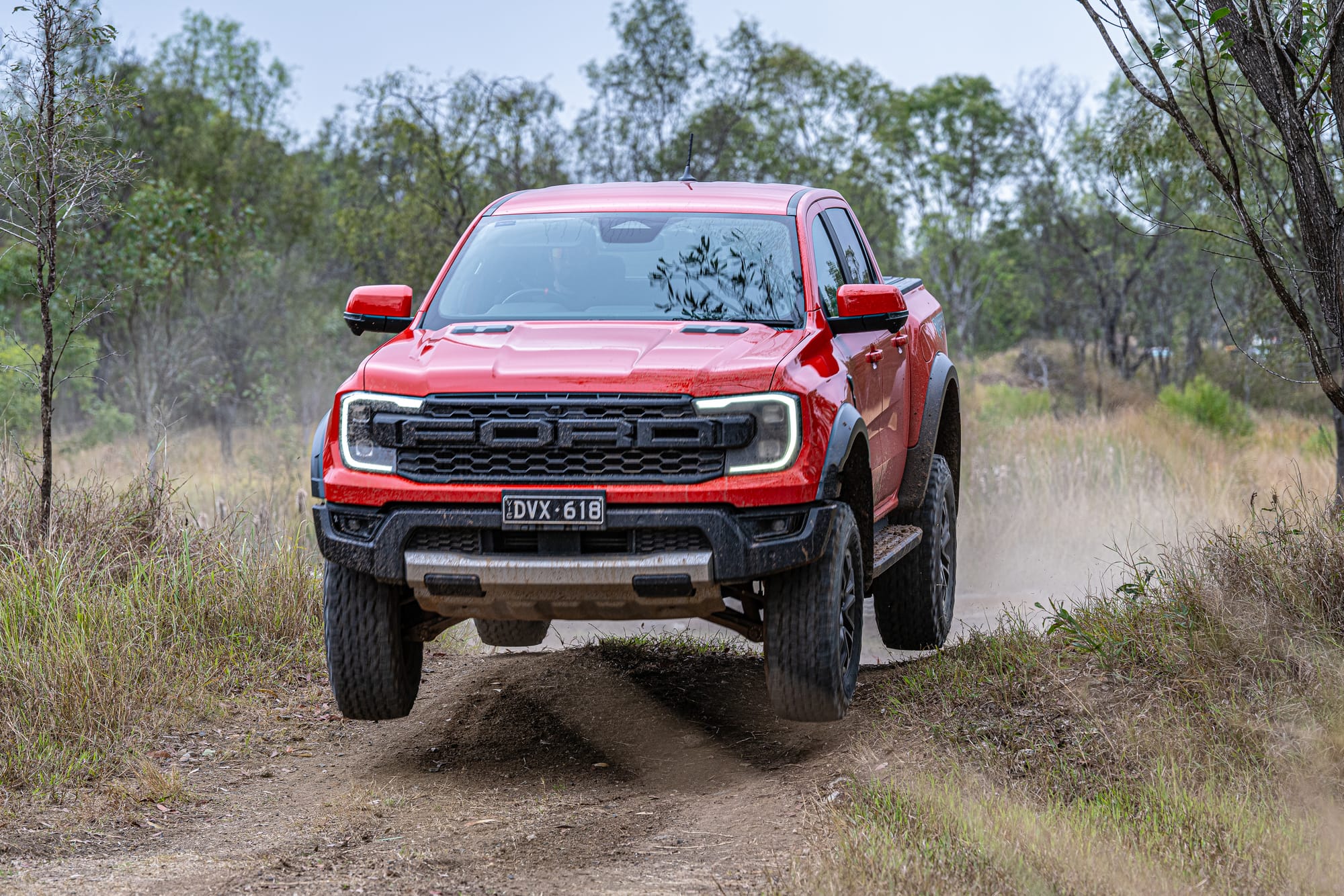
It also allowed me – or rather gave me confidence – to do something I’d never done before: get air in a car.
You can get airtime in almost anything, but what determines whether it’s a good experience or not is a) how nice the landing is, and b) if it’s put together well enough to do it again.
Thankfully in both instances the Ranger Raptor lives up to its hype and lets you go harder over jumps and bumps than you’d dare in most other cars, again thanks to its long extension and compression shocks.
It’s a car you can fang around – in private settings – all day, or at least until you run out of fuel.
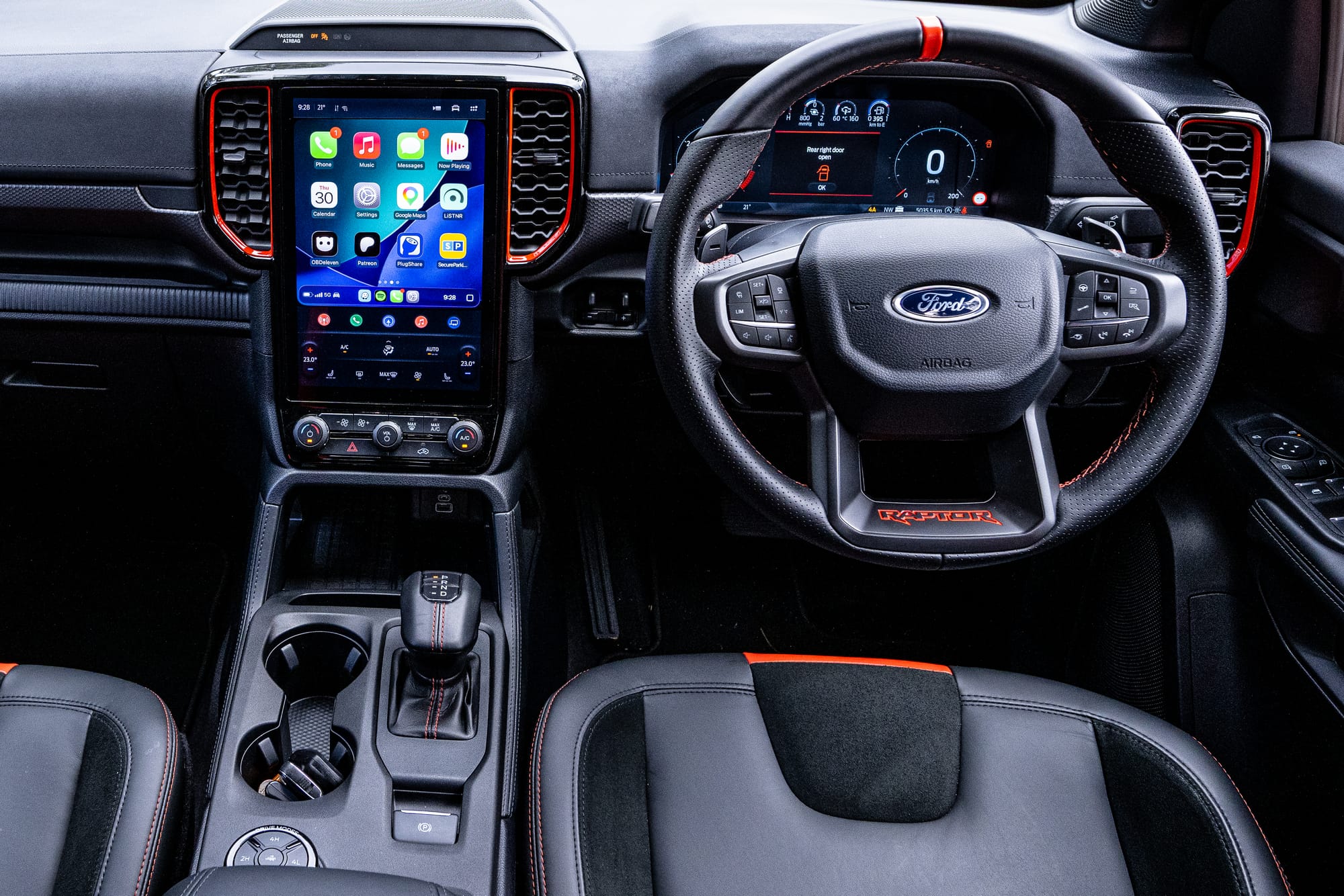
That might take very long either, as the EcoBoost V6 is one thirsty engine when you apply anything other than a gentle foot to the accelerator pedal, being undoubtedly the least economical Raptor to run.
Requiring 95 octane or higher unleaded petrol, you’ll be spending a fair bit of cash at the service station, one of the handful of drawbacks previous owners have often brought up.
Another negative to it is that it’s hard to take to its full potential unless you have the necessary means, and very few people have access to off-road circuits.
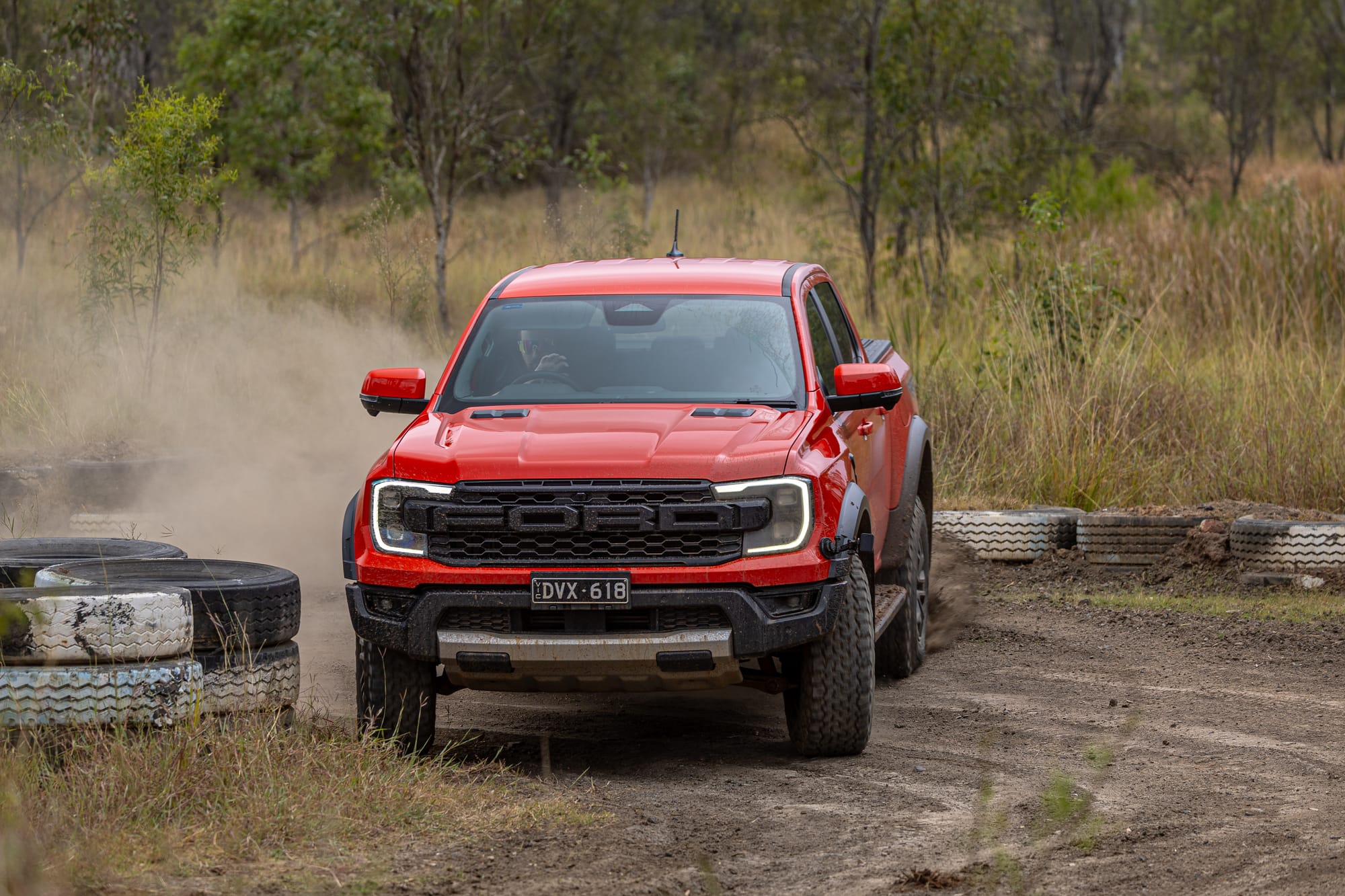
It’s a very very good tool at driving fast off-road, but 99 per cent of its life – or likely more – won’t be spent in that scenario.
There’s nothing wrong with its on-road performance, far from it. Those attributes such as its comfortable off-road ride are perfect for pothole-strewn roads, and the twin-turbo V6 means you’ll never struggle to get up to speed on a slip road in time.
But as with every vehicle, there is a compromise, and the Raptor’s is that it is a big, heavy thing that can’t carry or tow as much as more affordable Rangers, as well as other utes in the market.
Not that this really matters, as the Raptor – despite its $90,690 plus on-roads price tag – makes up more than 10 per cent of Ranger sales, with nearly two-thirds of buyers being ABN holders. Again, the stereotypes can write themselves.
There’s no shame in owning a Ford Ranger Raptor and only using it for highway holiday drives and the school run, but as with many supercars or even quick sports cars these days, you can’t do what it was made for on the road.
Despite this and all its flaws, it remains the car which has put the biggest smile on my face that I didn’t expect, and that is why it deserves the ‘performance’ badge throughout.