




As the year counts down we’re looking back on the vehicles that stood out. On New Year’s Eve (Wednesday) we’ll reveal our Top 5 Cars of 2025, but for now we’re counting down with the best of the rest, finishing our wrap up with our favourite unobtainable (for a motoring journalist, at least) supercars.
Porsche RS Spyder
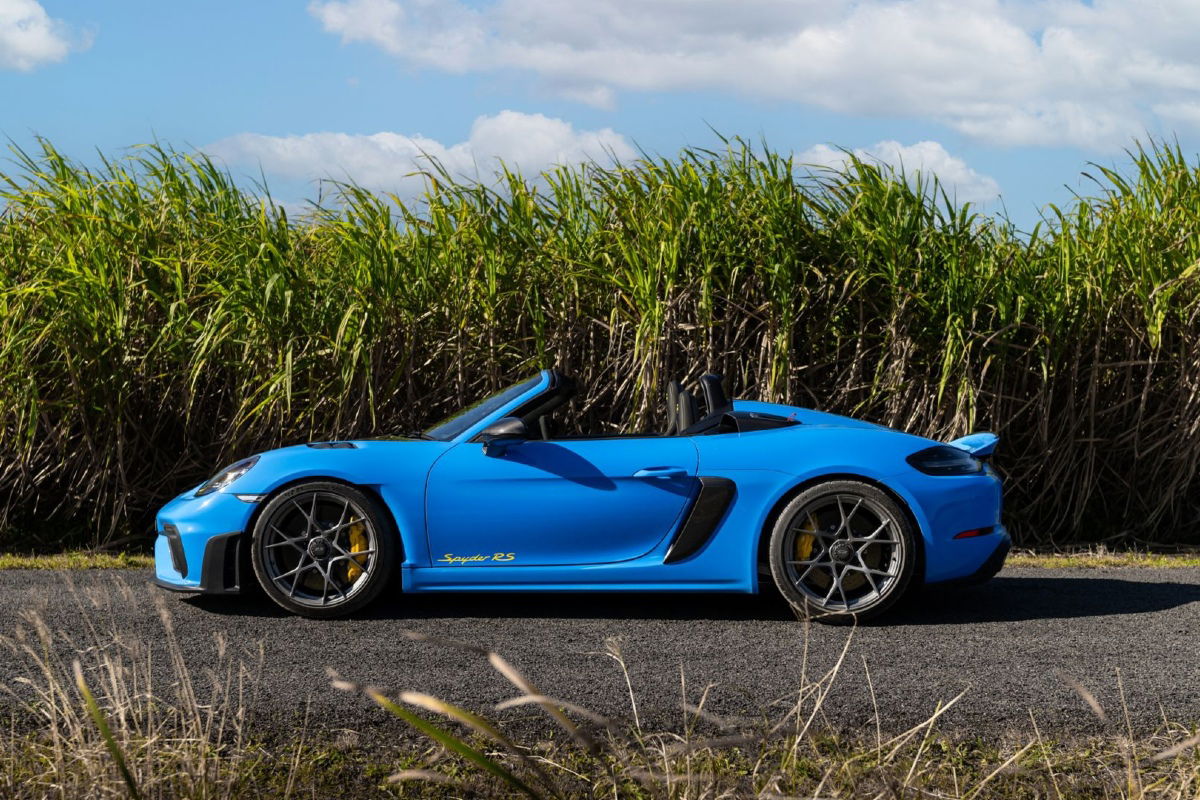
Is the best Porsche sports car not a 911? It was a serious question that the Boxster-on-steroid RS Spyder had us asking.
Porsche was always careful not to give the Boxster or Cayman too much power previously, but with options diminished, the German brand has installed the 4.0-litre flat-six from the 911 GT3 into its mid-engine models.
This means a combination of raw power and balanced handling that it has taken decades for the 911 to achieve, but the RS Spyder can match. While the lack of a roof normally makes a supercar feel less rigid and dynamically capable, in the case of the RS Spyder, it only makes it feel more visceral, in large part because you now have an uninterrupted path between your ears and the glorious noise the engine makes.
Sadly, the next-generation 718 Boxster and Cayman due to arrive in 2026 will be all-electric… but there is hope Porsche will offer a petrol-powered version in the not-too-distant future.
Aston Martin Vanquish
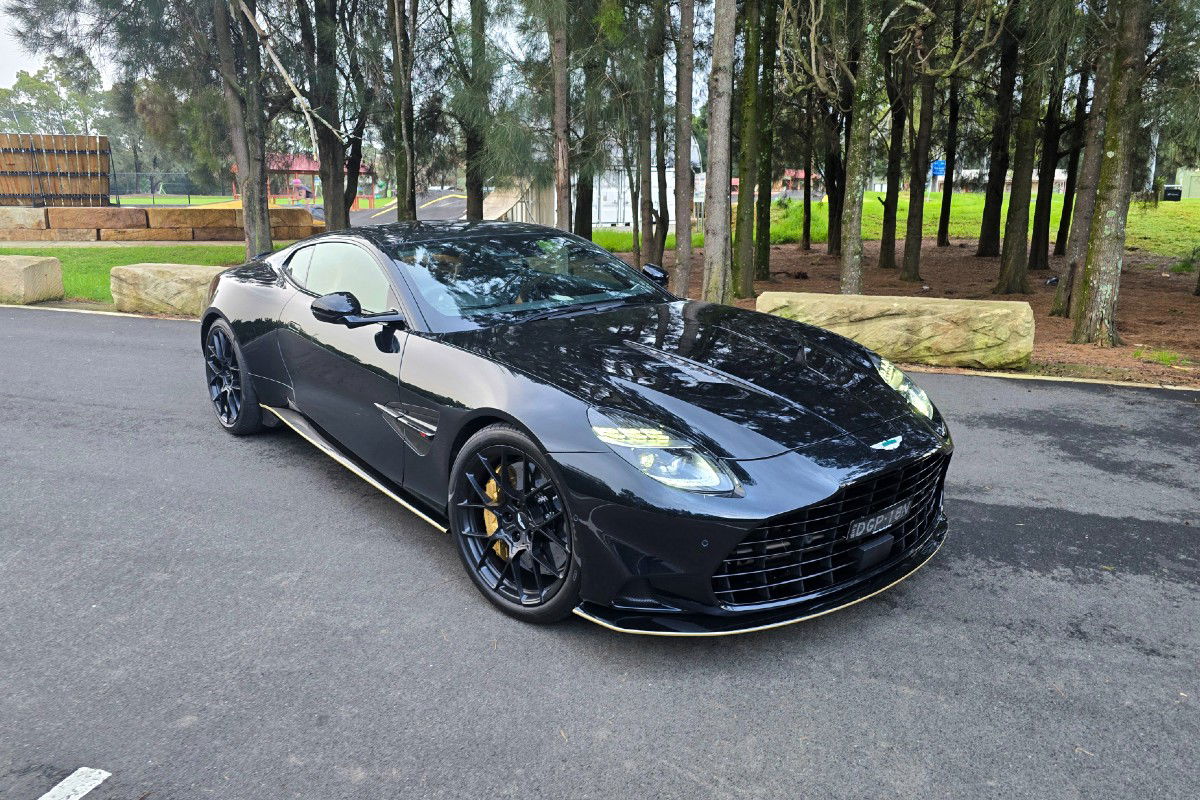
It sounds ridiculous, but this 614kW, twin-turbocharged V12-powered, $740k super coupe really impressed me. Of course, it should with those stats.
But what really left me wowed by the Vanquish was the fact it wasn’t all about its amazing engine… even though it really is all about its amazing engine.
The Vanquish exists to appeal to Aston Martin buyers who refused to buy anything other than a V12-powered model. Sure, the twin-turbo V8 was more powerful than the previous V12, but it simply doesn’t have enough cylinders to appease the Vanquish clientele.
However, despite being centred around the V12, the Vanquish surprised and delighted us with its dynamic and responsive handling. While not quite as nimble and agile as a Vantage, it proved to be far more like a sports car than the grand tourer you might expect.
Chevrolet Corvette Z06

Chevrolet has gradually expanded the Corvette range in recent years, adding both the hybrid E-Ray and this track-focused Z06. Typically track-friendly models like this one tend to be hard work on the road, given the compromises they need to make in the name of maximum performance.
And yet, while it feels more hard edged than the standard C8 Stingray and E-Ray, the Z06 feels right at home on the road. It retained the easy-to-live-with feeling of the rest of the range, even with the optional Z07 package added to our test car that includes a more racey bodykit and ceramic brakes.
The Z06 is powered by a different V8 than either the Stingray or E-Ray, a 5.5-litre race-derived flat-plane crankshaft design that allows it to rev harder and sound like the European sports cars it is trying to beat. It makes both a glorious noise but also a punchy 475kW and 595Nm.
At more than $400k the Corvette Z06 is in genuine supercar territory in both performance and price, but when you consider that a similar Ferrari will likely cost you double, it does leave you wondering if it’s a supercar bargain.
Porsche 911 Carrera

I was very fortunate to drive a lot of Porsches in 2025, including the awesome new 911 GT3 and 911 GTS T-Hybrid, as well as the shockingly fast Taycan Turbo GT. But the one that really stands out to me is the ‘Plain Jane’ 911 Carrera.
It probably has something to do with the circumstances of my drive, a 1500km road trip through California to the IMSA race at Laguna Seca.
Driving this iconic car down the iconic Pacific Coast Highway is a memory that will last a lifetime. Whether it was winding my way down the coast to Big Sur or soaking up the long highway miles from Los Angeles, the 911 was the perfect road trip companion.
It demonstrated that the 911 is all the sports car you need, even if every subsequent 911 just gets better.







Discussion about this post