
Bugatti Destrider revealed as low-slung, track-derived hypercar
The Bugatti W16 lives on in the Destrider, a one-off creation by the Solitaire division, designed to sit lower than any model before it.

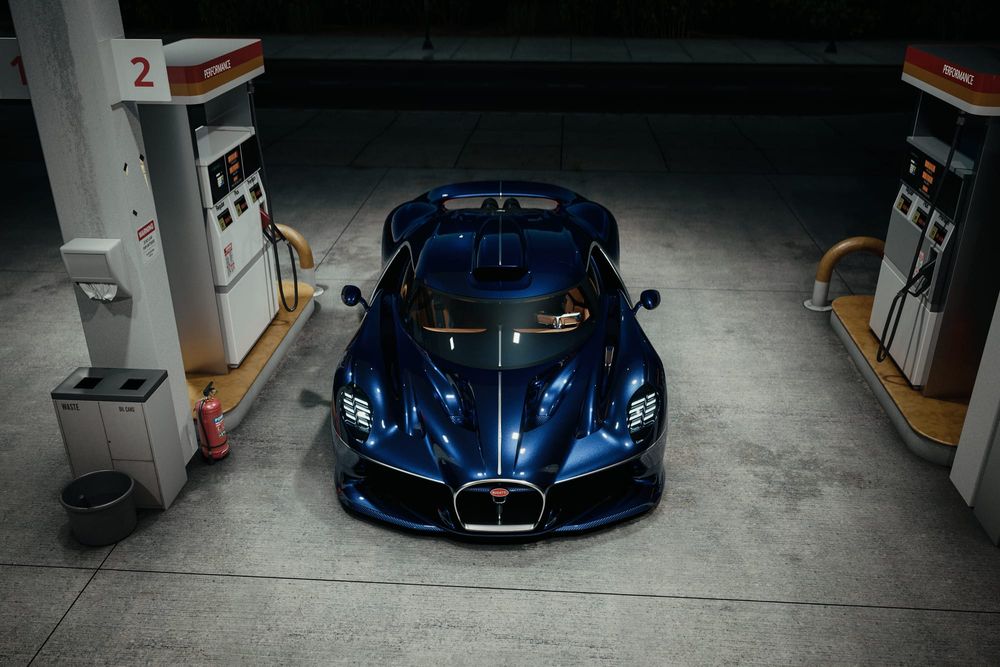
Bugatti is more than happy to keep the quad-turbo 8.0-litre W16 engine on life support as long as it still makes money, and the new Destrider commission proves there’s still demand for the byword in hypercars.
The third creation from Bugatti’s Solitaire commissions division – joining the Brouillard and Veyron-inspired F.K.P. Hommage – the Destrider is, effectively, a road-legal Bolide, utilising the track car’s carbon fibre monocoque but with an entirely new body.
Linking back to the brand’s famed Type 57 chassis which was successful in race guise (the 57G and 57C Tank were both Le Mans winners) as well as able to be fitted with a beautiful coach-built body (57SC Atlantic), the Destrider was designed to look as extreme as possible.
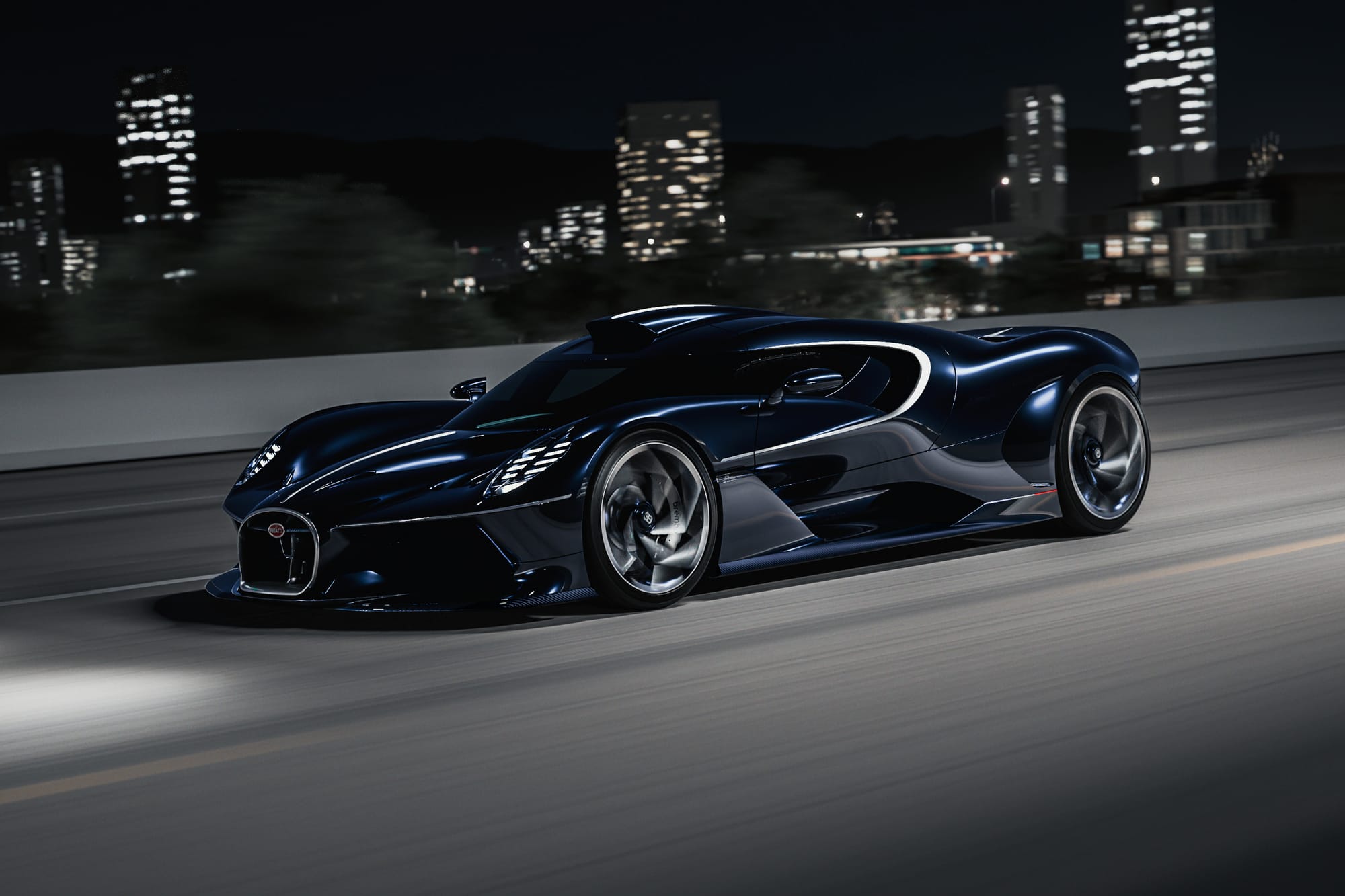
With its roofline coming in at under one metre tall, it sits even lower than the famous Ford GT40, though with the Destrider, the cabin is massively inset, giving it a bold stance on the road.
There are tweaked design elements from other Bugatti models, such as its C-line and horseshoe grille, as well as a Chiron Profilée-esque wing at the rear.
Finished in Sapphire Celeste, the bespoke, multi-layered exterior colour is only available for this one car, with its diamond-like sparkle and aluminium trim highlights standing out against the dark paintwork.
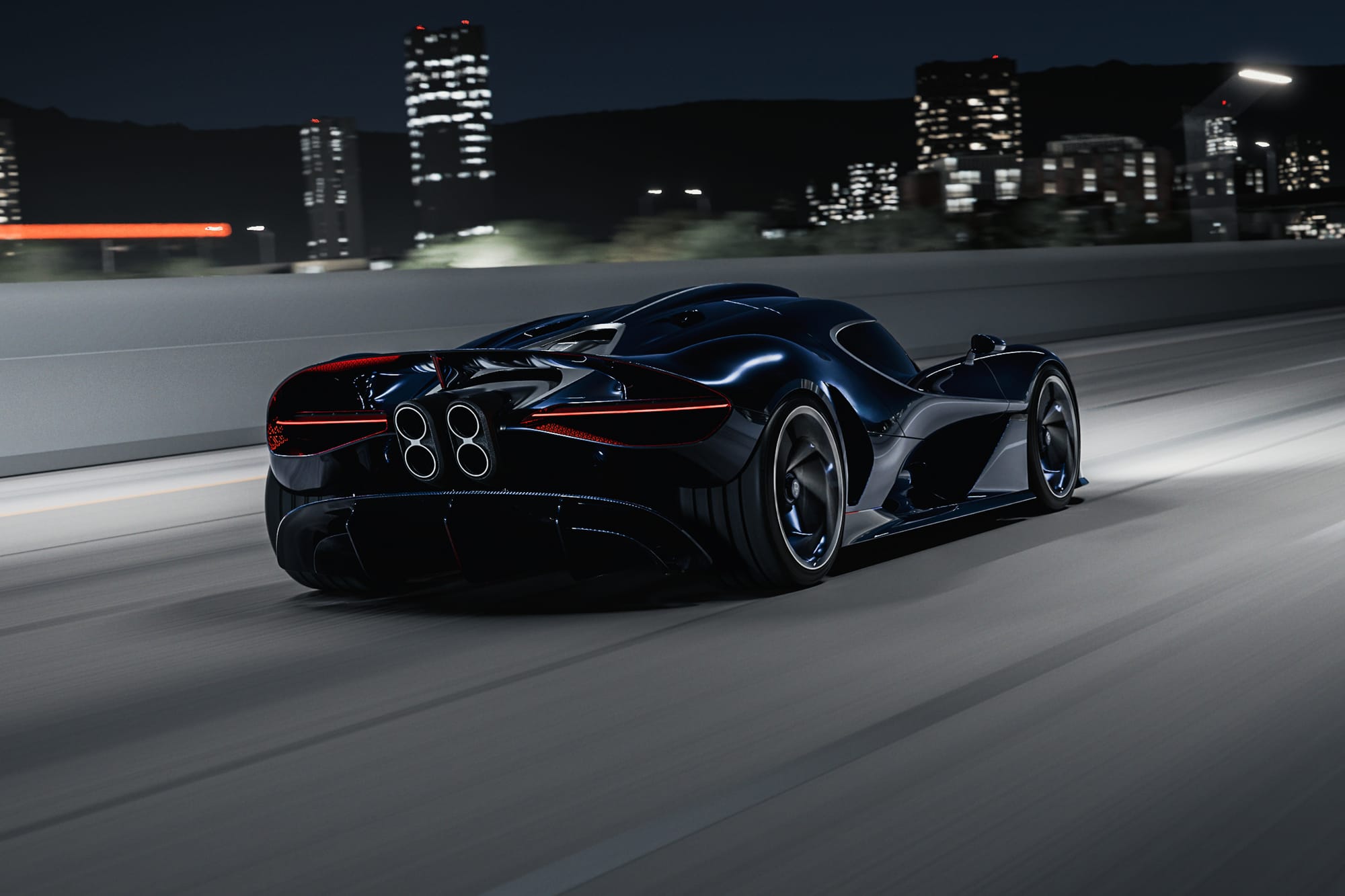
To ensure everyone knows about its Bolide roots, the front splitter and rear diffuser remain in exposed carbon fibre, meanwhile the engine bay’s trim has a slightly hammered look to its surface.
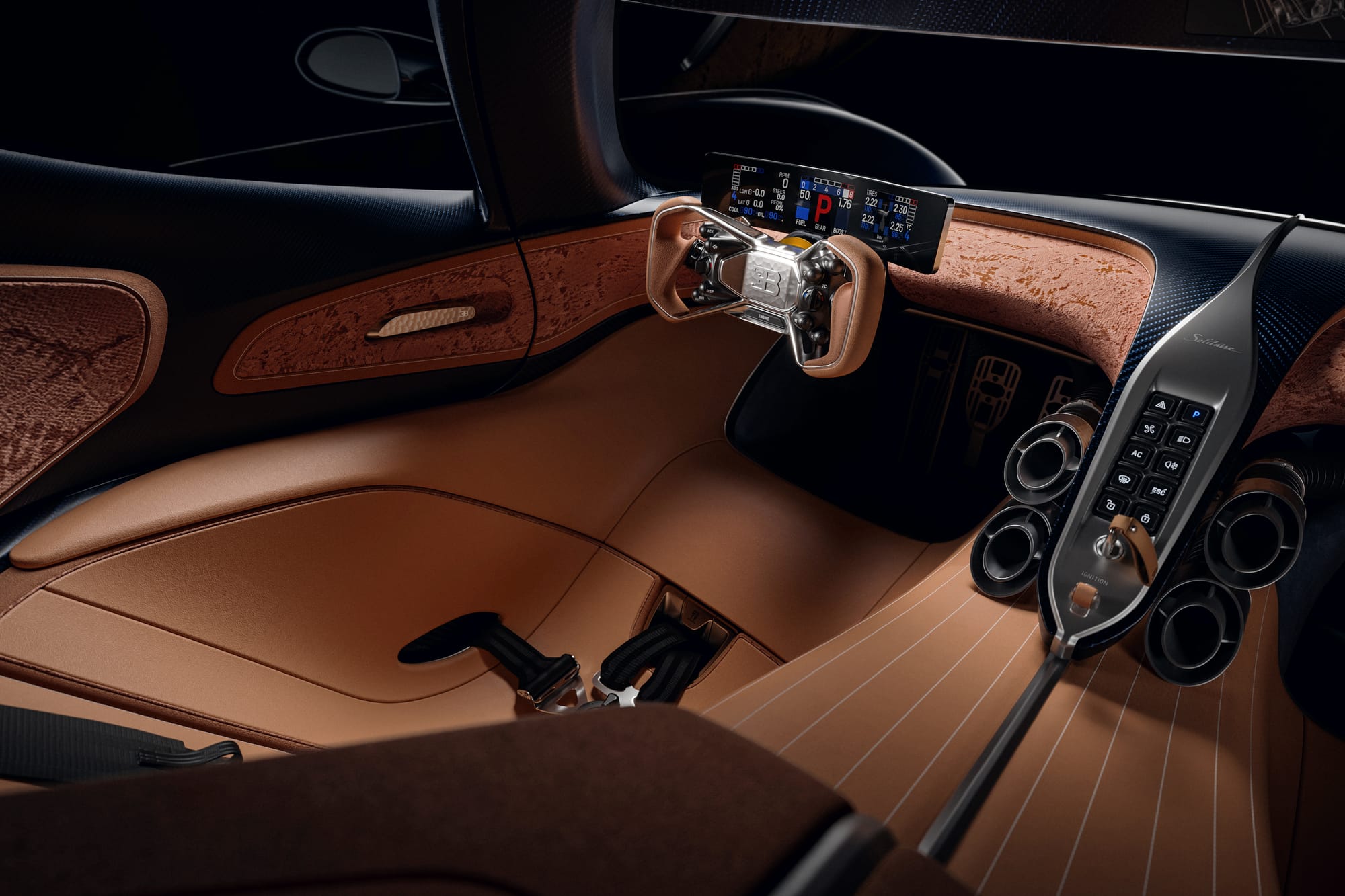
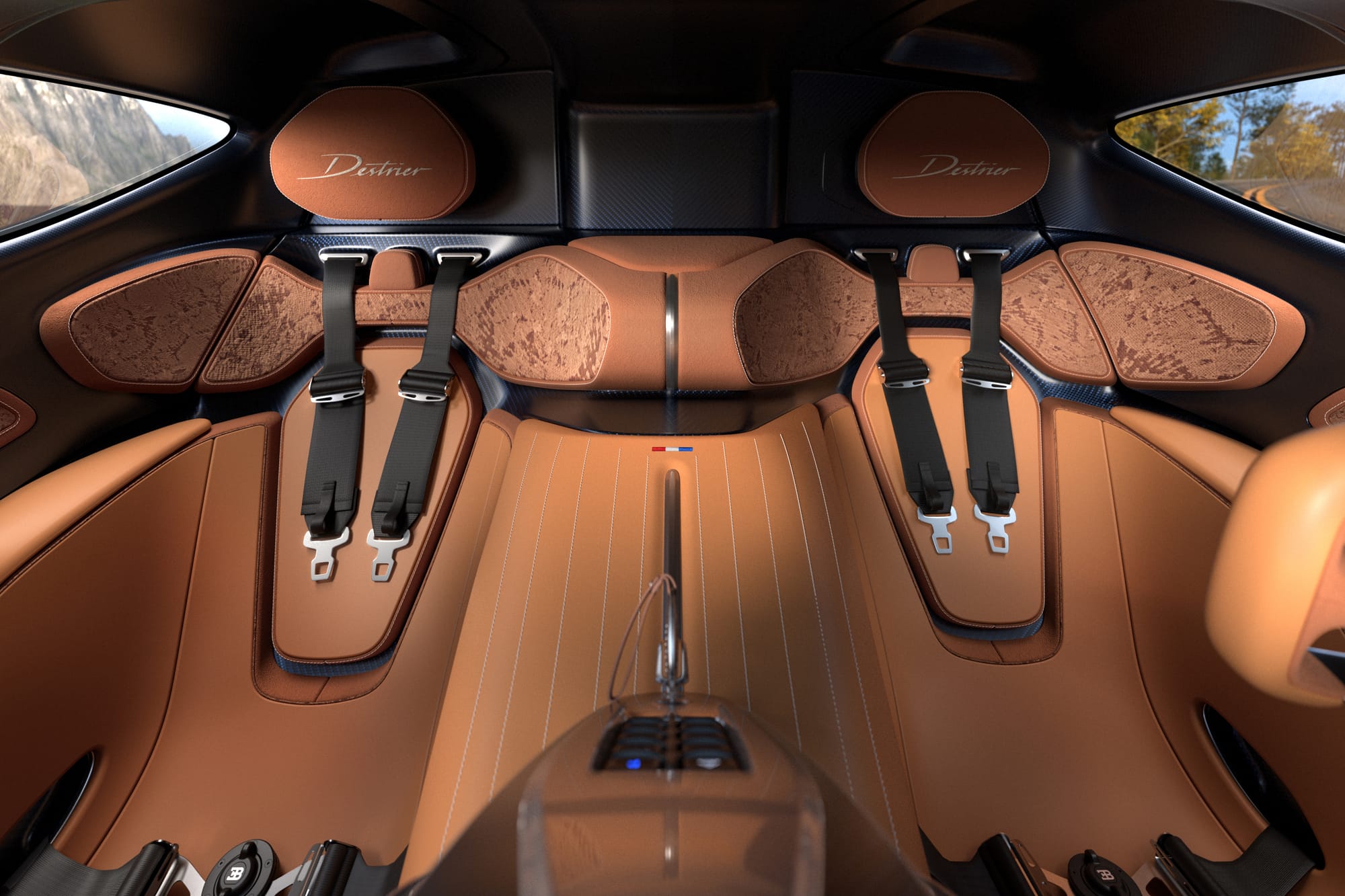
Moving inside the cabin, the Bolide’s seating position is largely retained but is now upholstered in Ambre Voyageur leather and nubuck, while 3D-knitted textiles are also seen.
Elements such as the door handles, air vents, steering wheel hub, and entry plate all feature the same hammered brightwork finish from the engine bay. There’s also a small French flag in the cabin, honouring the brand’s home nation.
Behind the driver sits the centrepiece of every Bugatti since the Veyron: a W16 engine.
Producing 1177kW and 1600Nm, it’s not quite as powerful as the Bolide’s track-tuned 1361kW and 1849Nm outputs, though it matches the open-top Mistral, a model which was launched four years ago and recently ended production.
“Destrier is not a car you understand with your head, it is a car you feel with your heart,” said Bugatti head of design, Frank Heyl.
“The Bolide gave us the most extreme proportions we have ever created, and by freeing them from the Bolide’s relentless pursuit of downforce, we let them speak as pure sculpture.
“Just as the Type 57 chassis gave the world both a Le Mans winner and the Atlantic, one platform has now produced two entirely different masterpieces. I believe Destrier will be gracing Concours lawns 50 years from now.”
The Destrider is one of the final Bugatti models to be powered by the W16, as its next ground-up hypercar, the Tourbillon, will feature a naturally aspirated V16 engine and three electric motors.