
Ford’s Kia Carnival rival to lose diesel power
The Ford Tourneo will be the brand’s first nameplate to become exclusively plug-in hybrid, as the turbo-diesel version of the people mover faces the axe.

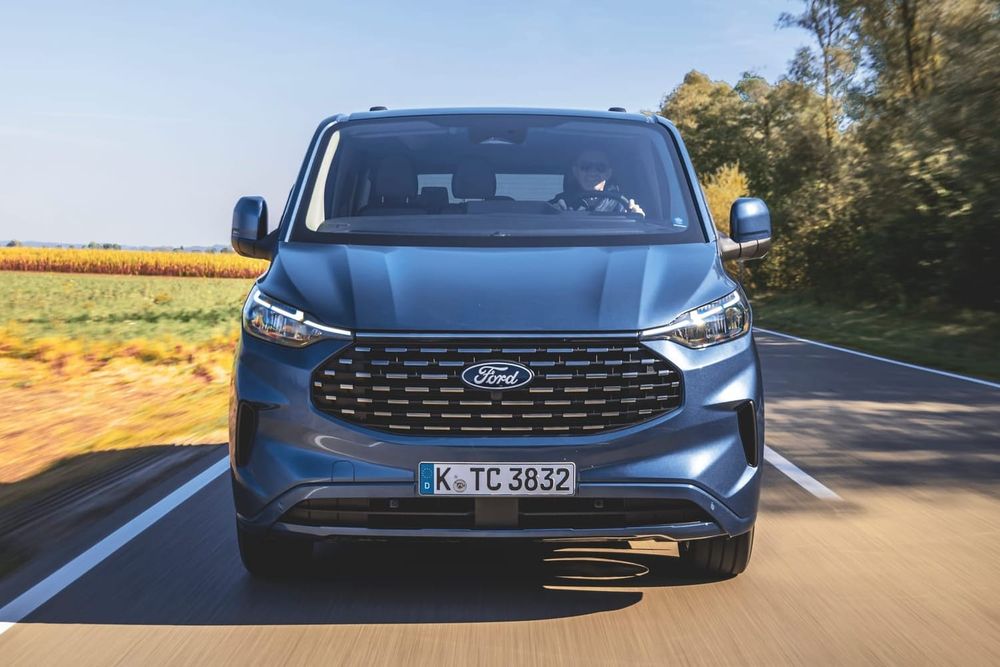
Ford is looking to reduce its emissions footprint in Australia, announcing the upcoming demise of the turbo-diesel Ford Tourneo people mover, with a plug-in hybrid (PHEV) powertrain to replace it next year.
Speaking to Australian media earlier this week, Ford Australia general manager of product marketing, Karen Larkin, announced the Tourneo will go PHEV-only next year, spelling the end for the current turbo-diesel powered model.
“[The] Tourneo, our eight-seat flexible people mover, will soon be offered exclusively as a plug-in hybrid with up to 51 kilometres of range,” Larkin said.
“It will be arriving in dealerships early in Q2 next year (April to June 2027) and give customers even more multi-energy choices and lower running costs.”

Currently the Tourneo is exclusively powered by a 2.0-litre four-cylinder turbo-diesel engine, sending up to 125kW and 390Nm to the front wheels through an eight-speed torque-converter automatic transmission.
In the first six months of 2026, Ford delivered 222 examples of the Tourneo, a 41 per cent drop on the same period last year. For context, Kia delivered 6009 Carnivals, Hyundai shipped 556 Starias, and even the electric Volkswagen ID.Buzz managed 554 deliveries.
The Tourneo PHEV is yet to be detailed, however it’s believed to carry across its powertrain from the Transit Custom, the van upon which the Tourneo people mover is based.

In the Transit Custom PHEV, its 2.5-litre four-cylinder petrol engine (making 86kW and 209Nm) is paired with a 111kW and 320Nm electric motor for total outputs of 171kW and 400Nm, continuing to drive the front wheels, though in this case through a CVT automatic.
This variant utilises an 11.8kWh nickel manganese cobalt (NMC), delivering 54km of claimed electric-only driving range. Larkin’s claim that the Tourneo PHEV will have a 51km driving range stacks up against the van’s figures.
A key motivating factor behind the switch is understood to be the Tourneo PHEV’s significantly lower CO2 emissions.

The Transit Custom PHEV has an official emissions figure of 38g/100km, compared to the turbo-diesel’s 209g/km figure, the latter of which features the same engine as the Tourneo currently in showrooms.
For context, the Tourneo emits 194g/km, expected to drop significantly when the PHEV arrives.
Under Australia’s New Vehicle Efficiency Standard (NVES), carmakers can be fined up to $100 for every gram per kilometre (g/km) their vehicles are over the emissions limits.
For ‘Type 1’ passenger vehicles such as the Tourneo, this limit is 117g/km in 2026, 92g/km in 2027, 68g/km in 2028 and 58g/km in 2029.