
Hennessey’s V8 manual supercar channels SR-71 Blackbird spy plane
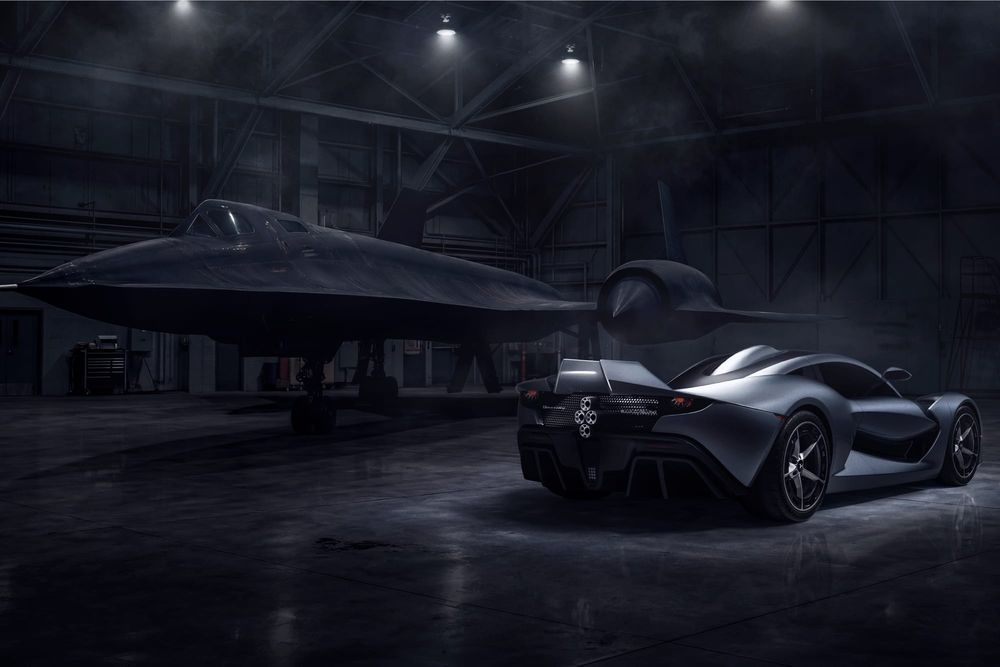
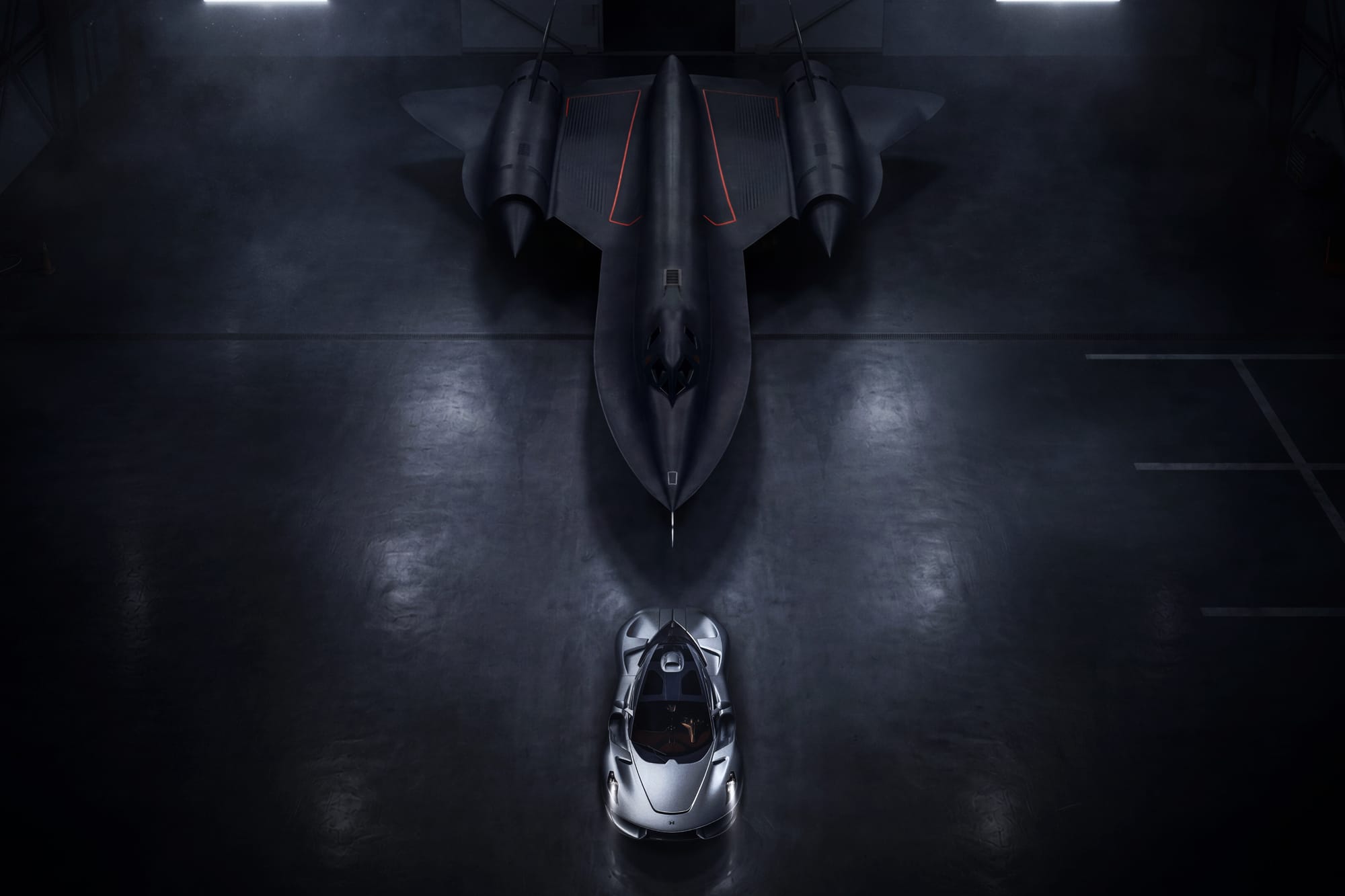
The brand behind some of the world’s fastest cars has taken inspiration from the fastest plane on the planet for its driver-focused supercar, the Hennessey Blackbird.

If you’re into super-fast cars, it’s likely you know Hennessy, whose Venom GT and F5 models have been among the quickest production vehicles ever, aided by big V8s with twin turbos.
It’s strange then that this brand which is usually big on power has decided to turn the dial down for its latest creation, the Hennessy Blackbird.
Billed as a more driver-centric model, the Blackbird – named after Lockheed’s SR-71 Blackbird spy plane, the world’s fastest air breathing machine – is designed to give the driver greater all-round engagement behind the wheel, rather than just focus on headline numbers.
“Blackbird isn’t just the next chapter in the Hennessey story, it represents the beginning of a new book,” said company founder and CEO, John Hennessey.
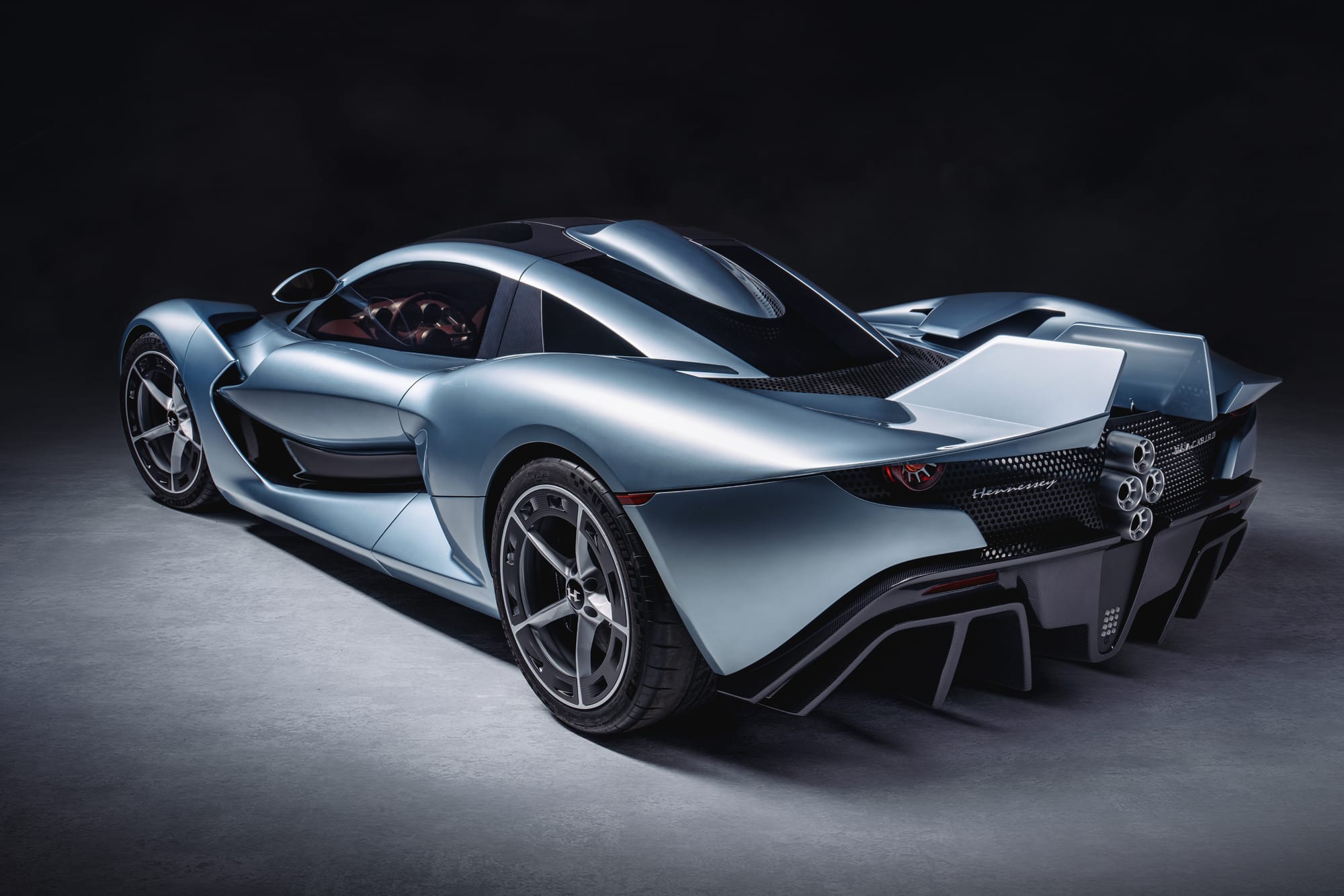
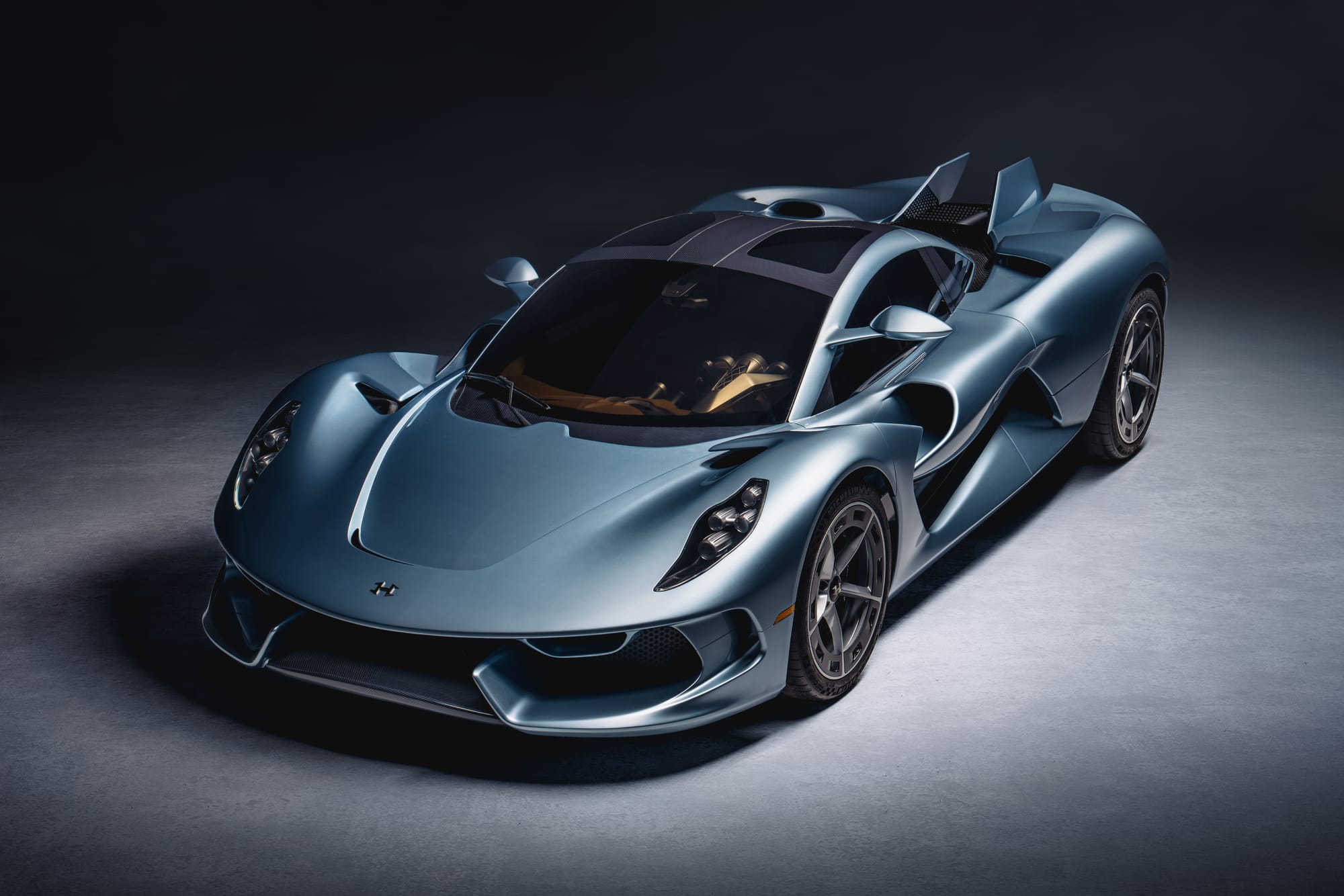
Hennessey Blackbird
“Our third hypercar, Blackbird, is unexpected by design, yet it’s exactly what I wanted to create and what our customers have been asking for. Challenging expectations has always been part of our DNA.
“From the beginning, Blackbird was guided by a simple idea: to deliver an analog experience where beauty and drama define every moment. This is not a numbers car.
“We set out to create an unparalleled emotional experience, from the first time you see it to the moment you take the wheel and feel the connection between driver and machine.”
That analog driving experience is achieved through the Blackbird being fitted with a gated, six-speed manual transmission, sending drive directly to the rear wheels.
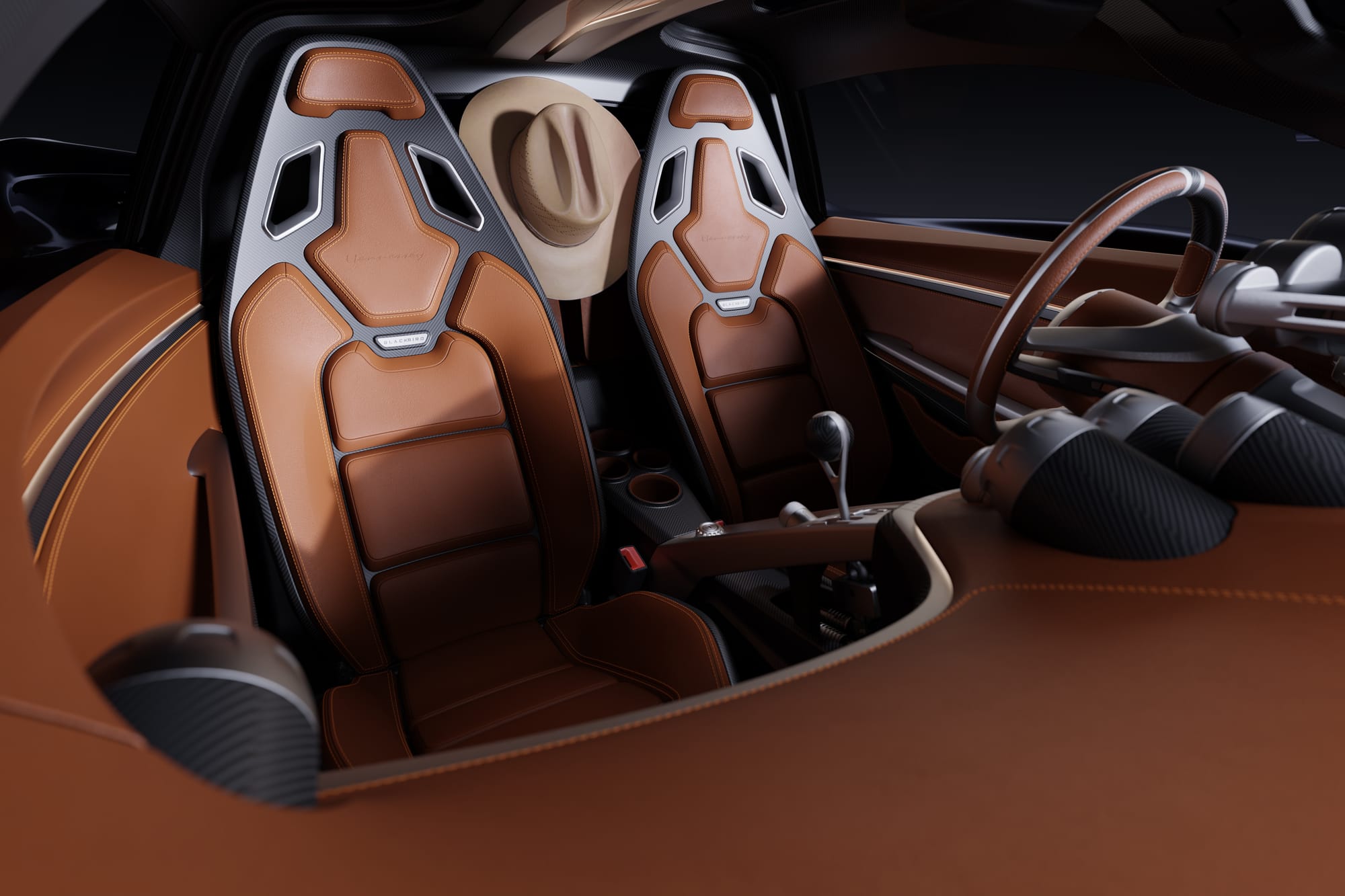
Hennessey Blackbird
It’s connected to a 6.2-litre, naturally aspirated V8 which has been developed in partnership with famed racing engine builders, Ilmor Engineering. Hennessy says it’s targeting the V8 to pump out more than 630kW and rev out to more than 9000rpm.
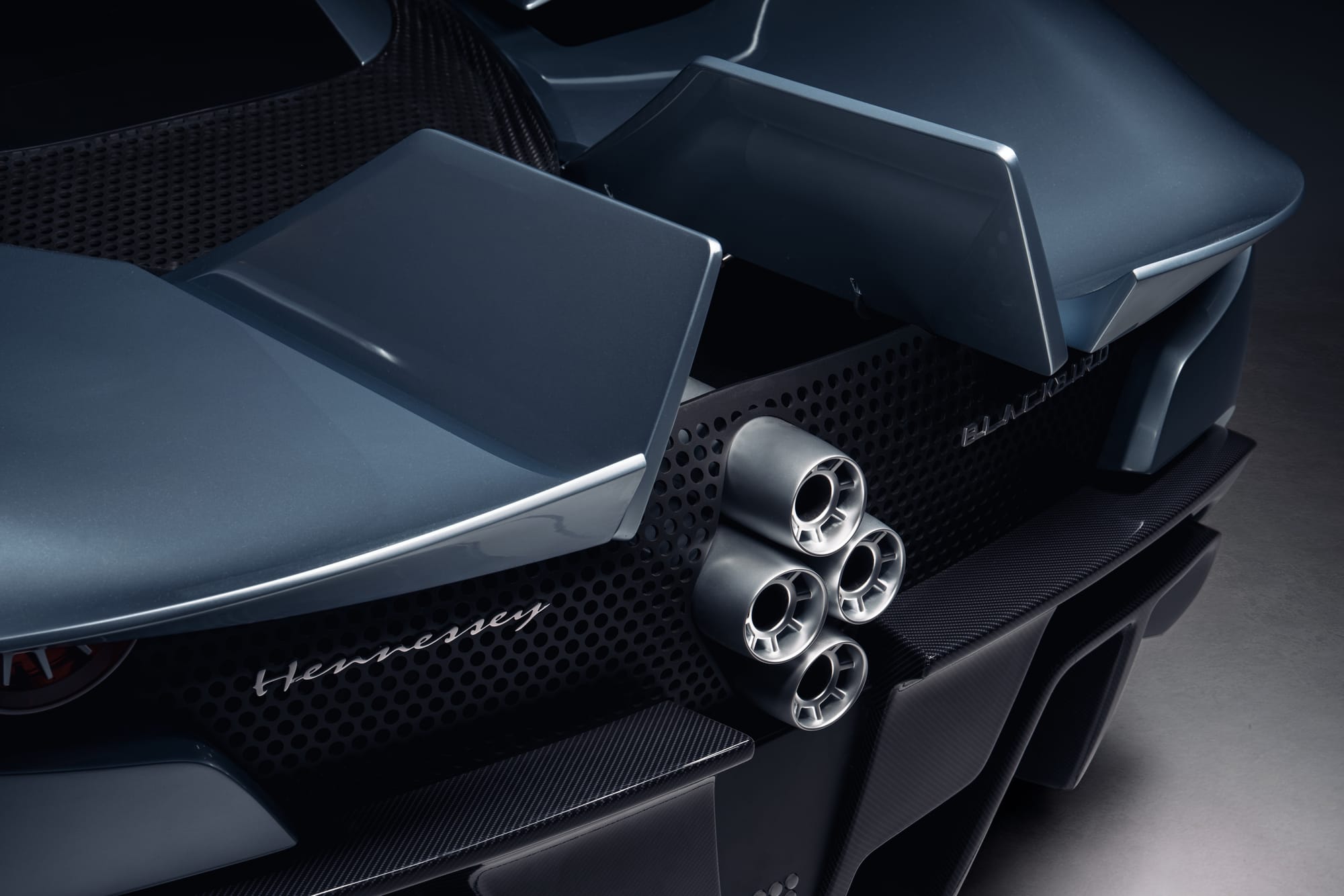
The car’s design is influenced by aerospace icons, including the Bell X-1 (the first plane to break the sound barrier) which leant its diamond-shaped quad-exhaust layout to the Blackbird.
In addition to this, the Hennessey’s sidepods take inspiration from Formula 1 racers, while there are also elements of Le Mans racers throughout its aero package.
The clearest reference to the SR-71 Blackbird is through its rear stabilisers, which automatically deploy when it reaches 114km/h (or 71mph), and are angled at 71-degrees.
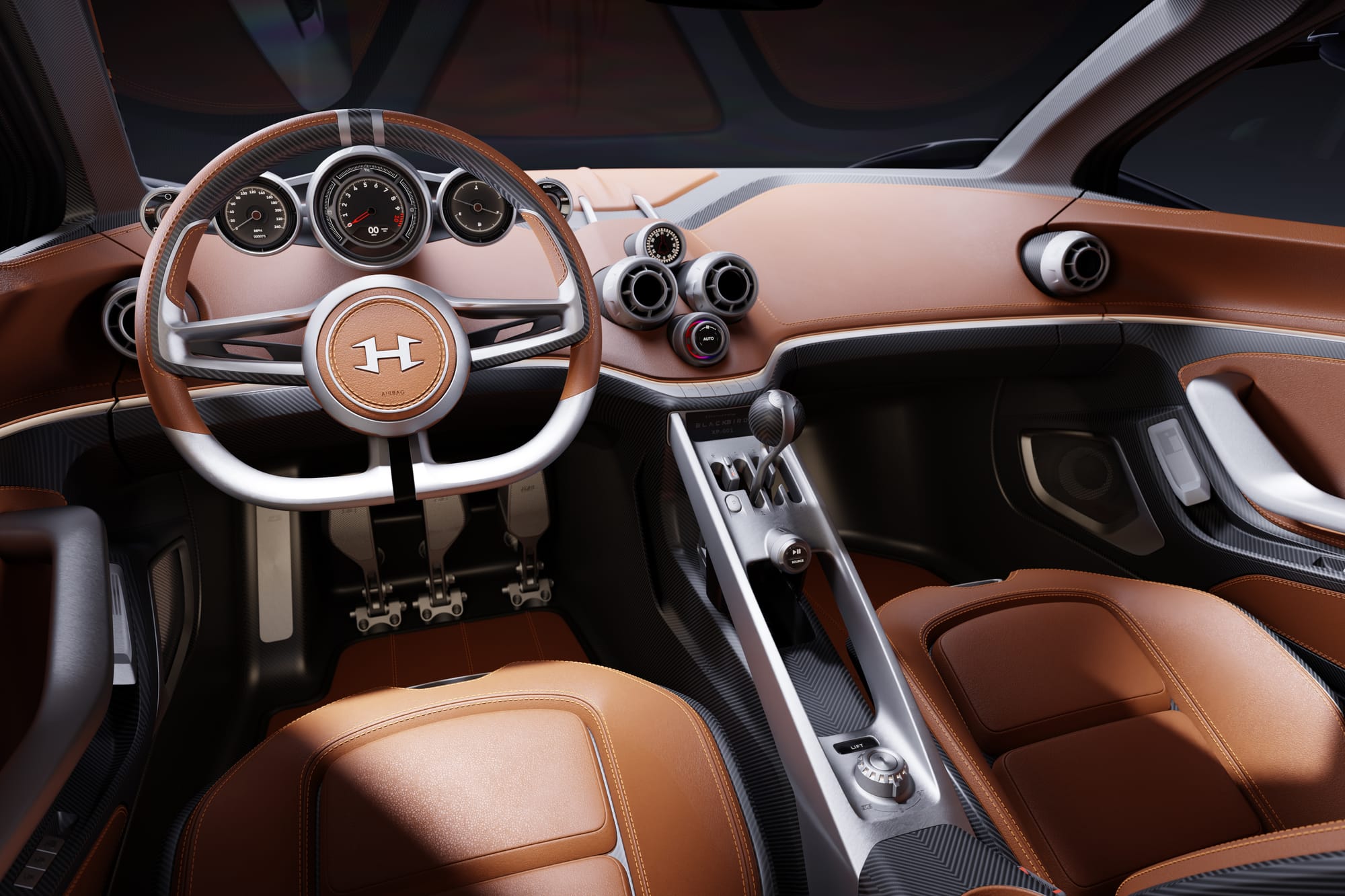
Inside the cabin, the minimalist focus is evident, with only analogue instruments sitting in front of the driver, in a space devoid of screens. There’s not even buttons on the steering wheel.
Under the skin, the Blackbird features a bespoke Hennessey full-carbon tub, adaptive suspension and a suite of driver aids, with a target weight of 1360kg meaning it could accelerate from 0-60mph (97km/h) in about 2.5 seconds thanks to its grippy Michelin Pilot Sport Cup 2 tyres.
All examples of the Hennessey Blackbird will be built at the company’s Texas headquarters, with a target of 2029 or 2030 for the first examples to roll down the line.
Only 71 Blackbirds will be made, priced from US$2.5 million (A$3.6 million). Despite this, Hennessey claims two-thirds of its production allocation has sold out before it even makes its public debut within a fortnight.