
Alfa Romeo’s racing legend reborn with modern super sedan
The Alfa Romeo 155 2.5 V6 TI dominated DTM in the 1990s, and now the M3-rivalling Giulia Quadrifoglio has been turned into a rolling tribute.

Germany’s DTM championship might conjure mental images of BMWs, Mercedes-Benzs and Audis battling on track, but in the early to mid 1990s it was Alfa Romeo which was one of the series’ stars.
With the 155 2.5 V6 TI and Nicola Larini behind the wheel, Alfa Romeo won the 1993 title, while its all-wheel drive, 2.5-litre sedan took 12 wins in the season, before going on to notch up 38 victories overall by the time it was retired at the end of 1996.
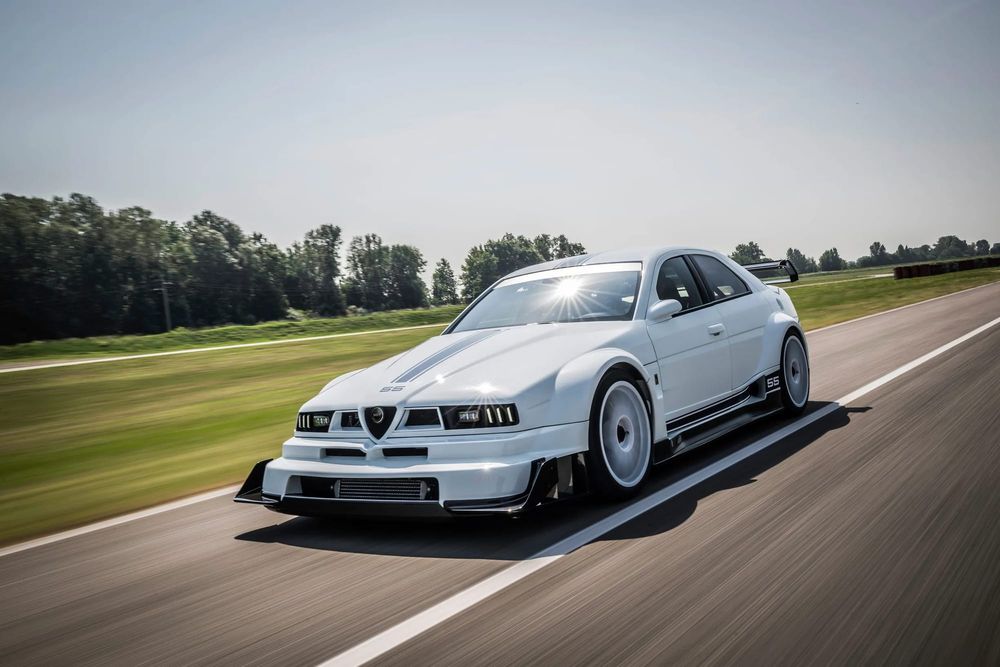
Almost three decades on from the last time the DTM-spec 155 raced competitively, startup firm SGT Automobili has paid tribute to the racer by releasing a modern reincarnation, the 55-SGT, based on the Giulia Quadrifoglio.
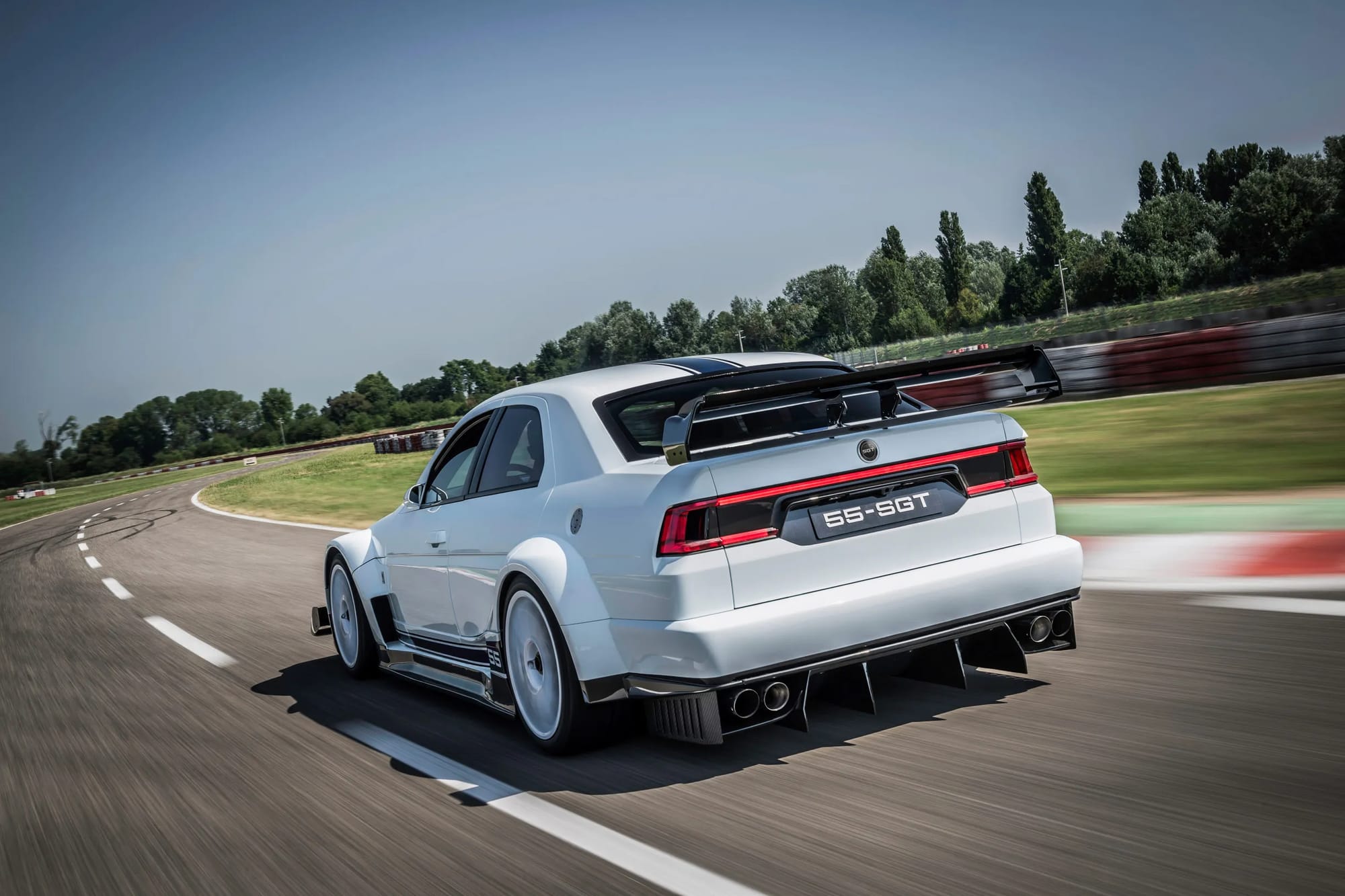
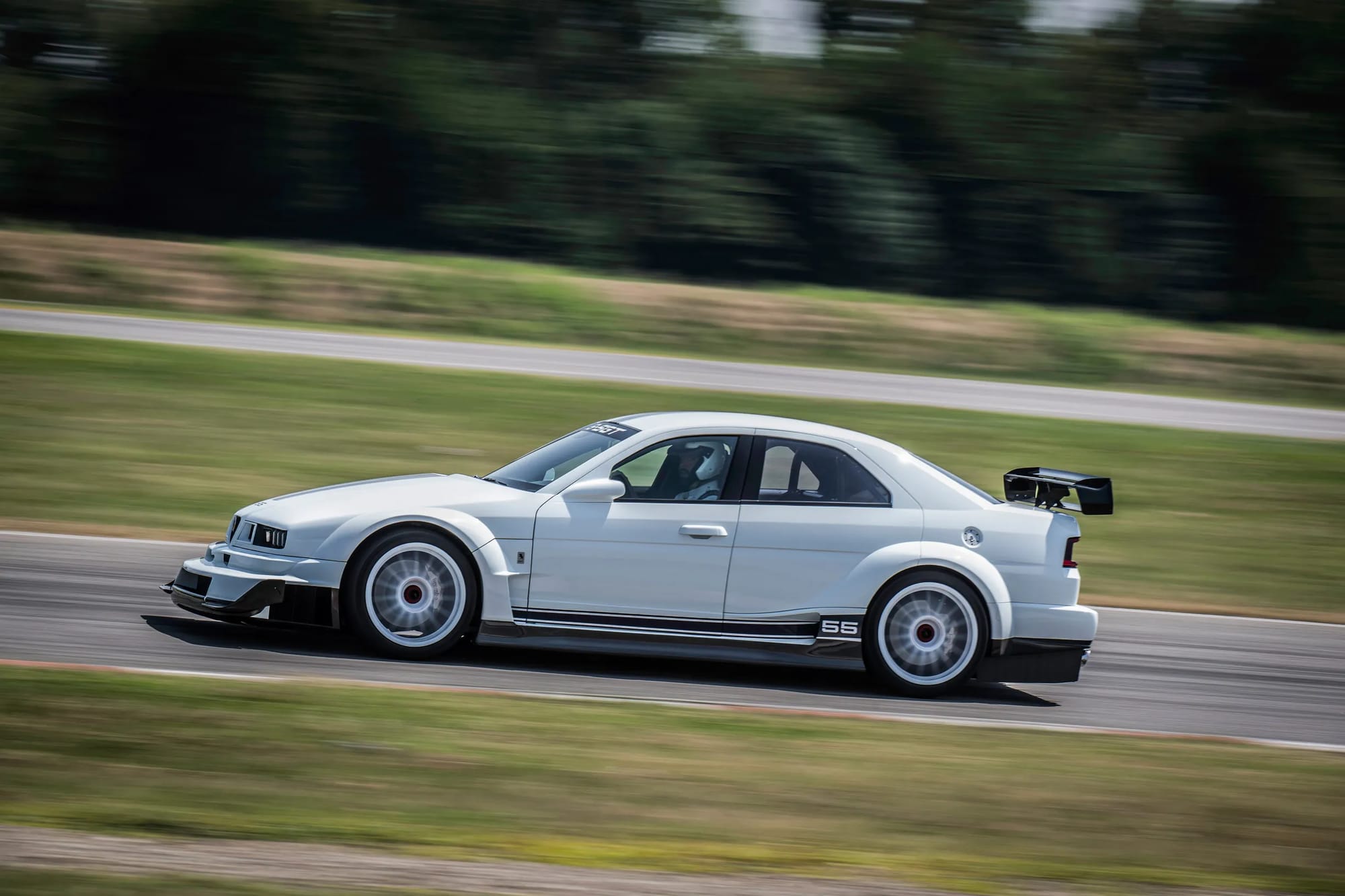
Using the Giulia sedan’s chassis and cabin as its base, there are no exterior carry-over parts from the current BMW M3-rival, with the body instead being a carbon fibre construction that painstakingly replicates the 155 2.6 V6 TI.
This includes its stepped front bumper, aggressive splitter and side skirts, as well as its hooped rear wing. There are even two less doors, something that wasn’t a feature on the racing car.
Its 20-inch OZ Racing wheels are bespoke, and sit in front of Brembo brakes all round.
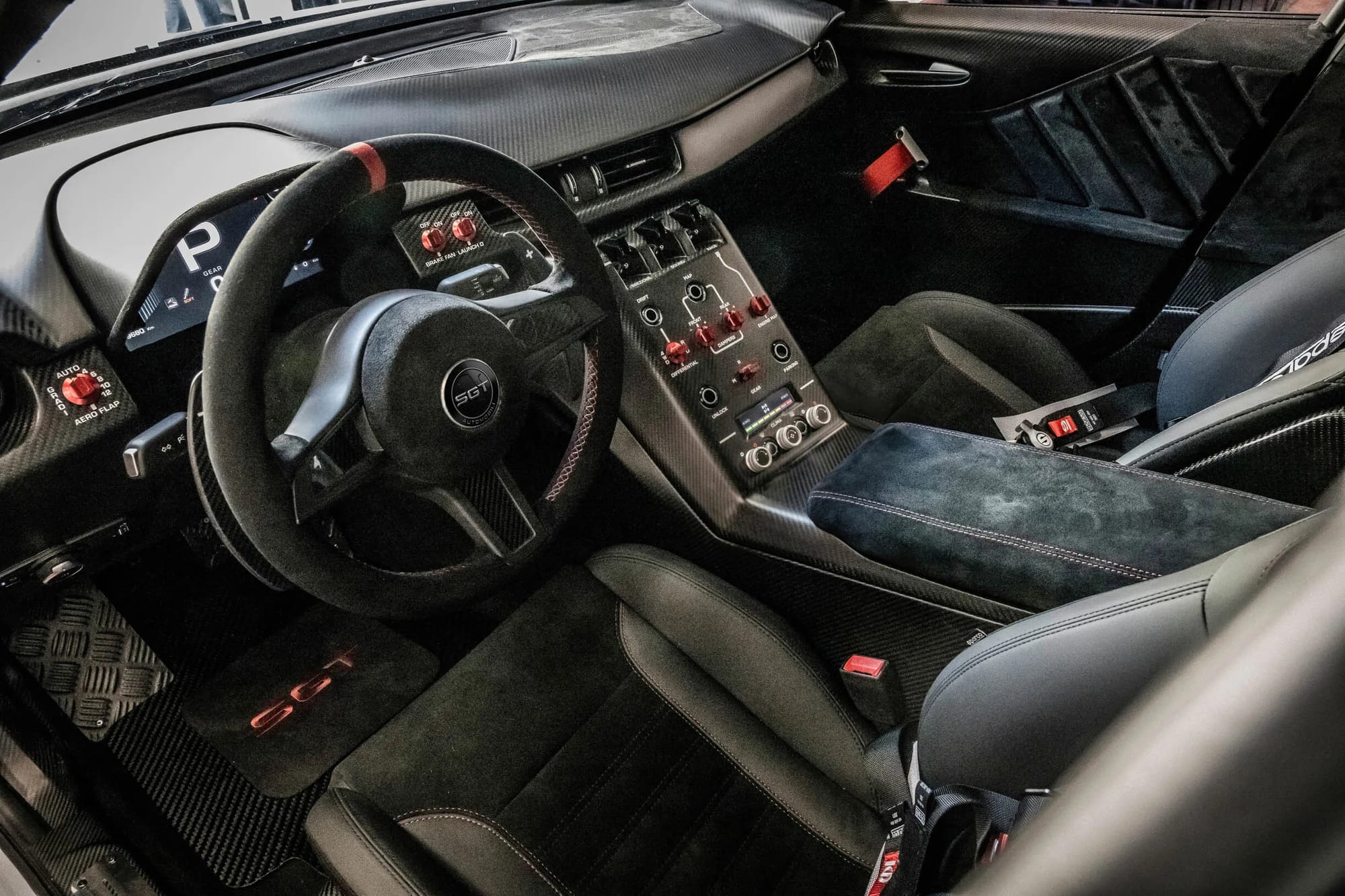
The interior has the strongest links to the Giulia Quadrifoglio production car, though in place of its rear seats there’s now a roll cage, while the front occupants get carbon fibre racing-style seats.
Via the centre command console, the driver can adjust the suspension settings, the engine outputs and even the torque split of the all-wheel drive powertrain, with a drift mode also being incorporated.
In its standard Stradale guise, the 55-SGT weighs just under 1590kg, while the stripped-back Trofeo version is just 1490kg, both being much lighter than the circa-1720kg kerb weight of the Giulia Quadrifoglio.
Powering the 55-SGT is the twin-turbo 2.9-litre V6 engine as found in the flagship Giulia, normally capable of producing up to 377kW, but turned up to 456kW in the Stradale and 552kW in the Trofeo.
Purists may be upset that the eight-speed automatic transmission is retained, rather than being swapped out for a manual or sequential transmission, though it would’ve likely resulted in a big price increase.
Speaking of which, there’s no price yet, but expect to pay a significant amount more than for a Giulia Quadrifoglio.