
Porsche Mission S revealed as a preview of next-gen models, supercar
A new Porsche supercar will be the brand’s halo offering, with the Mission S previewing what the ‘permanently available’ flagship model could look like.

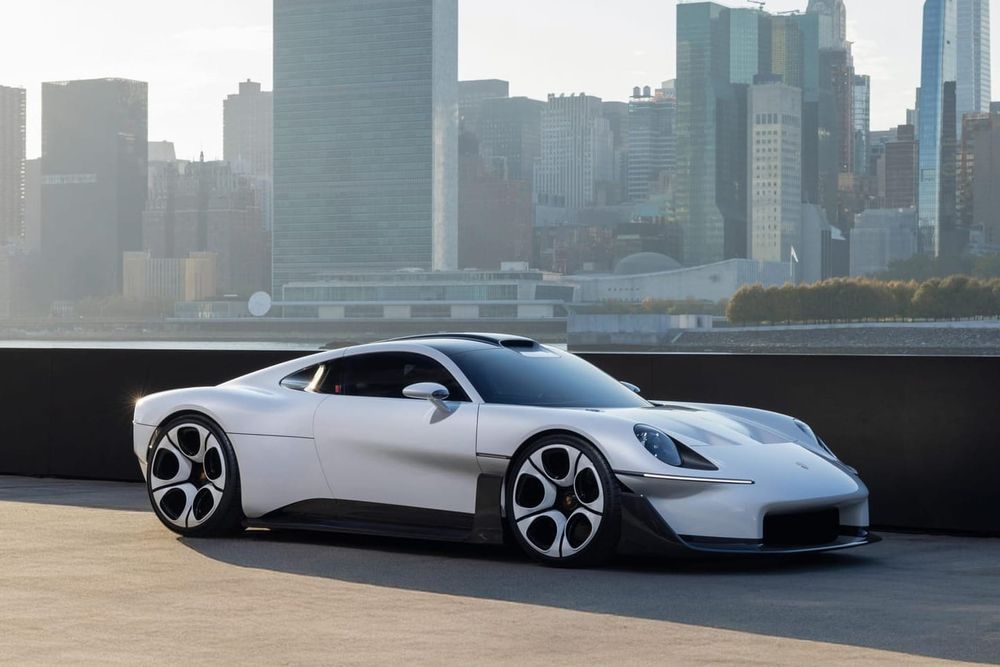
Porsche has revealed its new sports car identity with the Mission S concept, showing off not only the design of its future sports cars, but also a new non-limited supercar.
Unveiled in New York, the Mission S will set the tone for Porsche’s upcoming identity, but there’s not one specific car it will inspire – even if the brand has confirmed an important new flagship is coming.
“A Porsche must be recognisable as a Porsche at first glance,” said Porsche CEO, Dr Michael Leiters.
“The Mission S provides a glimpse of the ideas and design features that will shape Porsche in the coming years.
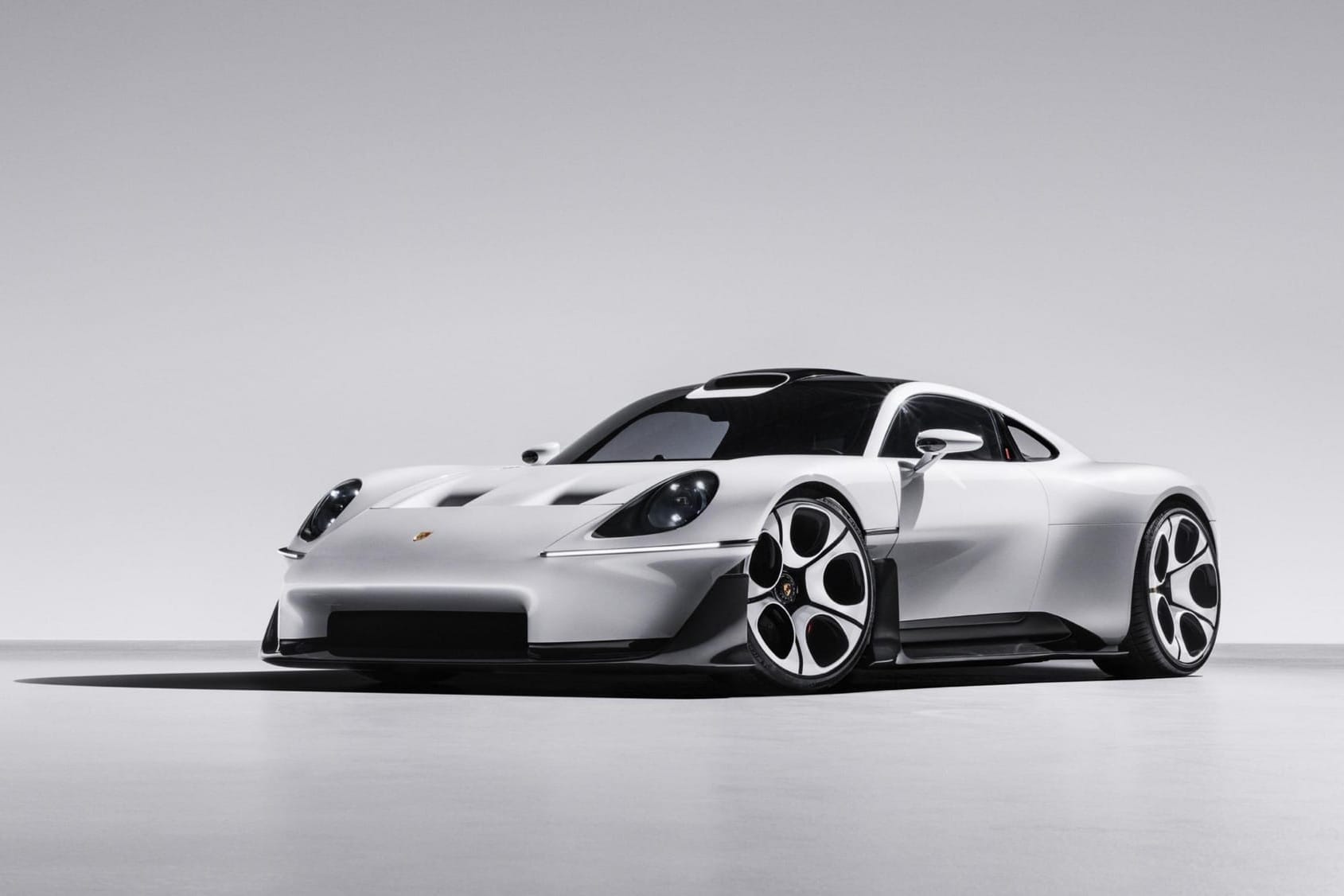
“At the same time, the Mission S represents a mid-engined super sports car platform positioned above the 911 – not as a one-off hypercar, but as a permanent and versatile addition to our customer offering.”
While the Mission S itself won’t go into production in its current guise, its design and underpinnings preview Porsche’s next halo product, set to join the likes of the 959, Carrera GT and 918 Spyder as its standalone flagships.
“Above the iconic 911 sports car, Porsche is planning, for the first time, a permanently available super sports car offer,” the brand said in its media release.
“The clear objective here is the highest level of engineering excellence and maximum flexibility. This is underpinned by decades of motorsport experience, innovative and brand-defining technology and the forward-looking design unveiled with the Mission S.”
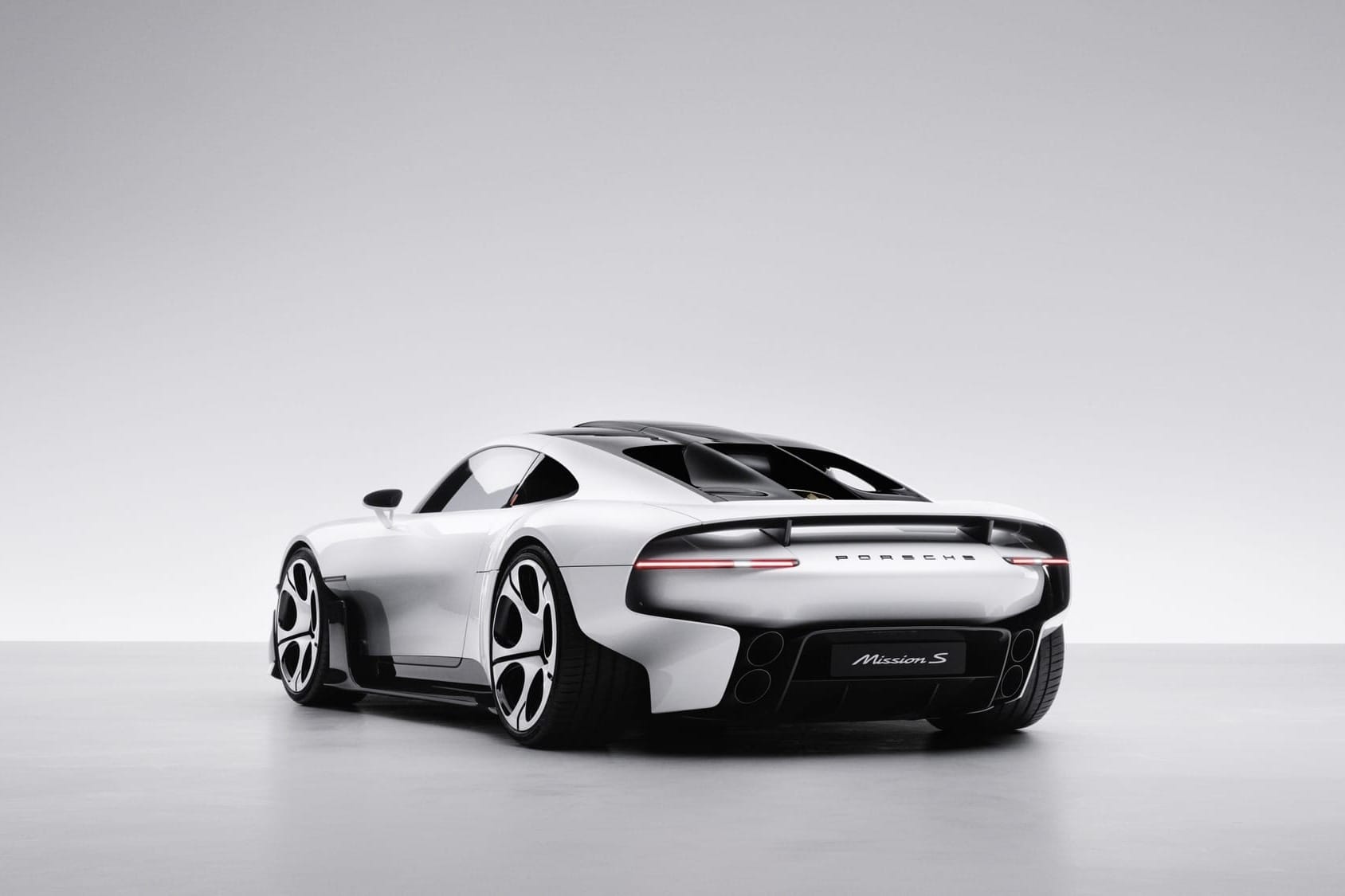
Porsche has gone all-out in making sure the Mission S celebrates as much of its heritage as possible, while also looking to the future.
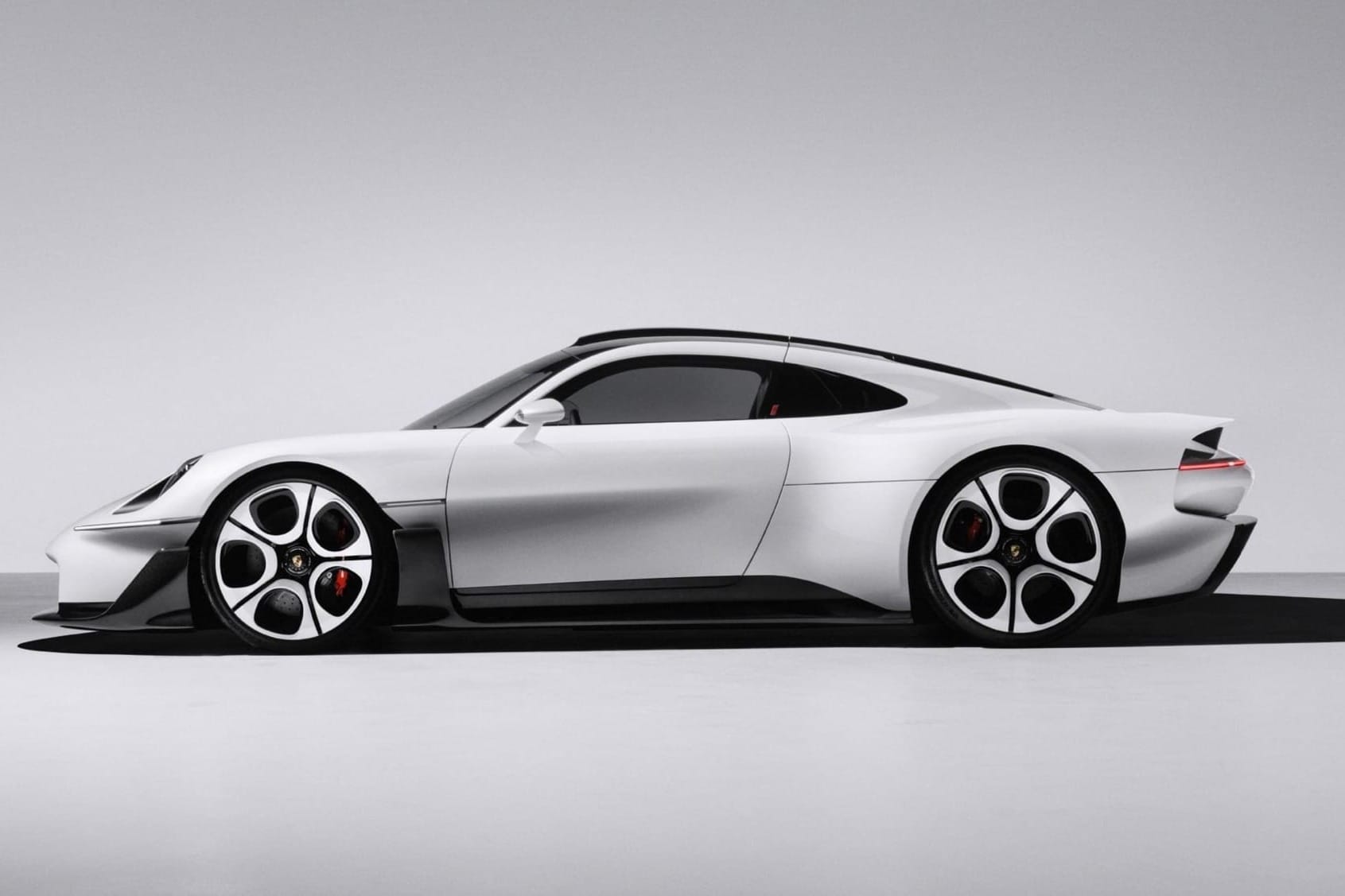
The 911’s round headlights and the front wheel-arch designs are quintessential 911, with the G-body original’s lines echoing through the shut lines and light graphics.
At the front, its flat bonnet is straight from the 996-based GT1 racer of the late 1990s, a car which also led to the unique ‘car-in-car’ design at the rear – where the race car featured the then-911’s lines underneath its bodywork.
The sloping roofline which stretches under the rear wing is a homage to the 959 – the first mega-Porsche – while even the 928’s ‘dial’-style wheels have led to the Mission S’s rim design, now brought into the modern age.
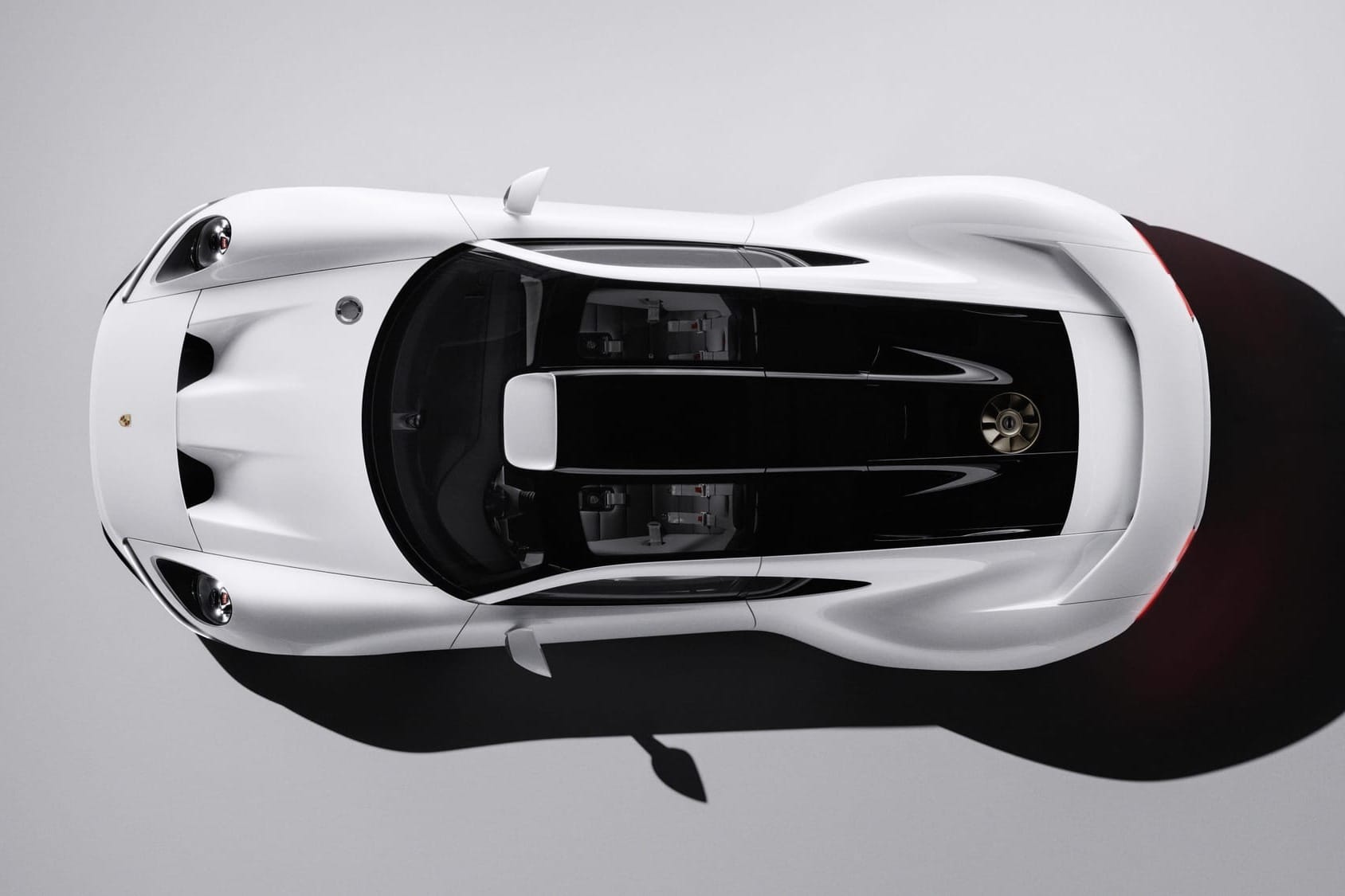
Looking down at the mid-mounted engine (which is yet to have its tech specs shared, but more on that later), the cooling system takes its design from the flat-12 which powered the 917 Le Mans racer of the late 1960s and early 1970s, one of the brand’s most important cars.
To give the front and rear a level of synergy, the main line which wraps around the car connects the light signatures at either end, with Porsche saying everything above the line emphasises “muscularity and dynamism”, while under it are the technical, functional aspects.
Painted in White Metallic, Light Red Metallic and Black Chrome, Porsche says the Mission S’s hues “reinterpret the classic Porsche Motorsport colours and emphasise the visual link to the brand’s sporting core”.
The retro theme continues inside the cabin, where the 356 and 550 Spyder have been used as the main sources of inspiration.
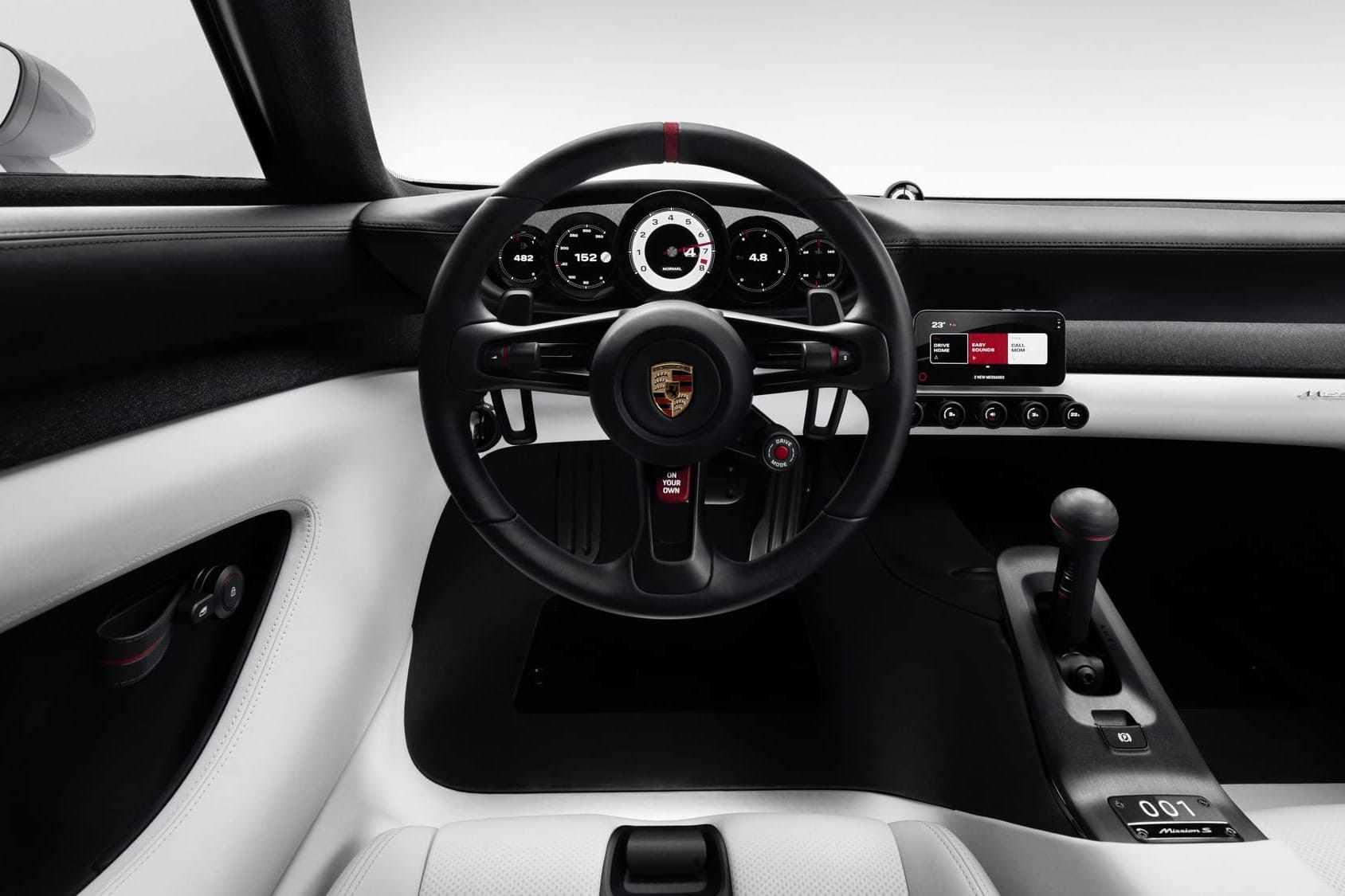
There are two defining lines which run through the dashboard and doors, highlighting the mix of digital and analogue controls, as Porsche has fitted physical buttons and switches alongside new display screens.
As you’d expect, the sports car brand wants this to be all about the driver’s experience, with the controls all aligned towards the driver.
Sitting directly in front of the driver is a rev counter with an analogue needle, making a return since the 992.2 (current) 911 moved to all-digital displays, getting rid of the last links back to its heritage.
The tachometer is flanked by two additional instruments on either side, though their positioning can be adjusted depending on the drive mode.
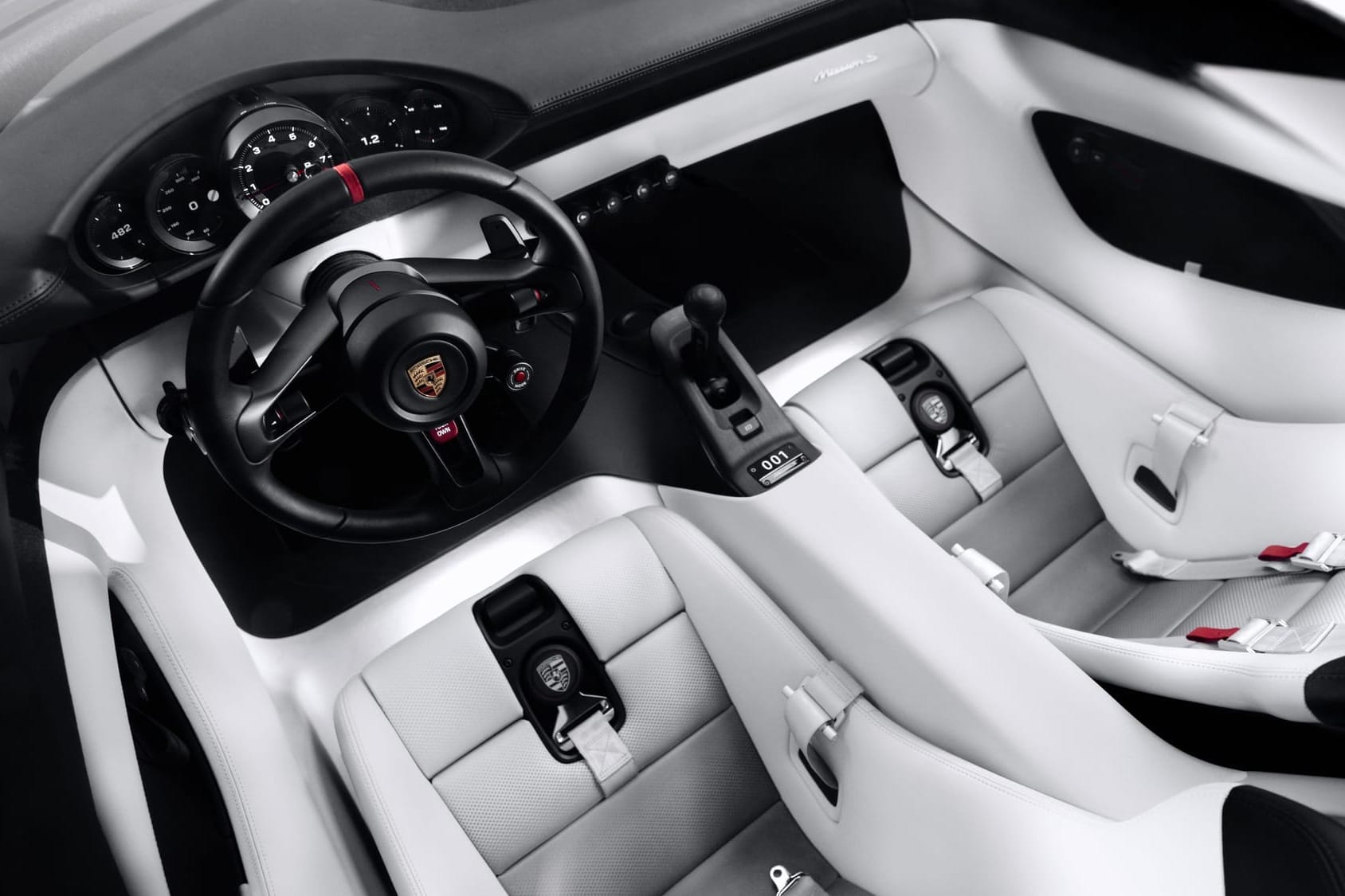
According to Porsche, it has “deliberately chosen not to include a permanently integrated center display or a fixed passenger display in the dashboard”, though there is a “retractable smartphone system compatible with MagSafe technology” which allows personal devices to be used for navigation.
While Porsche hasn’t provided technical specifications about what the Mission S previews, last month insiders reportedly told German publication Handelsblatt the flagship production model will be powered by a flat-eight engine, representing the first time Porsche has done so in a production car.
Porsche’s most recent successful attempt at a flat-eight was in the Porsche 908 race car of the late 1960s, though since then its boxer engines haven’t ventured higher than a six-cylinder count.
Earlier this month, Automotive News reported the next Porsche supercar would likely use the platform of the Lamborghini Temerario and Audi Nuvolari to save costs.
The Temerario was unveiled in 2024 and launched last year as the new ‘baby’ Lamborghini supercar, taking the place of the V10 Huracan, now with a twin-turbo V8 engine and plug-in hybrid system.
With a supercar platform already existing, it’s an easier business case for Porsche to create a supercar, given the reduced development costs and time, however it has traditionally gone its own way for its flagships.
The 959 (twin-turbo flat-six), Carrera GT (V10) and 918 Spyder (V8 hybrid) were all bespoke vehicles, sharing next to no parts with other models from the Volkswagen Group, or even from within the Porsche model range.
Given Porsche has a plan for future products lasting to 2035, we may have to wait a bit to see the Mission S in showrooms.