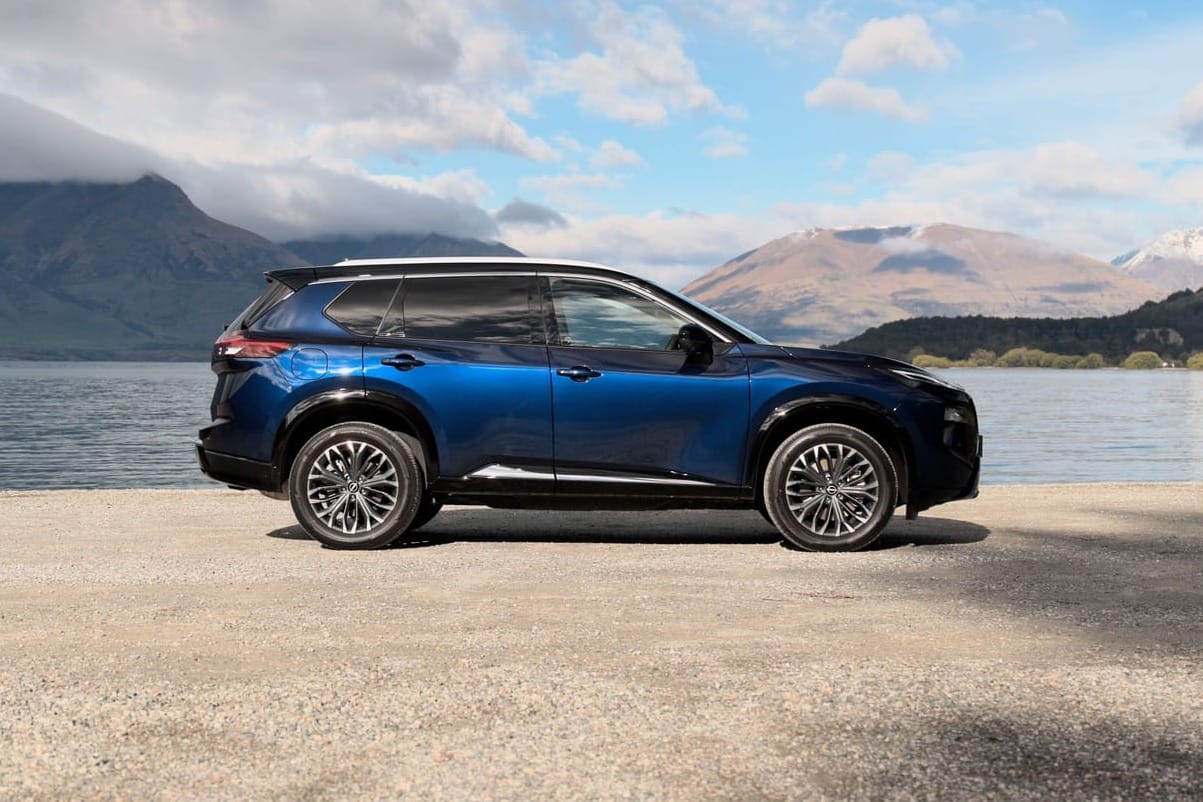
2026 Nissan X-Trail e-Power review
Nissan has launched a new front-wheel drive version of its unique e-Power hybrid system in the X-Trail, but it’s not taken away from the driving experience.

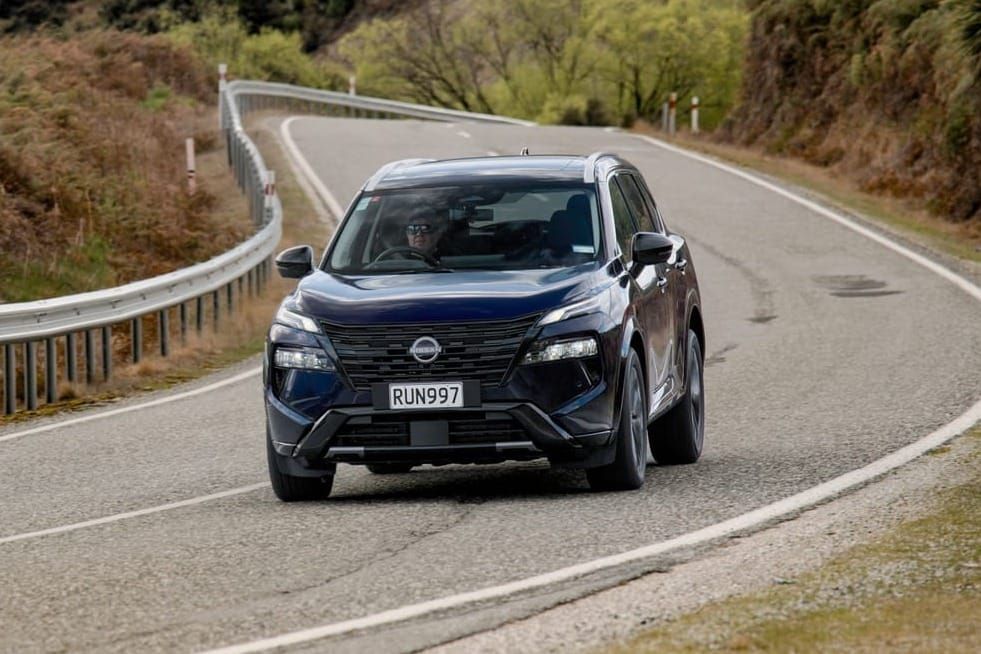
The Nissan X-Trail is in an important stage of its life in Australia, having found itself slowly slipping down the sales charts while the likes of the Toyota RAV4 and Tesla Model Y fight to be the most popular mid-sized SUVs on the market.
Nissan’s current fourth-generation X-Trail is currently celebrating 25 years in showrooms, and the brand has added another few weapons to its arsenal, introducing the purely petrol-powered Rock Creek variant, as well as three new front-drive e-Power hybrids.
We’ll touch on the Rock Creek later this week, because the focus of Nissan’s attention – and ours too – is on the new X-Trail e-Power front-wheel drive variants, given how timely fuel-saving technology is in Australia right now.
The standard all-wheel drive X-Trail e-Power e-4orce (which must set a record for how many dashes can fit into a car’s name) has been on sale for a handful of years, and has enjoyed modest success.
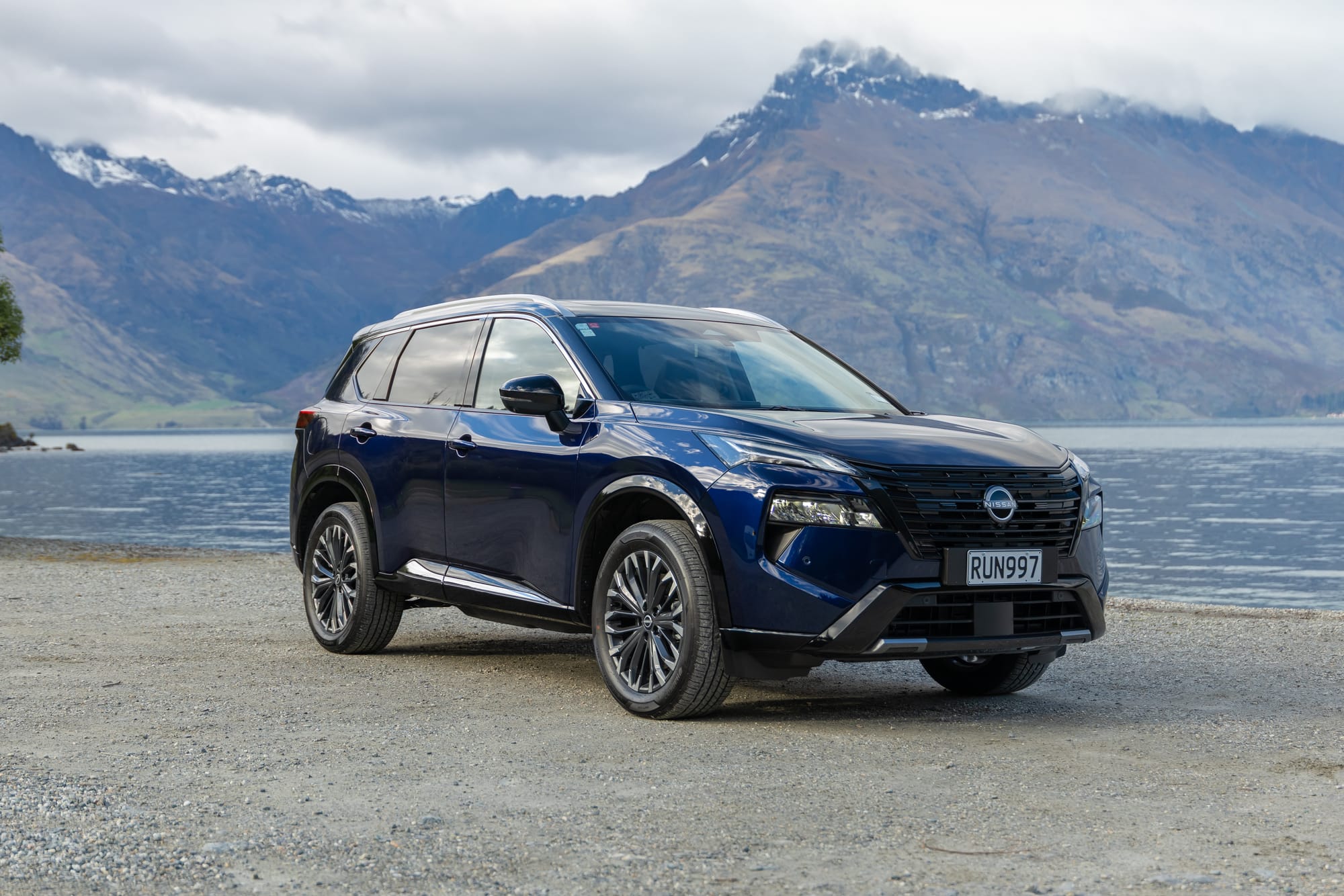
Unlike most hybrid systems - like that found in the similarly sized Toyota RAV4 - the e-Power powertrain doesn’t see the petrol engine drive the wheels with electric assistance.
Instead, the petrol engine acts as a generator to the small onboard battery, which supplies power to its single electric motor at the front axle.
Given there is no physical connection between the petrol engine and wheels, the result is a car which drives like an EV in how it directly puts power to the road, but without the need for charging via a cable, with the only topping up required being that of the petrol tank.
While revolutionary in its operation, the X-Trail’s e-Power system hasn’t proven to be as popular as the traditional hybrid tech in the likes of the RAV4, Hyundai Tucson and Kia Sportage, though the new front-drive variant aims to change that.
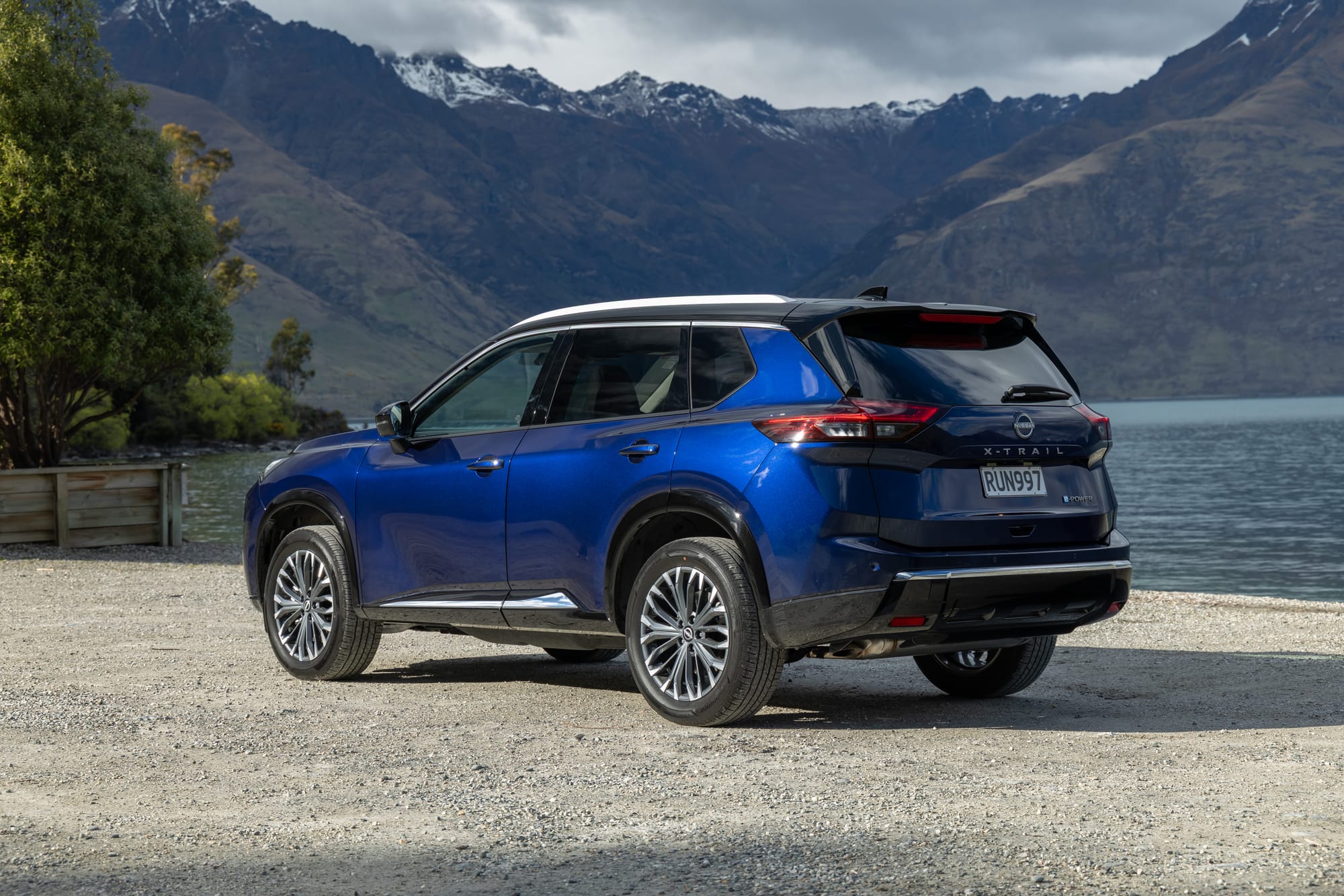
Of Australia’s hybrid vehicles sold from April to August 2026, 51 per cent of cars delivered were two-wheel drive (either front or rear-driven), compared with all-wheel drives making up the remaining 49 per cent.
This then places greater emphasis on the success of the X-Trail e-Power, as it’s now opened up to an even wider share of the market.
So with the why out of the way, here’s what it’s like.
How much does the Nissan X-Trail cost?
Prices start from $45,990 for the X-Trail ST-L e-Power FWD, $50,915 for the X-Trail Ti e-Power FWD, and $54,715 for the X-Trail Ti-L e-Power FWD. For context, that represents a saving of $3090 for the ST-L compared to the AWD e-Power, and a $3655 discount for the Ti and Ti-L against the e-4orce versions.
It also narrows up the price difference between the regular petrol-powered X-Trails and the hybrid variants, while giving Nissan greater coverage in the segment.
The new front-drive e-Power’s entry price matches that of the base Toyota RAV4, which has been Australia’s best-selling passenger vehicle this year, and is only available as a hybrid.
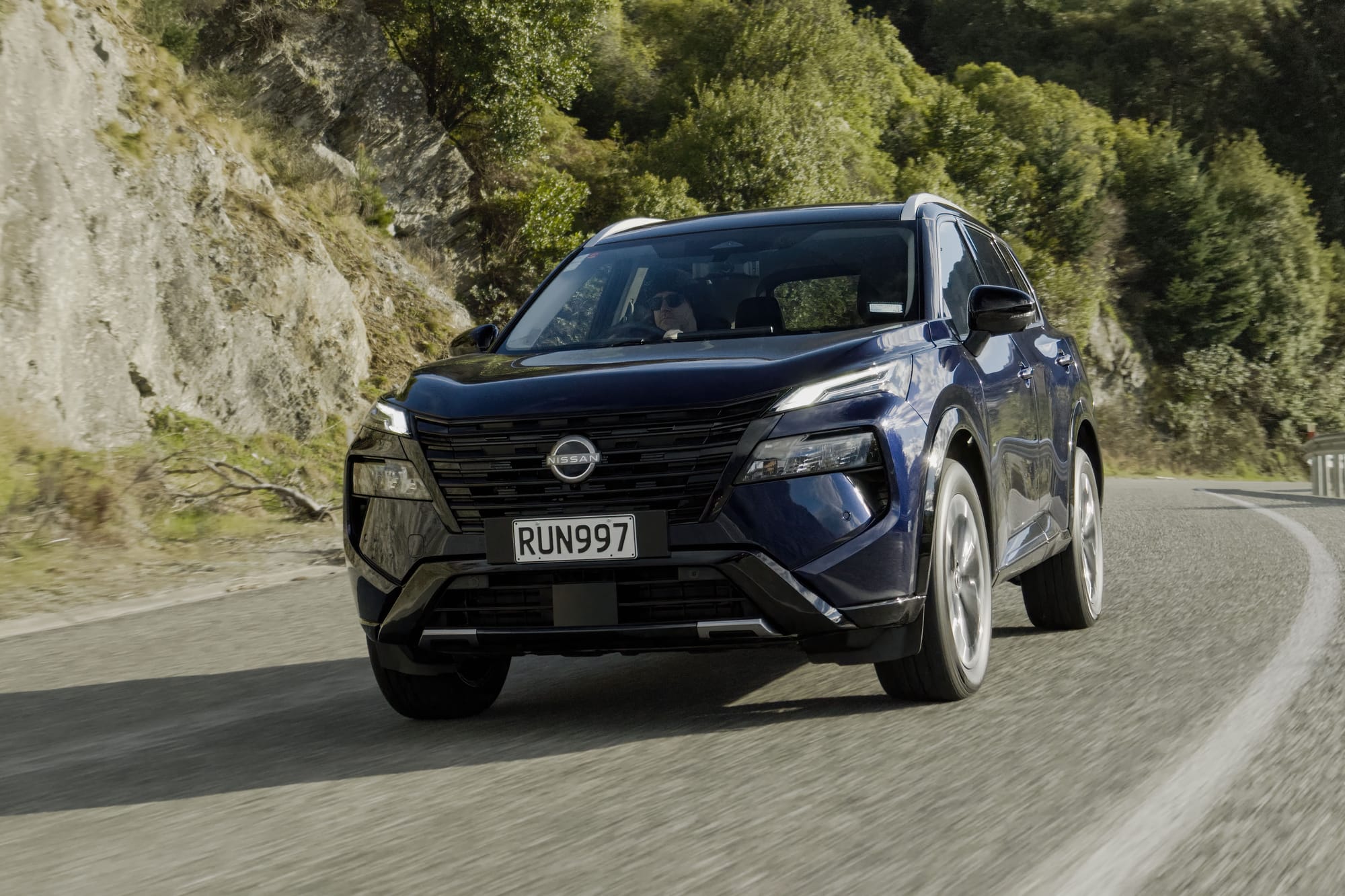
What’s under the skin of the Nissan X-Trail e-Power?
In the existing X-Trail e-Power e-4orce, a turbocharged 1.5-litre three-cylinder petrol engine is paired with dual electric motors to produce 157kW, though in the front-drive version, the rear motor has been removed, resulting in total outputs dropping just 150kW.
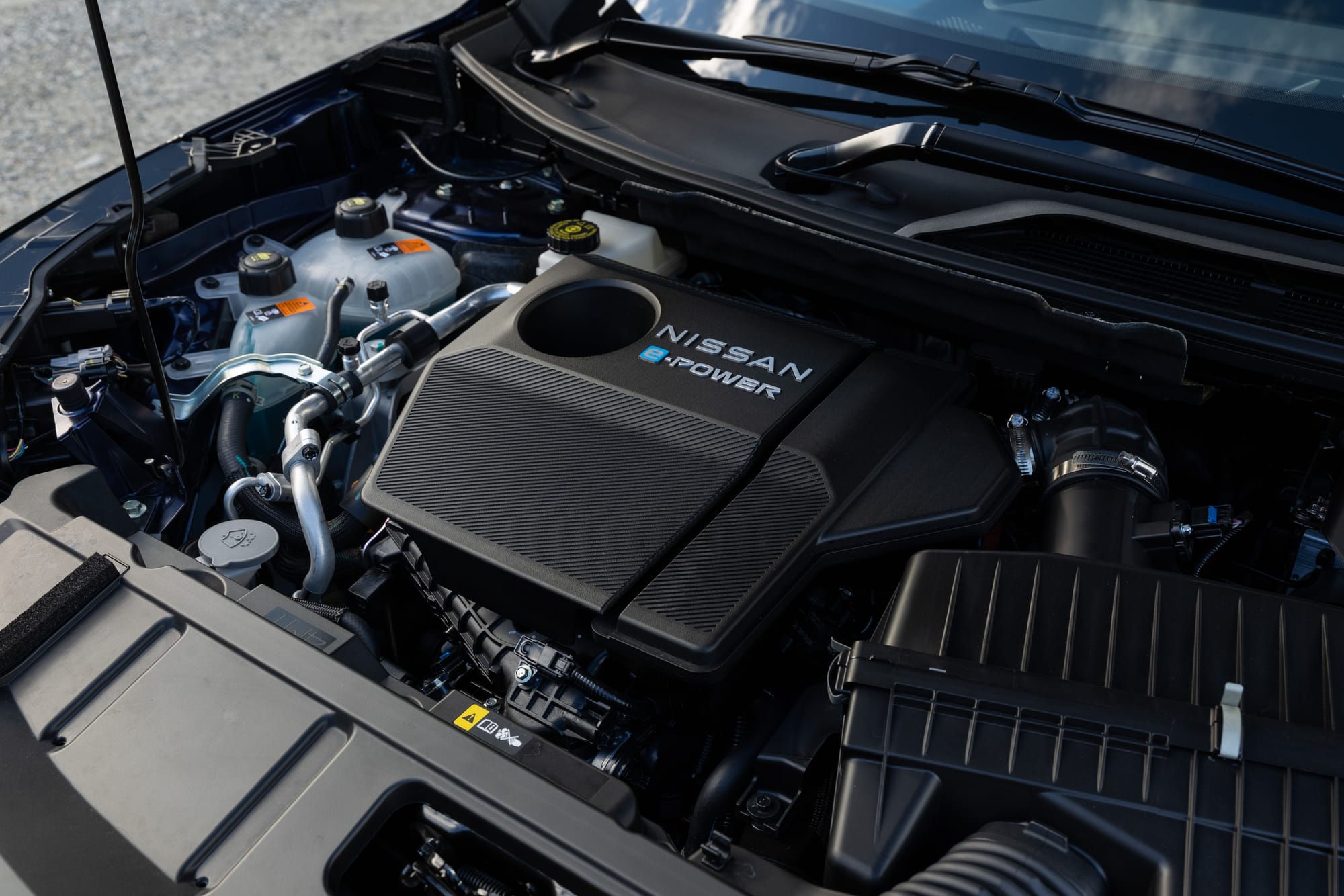
Despite a negligible drop in power, the front-drive e-Power has a claimed fuel consumption figure of 5.4L/100km, a bit less than the 6.1L/100km number of the e-4orce, and about two litres better than the standard X-Trail’s 7.4L/100km result.
While the petrol-only X-Trail runs fine on 91 octane unleaded, the e-Power variants require at least 95 octane, though they retain the same 55-litre capacity fuel tank.
How does the Nissan X-Trail e-Power drive?
The Nissan X-Trail is one of about 60 mid-sized SUVs on sale in Australia right now, and you’d hope that for all of the brand’s years in the market, it knows how to engineer a car that is easy to drive.
The X-Trail will never win awards for setting lap records, nor will it be lauded for providing cloud-like comfort, but in a market where the splitting of hairs between rivals is so commonplace, it’s a clear standout.
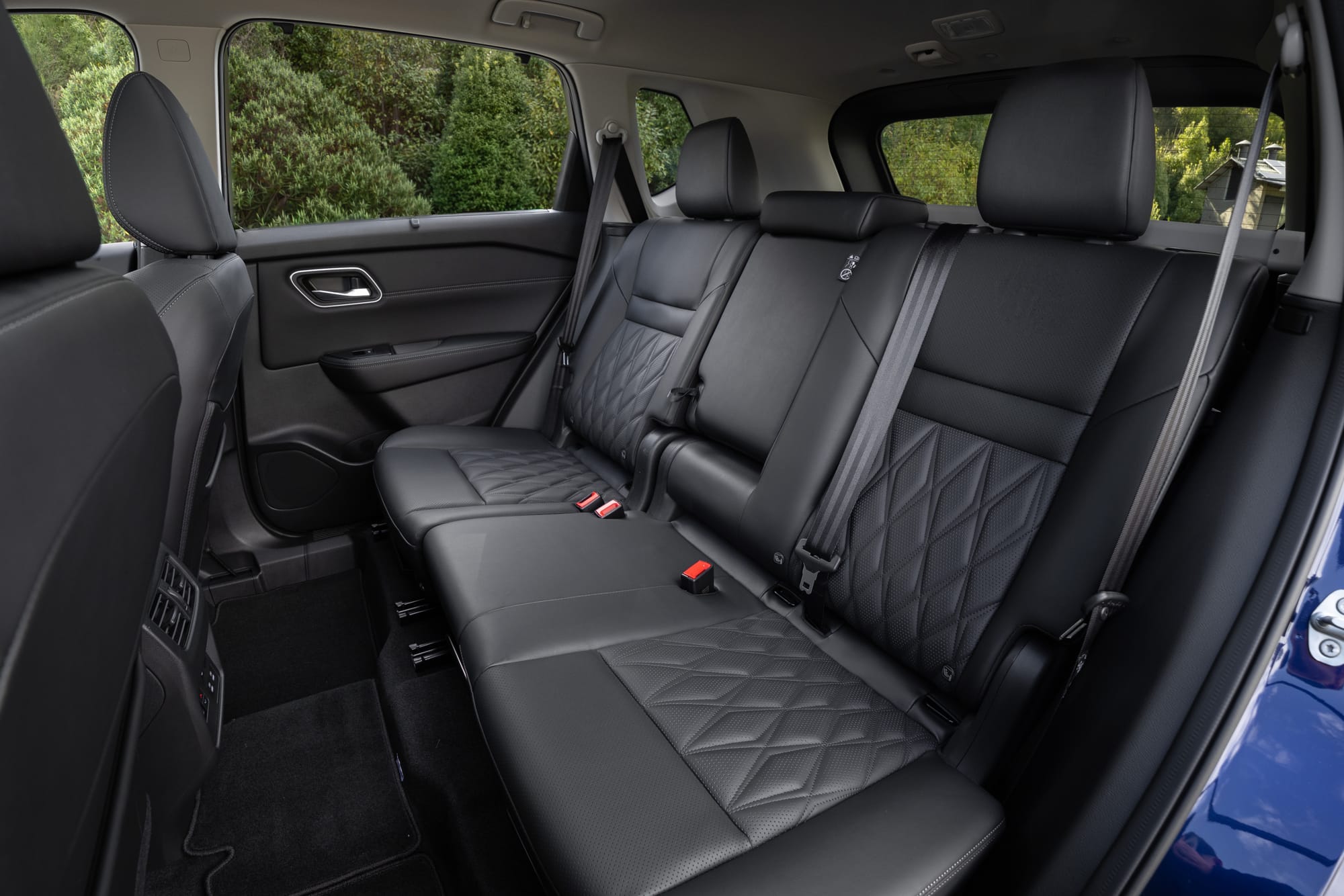
For starters, the cabin ergonomics work well for occupants of all sizes, with the driver given ample seat and steering adjustment to sit how they want, without impeding too much on second-row occupants.
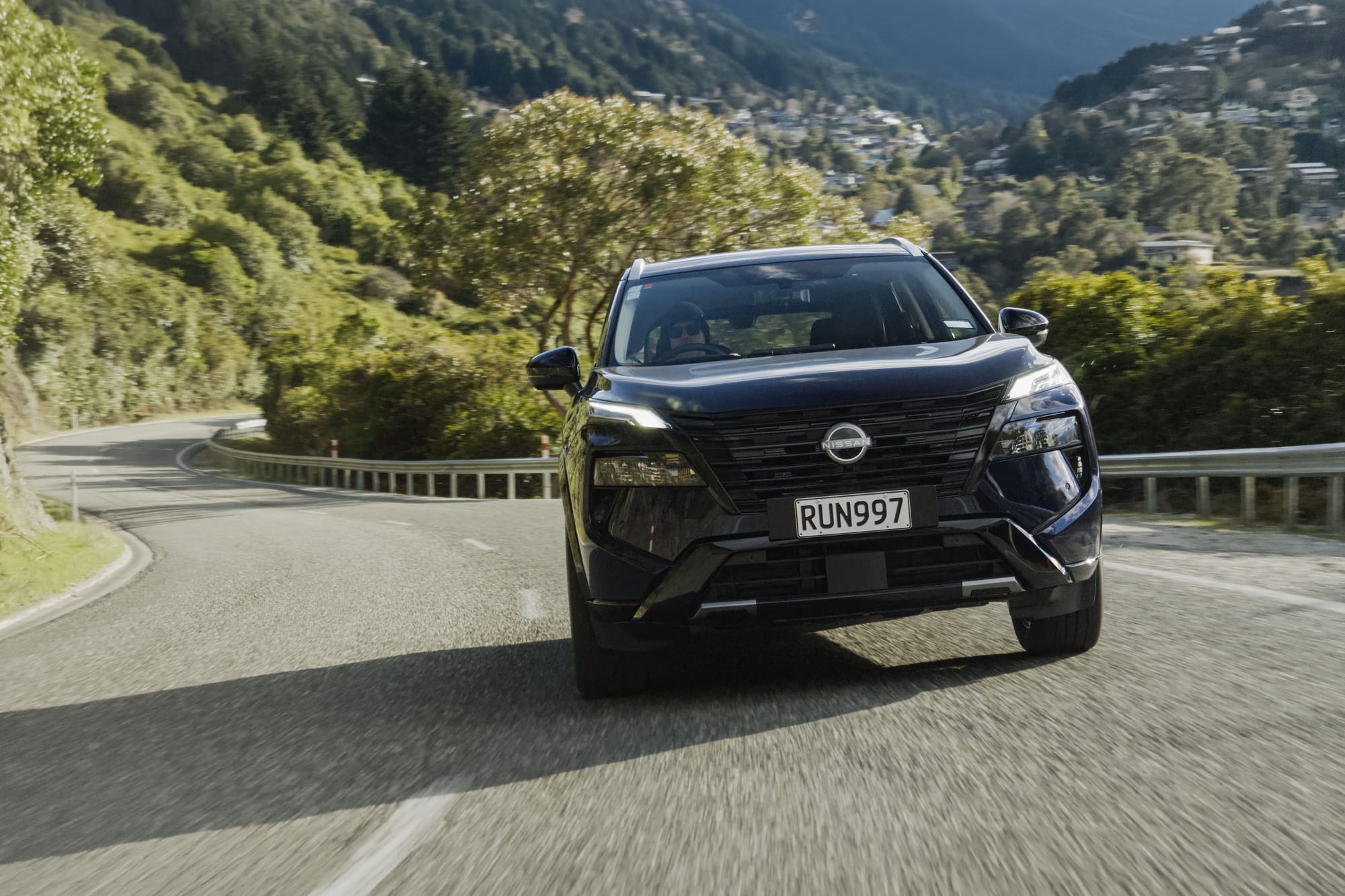
It’s from behind the wheel that the X-Trail stands out amongst its rivals from China, Japan and South Korea, being comfortable and quiet but never at the expense of its road-holding ability.
Across a drive of more than 250km through New Zealand’s Queenstown region, the X-Trail e-Power was effortless on the rough stuff as much as it was on smooth roads, with only the deepest potholes providing a cause for worry in examples with the largest wheels.
This is a hybrid SUV that is intuitive to drive and operate, aided by Nissan’s insistence on its climate controls remaining as physical buttons and knobs, rather than fall down the same path as some of its competitors by moving every possible operation to the touchscreen.
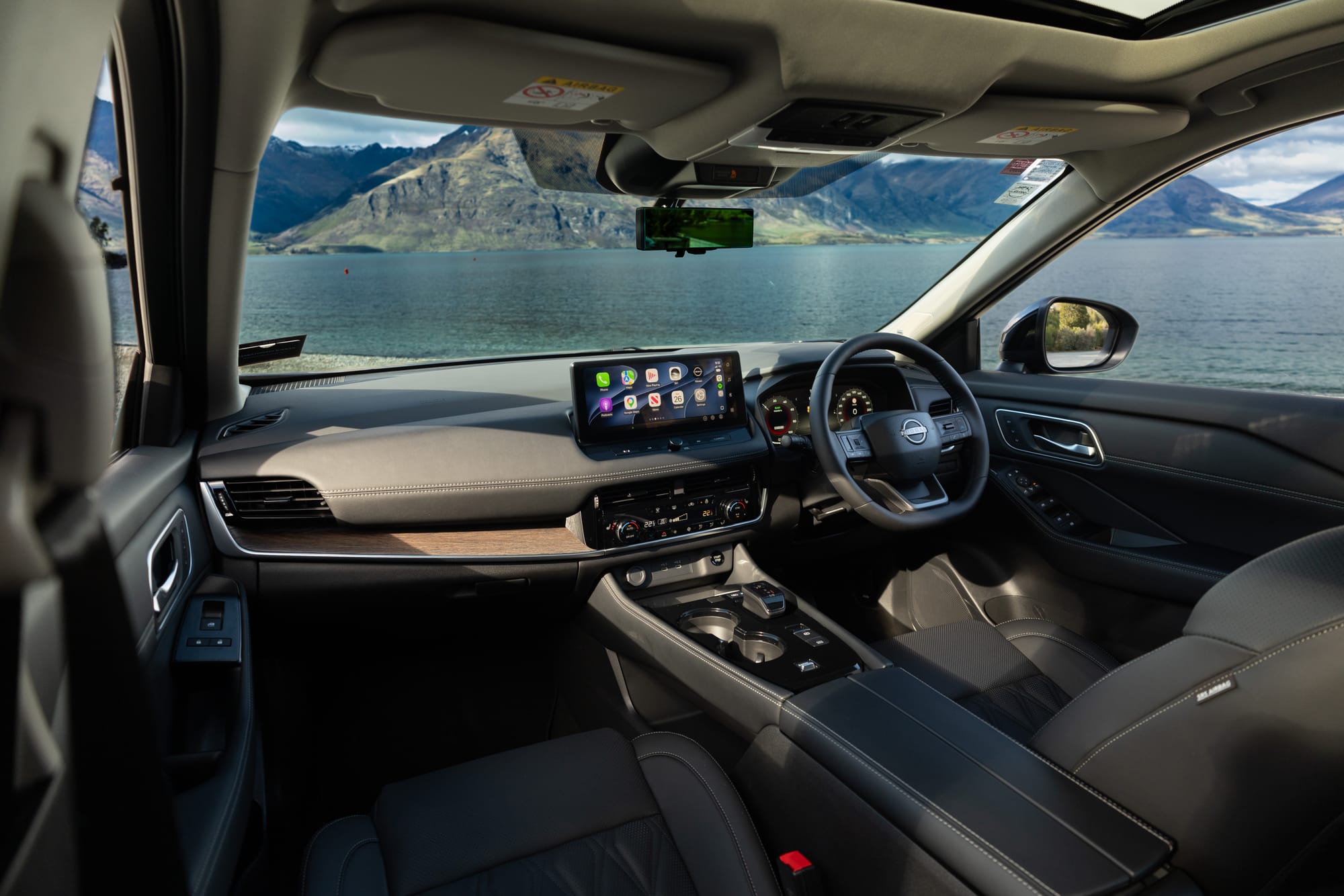
Some may argue that the interior can feel a bit dated, though everything has its place and it’s not too hard to find the control for whatever function you need, though the cruise control activation through one of the steering wheel buttons can take a little bit of time to figure out for those unfamiliar with it.
Power delivery from the hybrid system is linear. It’s not rapid and it’d be unfair to expect it to be, given this is a circa 1700kg family SUV with 150kW driving the front wheels.
That doesn’t mean it’s a slug, as the instant torque from the electric motor means overtakes on narrow highways can be dealt with safely and quickly, though in slippery conditions the lack of rear driven wheels could provide something of a disadvantage.
It is possible too to get the front tyres to break traction and engage the traction control system, something I discovered while navigating a T-intersection onto a highway, needing to get up to speed quickly.
Thankfully there’s next to no torque-steer despite all the load being put on the front tyres, with the calibration of the traction and stability control doing its job to safely get the X-Trail e-Power moving straight.
The e-Power system also provides another point of refinement compared to the petrol X-Trail, with any mashing of the throttle not resulting in an engine operating at high revs due to a CVT, and instead delivering a quiet experience in the cabin.
If there’s a criticism of the Nissan X-Trail e-Power it’s that the fuel economy claim wasn’t achieved despite some of the conditions being conducive to it. Across the drive my car returned a result in the high 6L/100km range.
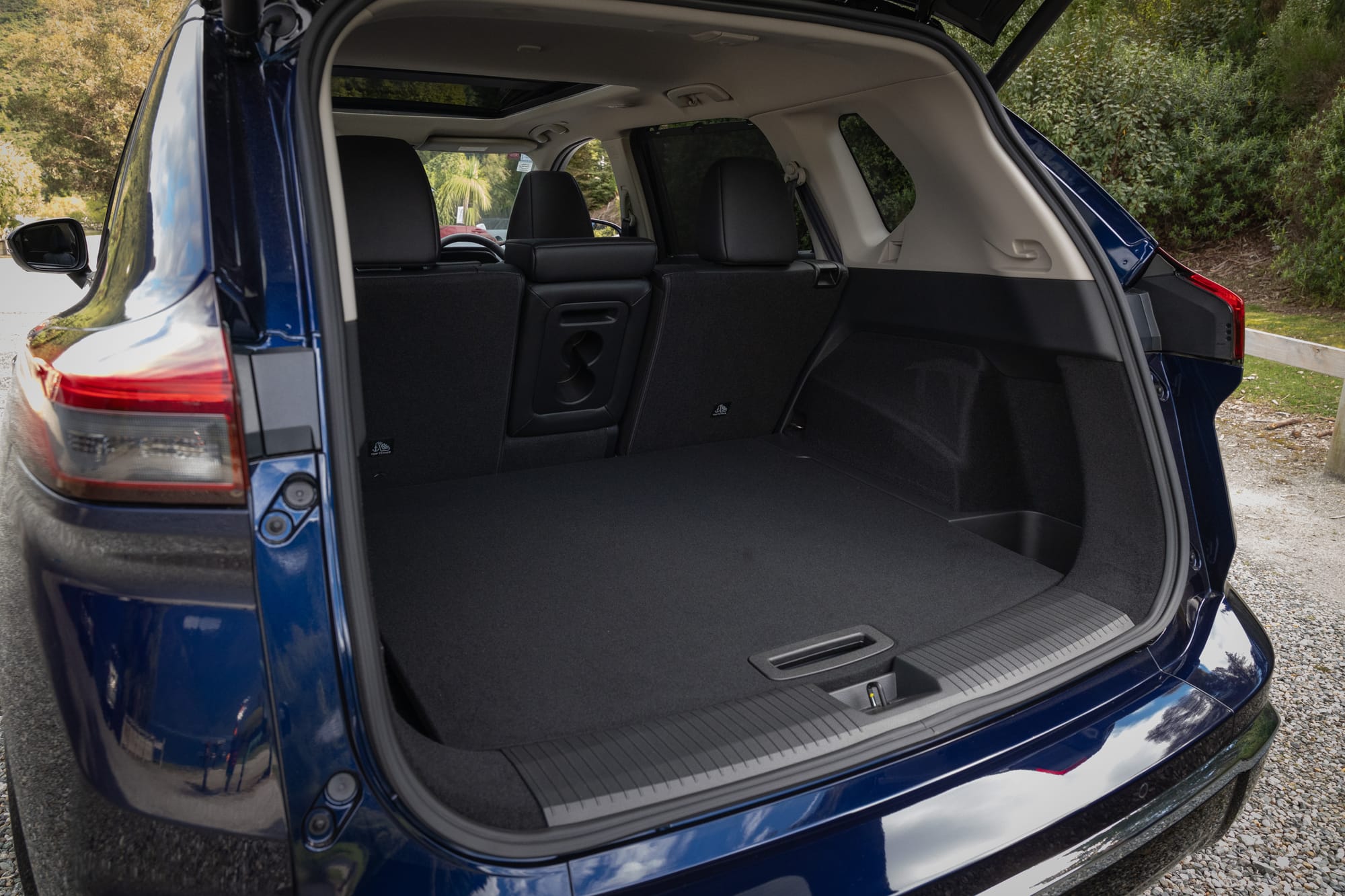
There’s also another drawback for families looking to get into the X-Trail, with the e-Power versions coming as five-seaters only, rather than offering the seven seats of some of its petrol derivatives.
Should you buy a Nissan X-Trail e-Power?
At a time when the new-car market – especially that for mid-sized SUVs – feels like it’s overwhelming in the number of options available, it’s nice to be reminded that the likes of the X-Trail are out there.
It may not be the fastest, the most affordable or offer the most equipment, but as I spoke to one of my industry colleagues about, it’s the kind of car you’d recommend to a friend.
Though the e-Power hybrid system seems complex, it’s enough to give an EV-like driving experience without the hassle of charging either at home or at public fast chargers.
The ownership proposition is made even more enticing through Nissan’s 10-year warranty offering and its capped price servicing plans, though as always it pays to shop around to find out if the X-Trail e-Power is the right fit for your family.