
2026 Audi RS3 review: Five cylinders of imperfect perfection
The future of the Audi RS3 and its sonorous five-cylinder engine is unclear, so what better time to finally have a go in one?

If someone held a gun to my head and said I could only keep three types of engines, my answer would come quick and easy: V8s, flat-sixes, and inline fives – but until now, I’d never tried the latter.
I’ve driven 4.0-litre Porsche Boxsters and enough V8s to waste a few dead dinosaurs, but my exposure to five-cylinder engines was limited to videos of old Audi Quattros and IMSA 90 GTOs.
That was until a few weeks ago when I finally got the chance to drive the current Audi RS3 sedan, a car which seems like it might be closing in on the end of the road.
The RS3 launched in 2015 in the ‘8V’ A3 lineup, becoming its high-performance flagship, offering similar looks to the Volkswagen Golf R-twinned S3, but with a turbocharged 2.5-litre five-cylinder petrol engine under the bonnet.
This combination of small car and relatively big engine has remained for more than a decade, and was most recently brought into its latest generation in 2021, with a subsequent facelift coming to Australia last year.
The hot hatch – or in this case, high-powered small sedan – market continues to evolve, though the RS3 has been a near constant, with its winning formula only tweaked slightly to stay ahead of the same.
So with all of the pathos out of the way, here are some details on the Audi RS3.
How much does the Audi RS3 cost?
In Australia, prices for the Audi RS3 start from $104,727 before on-road costs for the hatchback, and rise by $3000 to $107,727 plus on-roads for the RS3 sedan.
That represents a rise of about $14,000 since the current ‘8Y’ generation model first launched here in 2022, though it keeps it below the price of the Mercedes-AMG A45 ($122,500 plus on-roads) and the BMW M2 ($126,100 plus on-roads), the latter of which offers similar performance.
Compared to the four-cylinder S3, the RS3 is also $26,000 dearer.
What’s under the skin of the Audi RS3?
As previously mentioned, the heart of the Audi RS3 is its engine, with 2.5 litres of five-cylinder glory nestled under the bonnet, wedged between the strut towers with little room to spare.
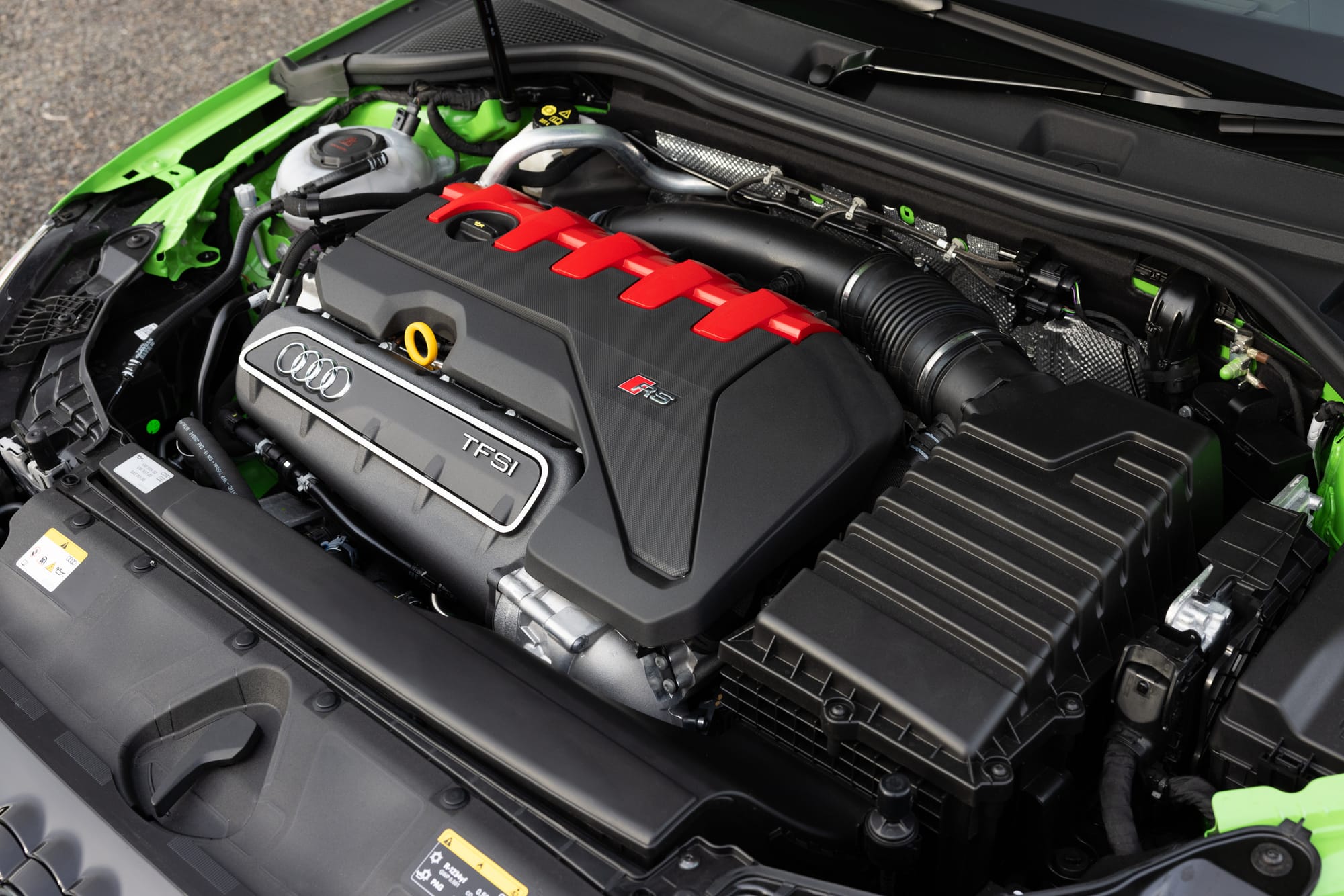
Capable of producing 294kW and 500Nm, a 0-100km/h time of 3.8 seconds is claimed and entirely believable, thanks to the all-wheel drive system and quick seven-speed dual-clutch automatic transmission.
The most notable change for the current 8Y RS3 was its move to a different all-wheel drive system, ditching the notoriously front-biased Haldex to a more rear-biased setup – incorporating a torque splitter which can send the bulk of the power to the rear wheels.
What features does the Audi RS3 have?
The equipment list on the Audi RS3 isn’t what you’d call limited, with the sedan and hatch coming well-loaded from the get-go.
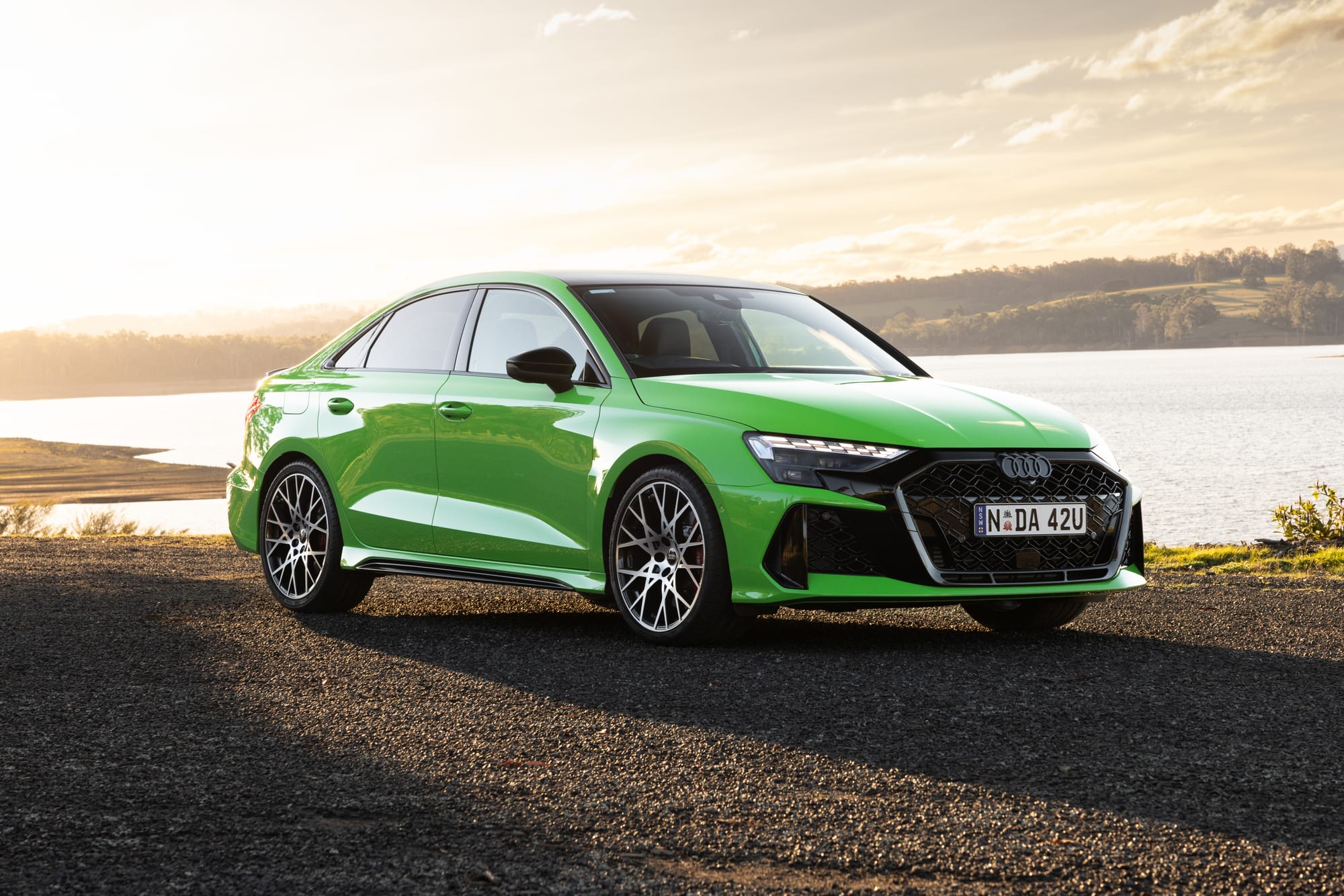
On the outside, there are 19-inch Audi Sport wheels – five-Y spokes as standard, or 10-spoke cross designs for an extra $1200 to $1400 – as well as matrix LED headlights, and red brake calipers.
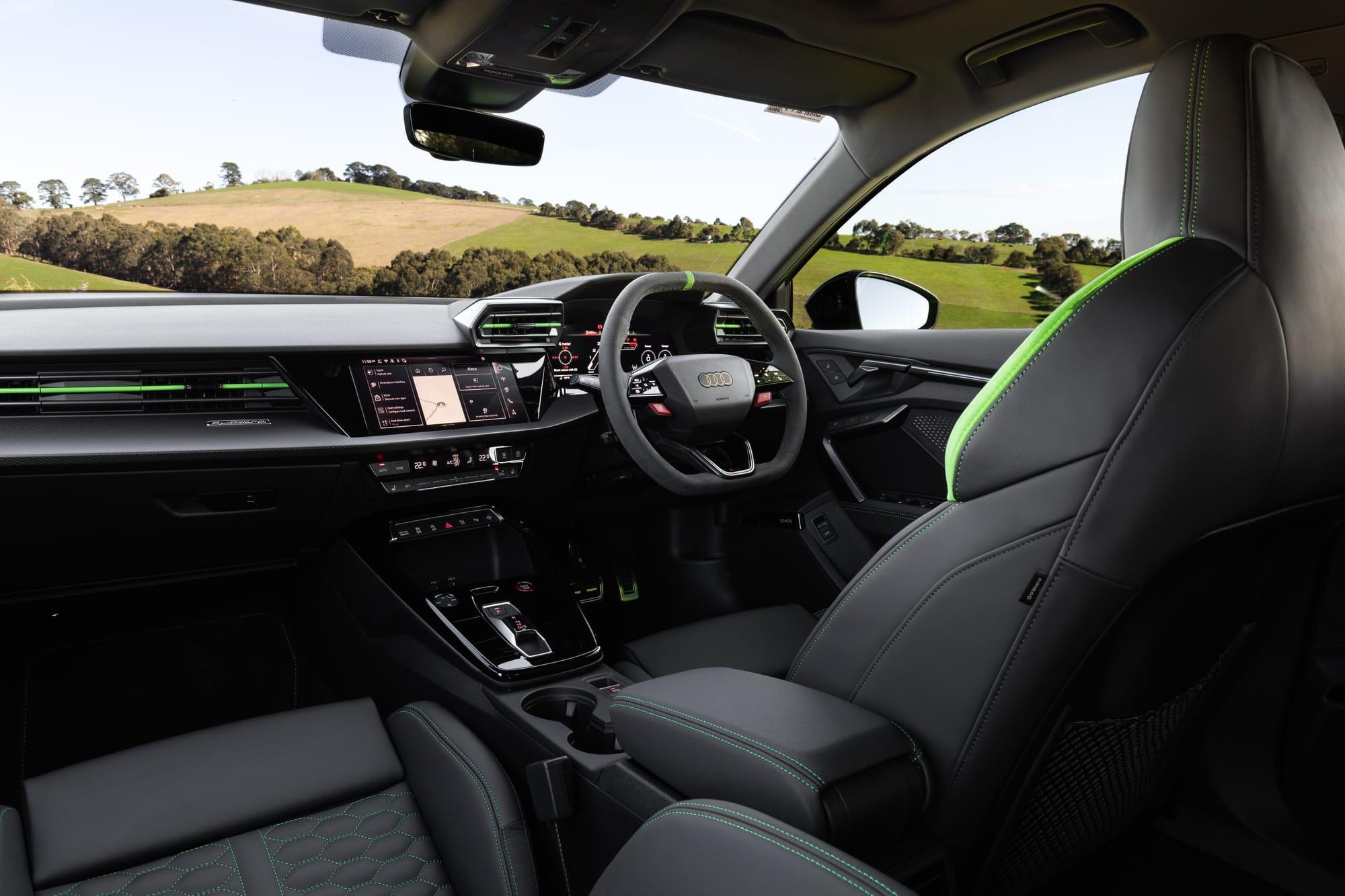
Inside, occupants are treated to standard Nappa leather seat upholstery on the heated front buckets, a flat-top and bottom steering wheel with haptic controls (more on those later), a panoramic glass sunroof, a 12.3-inch digital instrument cluster, 10.1-inch infotainment touchscreen, 15-speaker Sonos sound system (I’ll get to this), a head-up display and tri-zone climate control.
Though there’s plenty of standard equipment, you can go a bit silly with the options too, which can start to drain the wallet quickly.
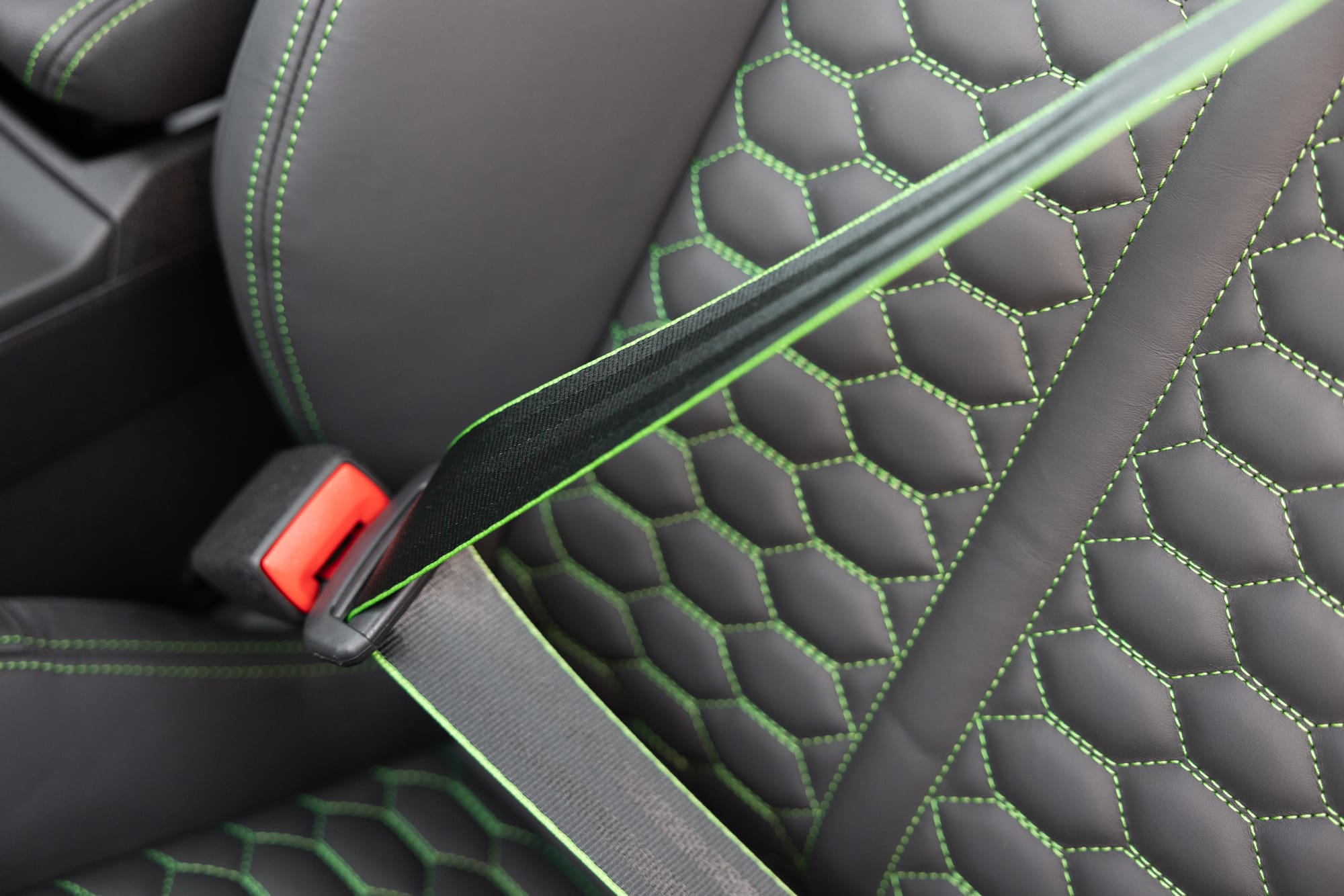
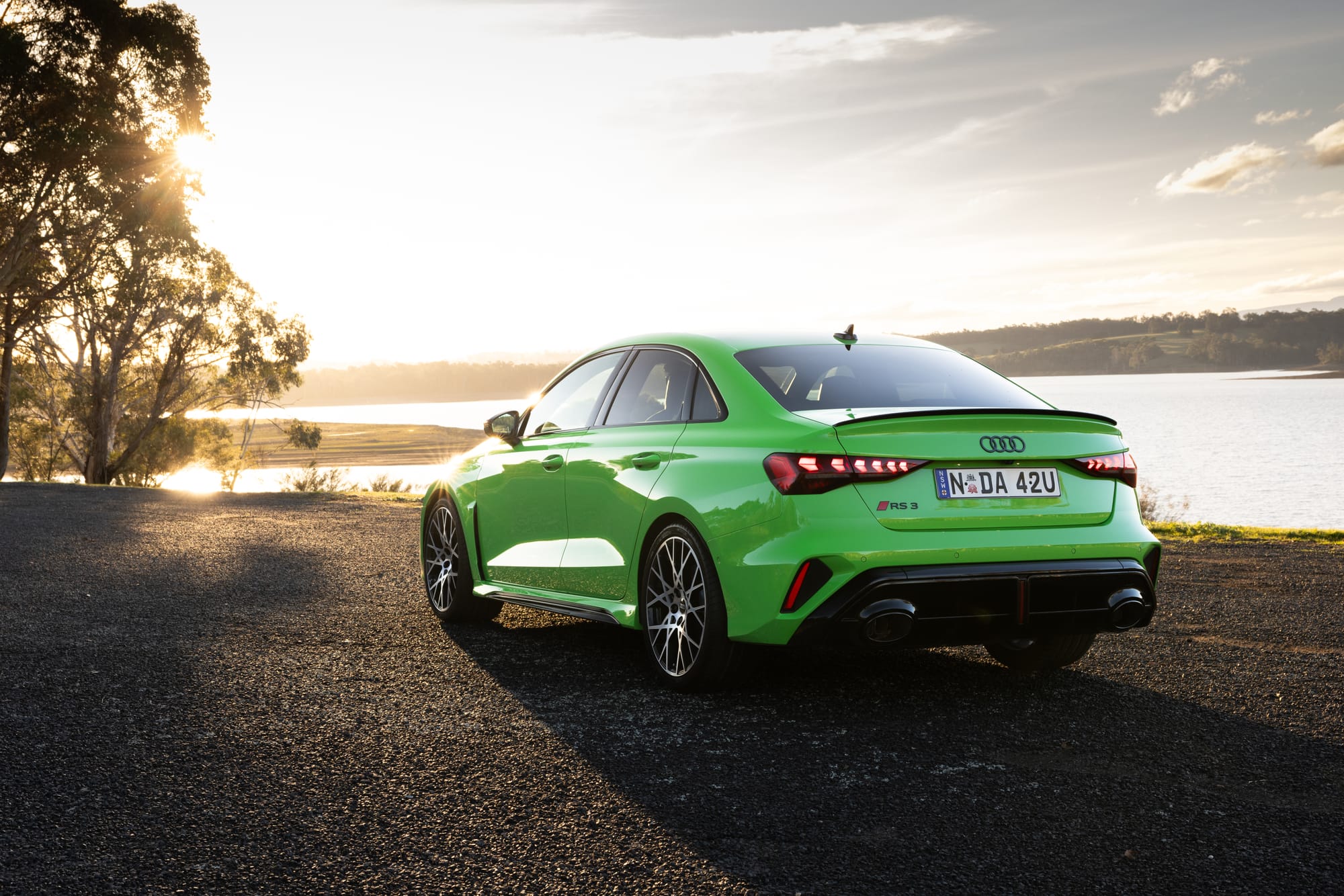
The Carbon package fitted to this car added another $7400 for its gloss carbon exterior highlights, while the green RS design package plus is an additional $2150, bringing very bright green highlights to the interior to match the Kyalami Green outside.
Not fitted to the test car were its optional ceramic brakes, a $10,800 extra.
How does the Audi RS3 drive?
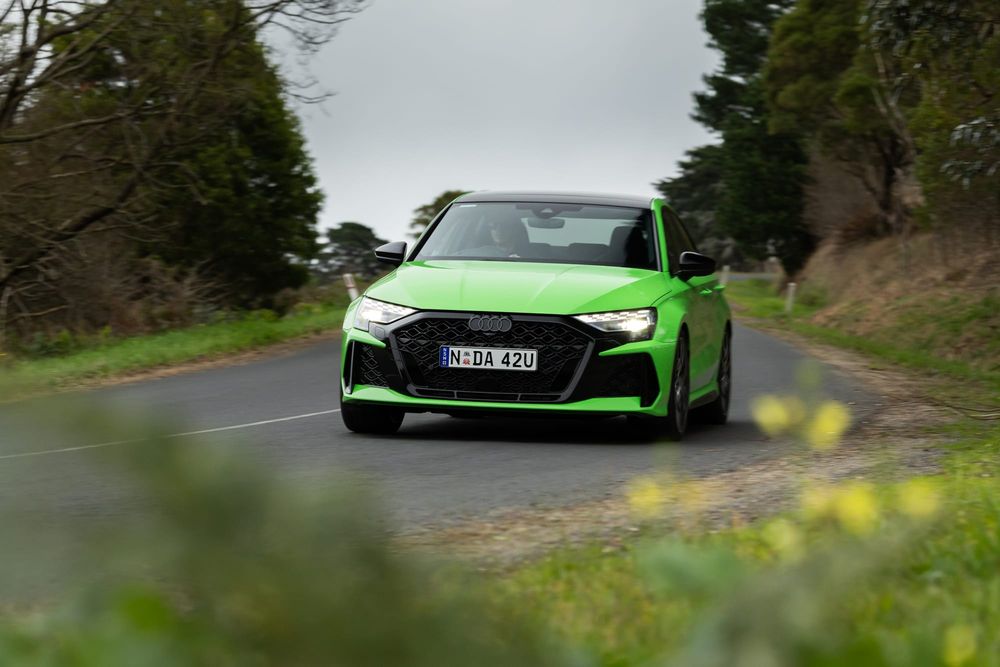
Once you walk through the blindingly bright green exterior and look past the slightly duller green interior, you sit in a very well positioned seat, nice and low with plenty of scope in the wheel adjustments to get it sitting just right.
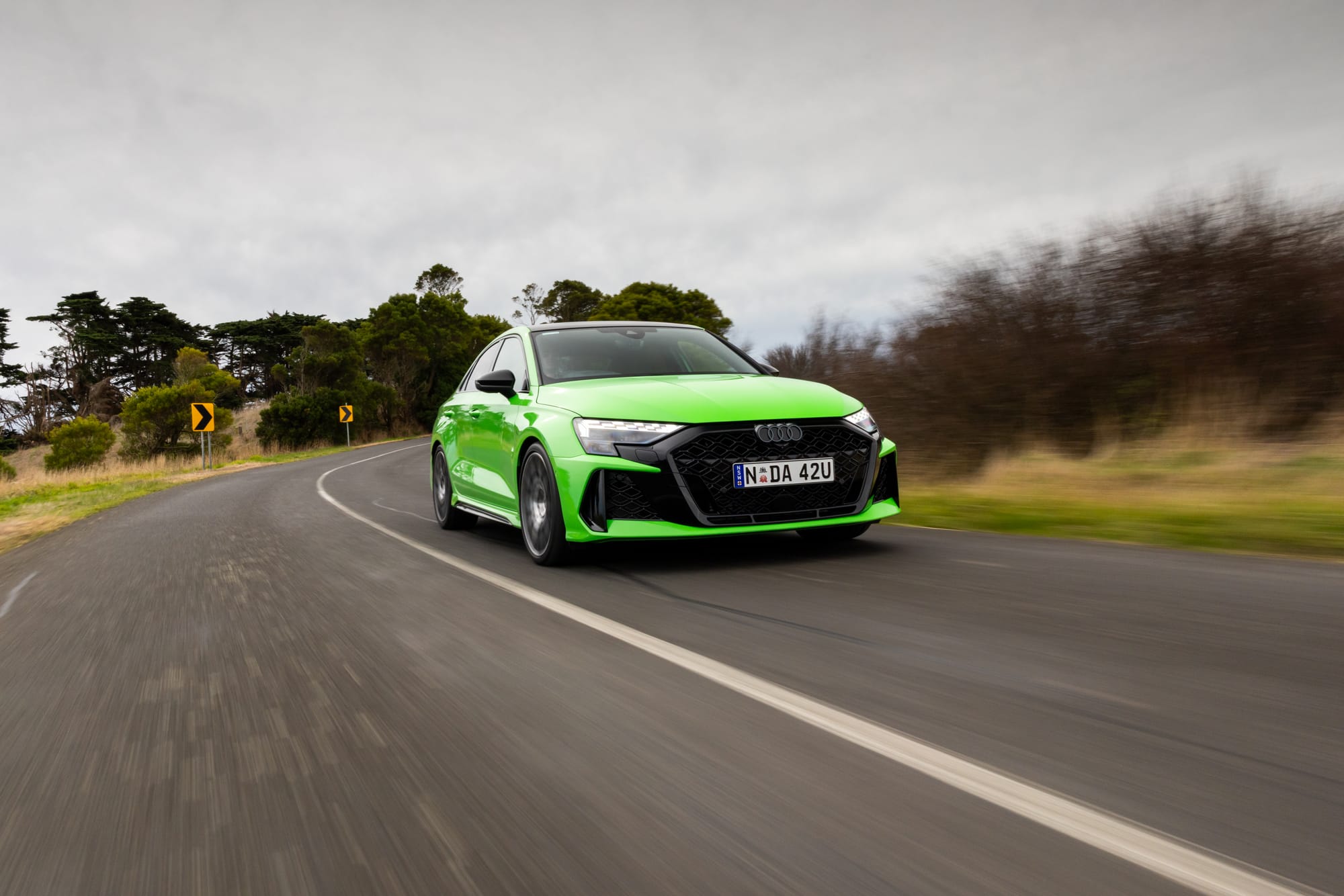
And you’ll want it that way too, as the Audi RS3 provides a drive that isn’t worth wasting on being uncomfortable.
Before setting off, I must confess that the Volkswagen Group’s MQB platform underpinning the RS3 is no stranger to me, as our family car is a Skoda Superb while the previous house vehicle was an Octavia RS.
It’s a chassis and setup I’m familiar with, right down to the RS3’s sports pedals which have been lifted straight from the VW Group parts bin. They’re perfectly fine, but maybe if I was spending more than $100,000 on a car, I’d want something nicer than what you can get in a decade-old Skoda.
But for the most part, that’s where the similarities end, as the sum of the RS3’s parts are just about as good as you’d expect them to be, not only for the price you pay but the hype this car gets.
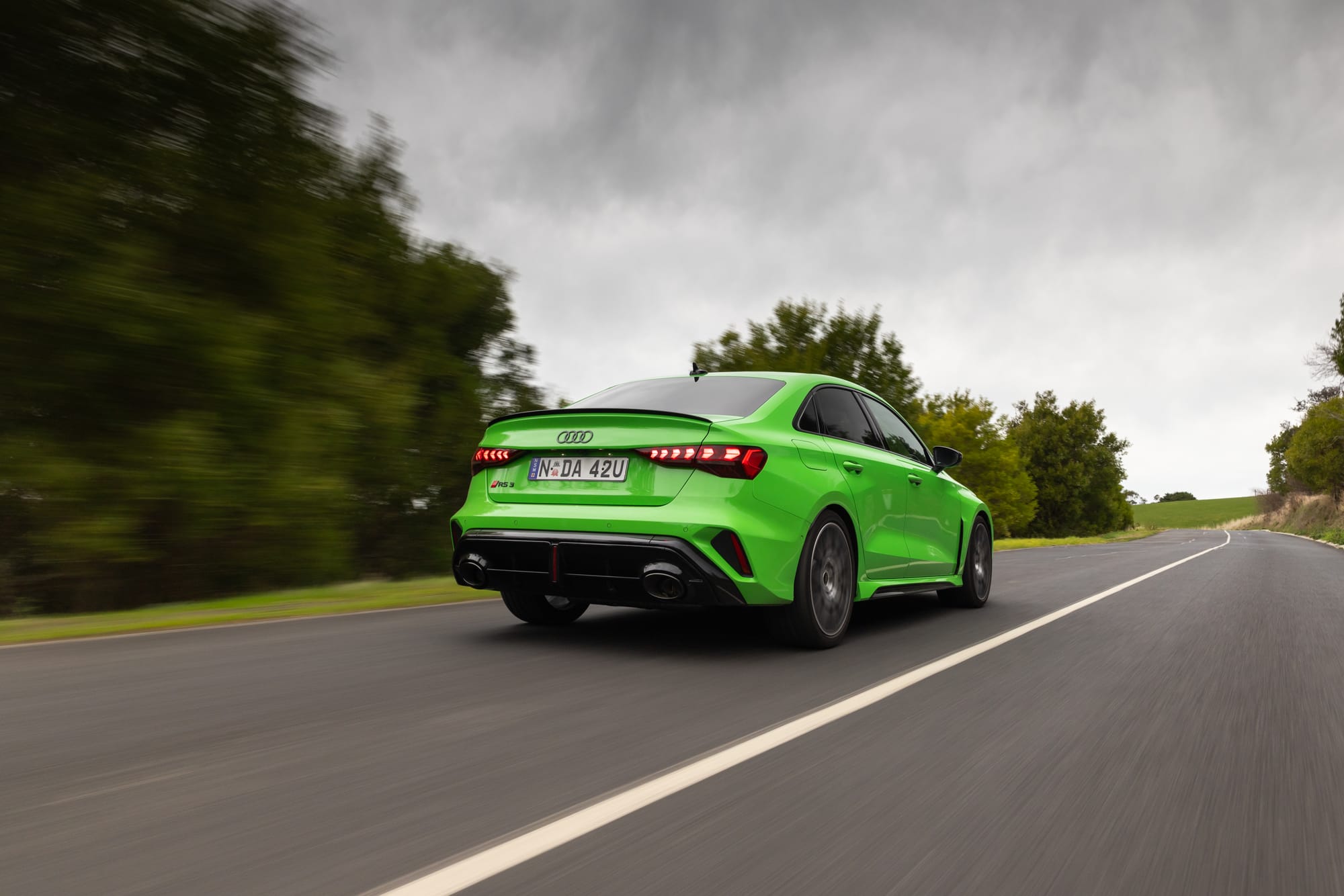
For starters, the ride is sublime. The 19-inch wheels and RS suspension could easily be forgiven for being unforgiving, but the adjustability of the adaptive dampers means that even in the comfort and normal modes, they handle bumps with ease.
It’s arguably in these modes that the RS3 is most at home, soaking up the imperfections in the road akin to a tarmac rally car, rather than trying to bash them down like a touring car.
Despite having never driven previous RS3s, I did get to have a steer of the last generation S3, which featured the same unloved Haldex all-wheel drive system.
At the time, I thought it felt like driving a Golf GTI with the suggestion that maybe some power could go to the rear wheels under load, with giving it a boot full of throttle still enough to overstimulate the front tyres.
Thankfully, no such problem exists in the RS3, where even in its standard drive modes it never feels like you’re asking too much of the front axle – probably unsurprisingly given the wide 265mm tyres doing the steering and power, with narrower 235mm rubber at the rear.
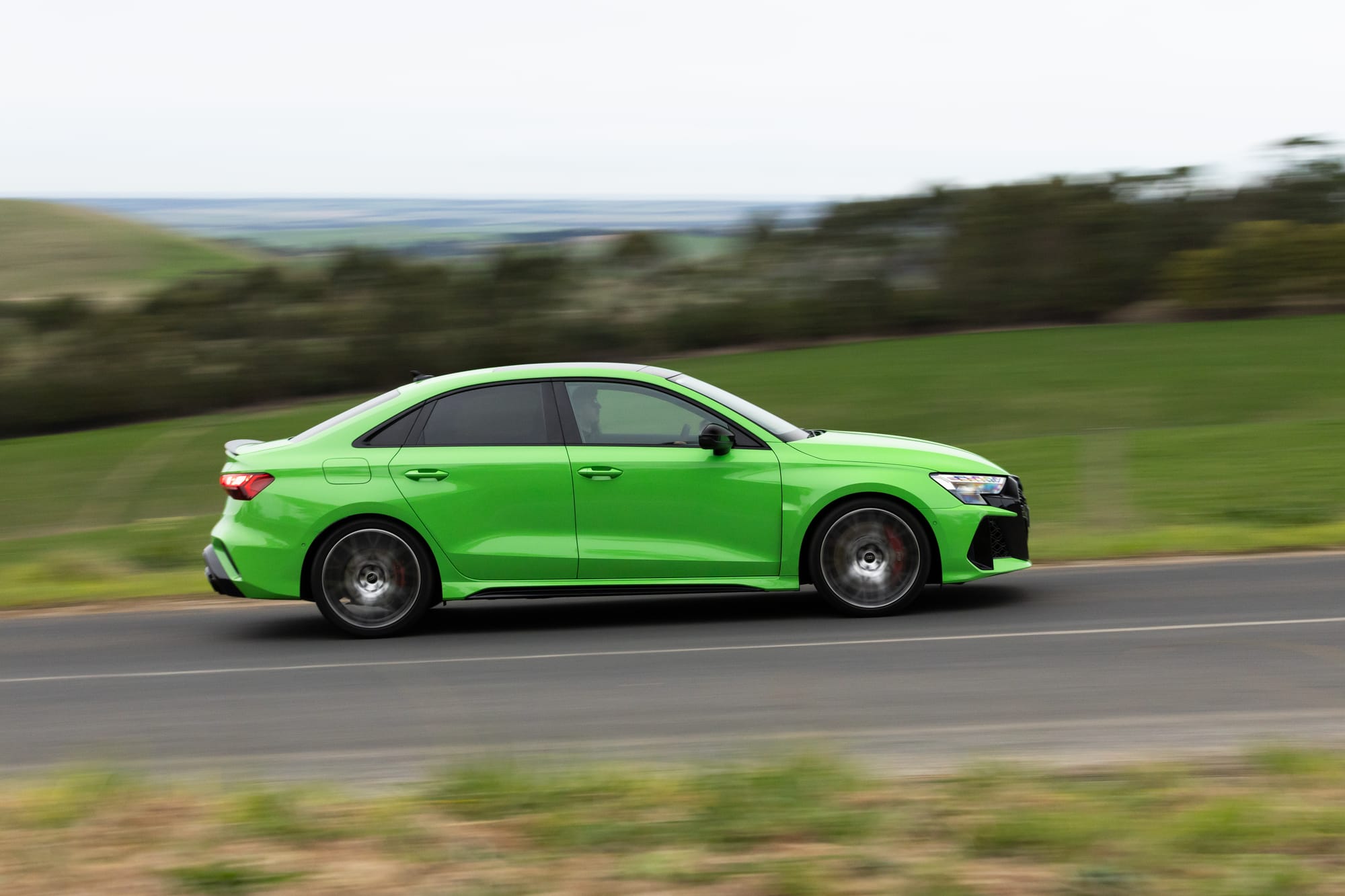
Planted is the word that comes to mind when driving the RS3 in almost all conditions, with that move to a more rear-biased system but still retaining its grippy front end providing a pleasantly neutral driving experience.
Of course, the real star of the show is the engine. As much as I’ve come to enjoy quieter, more sedate engines as I’ve gotten older, the five-pot begs to be put in its loudest exhaust mode all the time.
The first time I got to pin it and ride the wave of torque gave equal parts of pleasure from the noise coming out of the back and the sensation of speed from behind the steering wheel, as it pushes you down the road.
Its seven-speed dual-clutch automatic is as sharp as we’ve come to expect from VW’s DSG boxes, effortlessly punching its way through the gears, while delivering a burbly throb each time it does so.
If there’s any major surprise with the RS3, it’s that it isn’t as savage as you’d expect when you don’t want it to be. Leave it in its standard drive modes and you could be forgiven for thinking you’re driving an A3, such is the double-edged nature of the car.
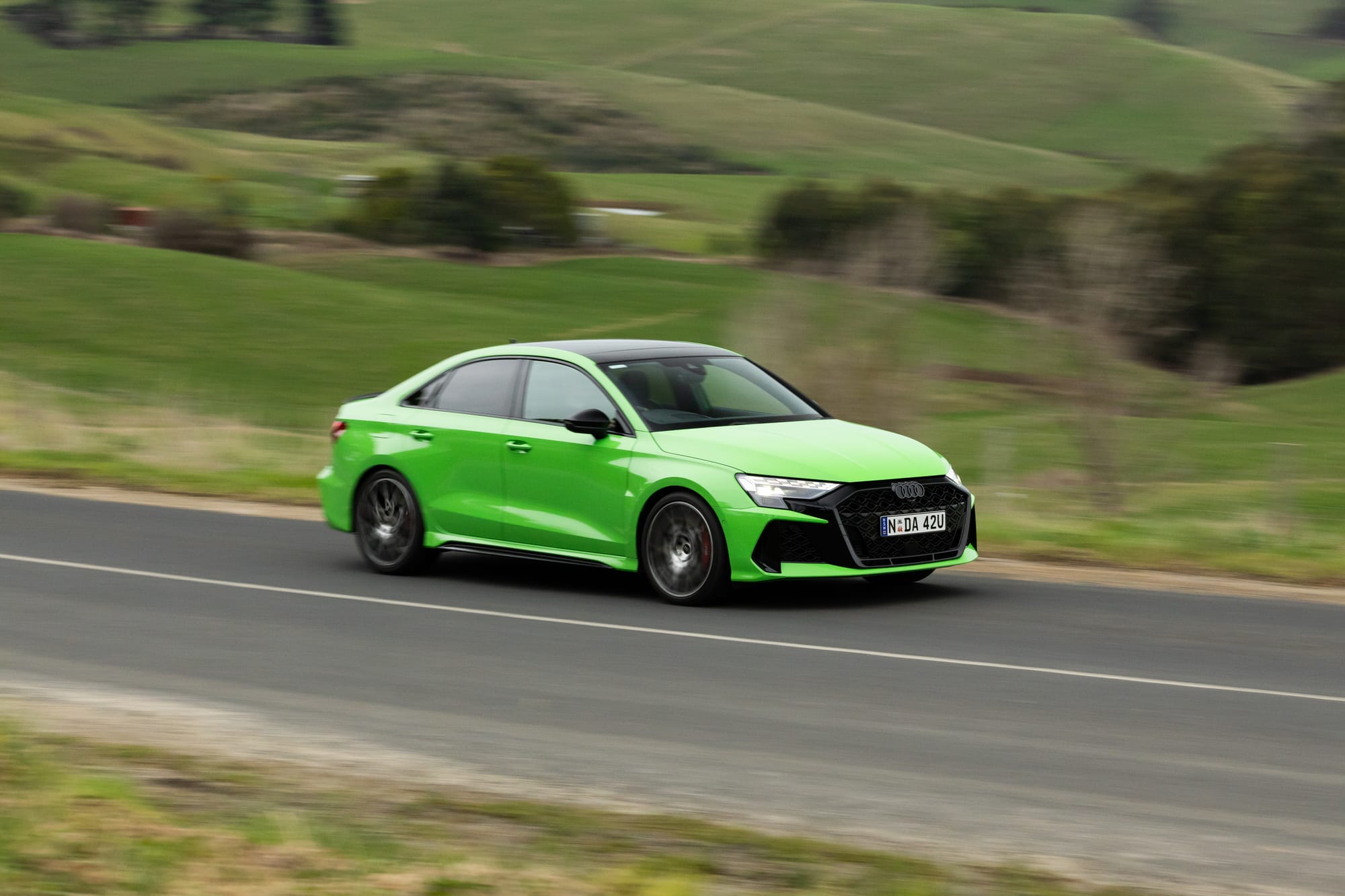
The engine note is addictive, though I was pleased I wasn’t the only one getting a kick out of it. My daughter kept asking for more, as did my wife – so much so that she begged to take this Kermit green sedan to her work.
As enamoured as we were with the RS3, it didn’t take long for some of its more annoying flaws to rear their head, and they’re not things to easily look past.
The steering wheel, though funky in its semi-rectangular design, is incredibly annoying as it is a reminder of the Volkswagen Group’s biggest failure: haptic controls.
Numerous times I accidentally swiped away from a song, turned the volume down too much, or changed the dash display page because I had the audacity to lightly run my hand over the wrong not-button while driving. Maybe it’s something you can get used to not doing, but when you’re used to physical controls, it’s an annoying thing to have to re-learn.
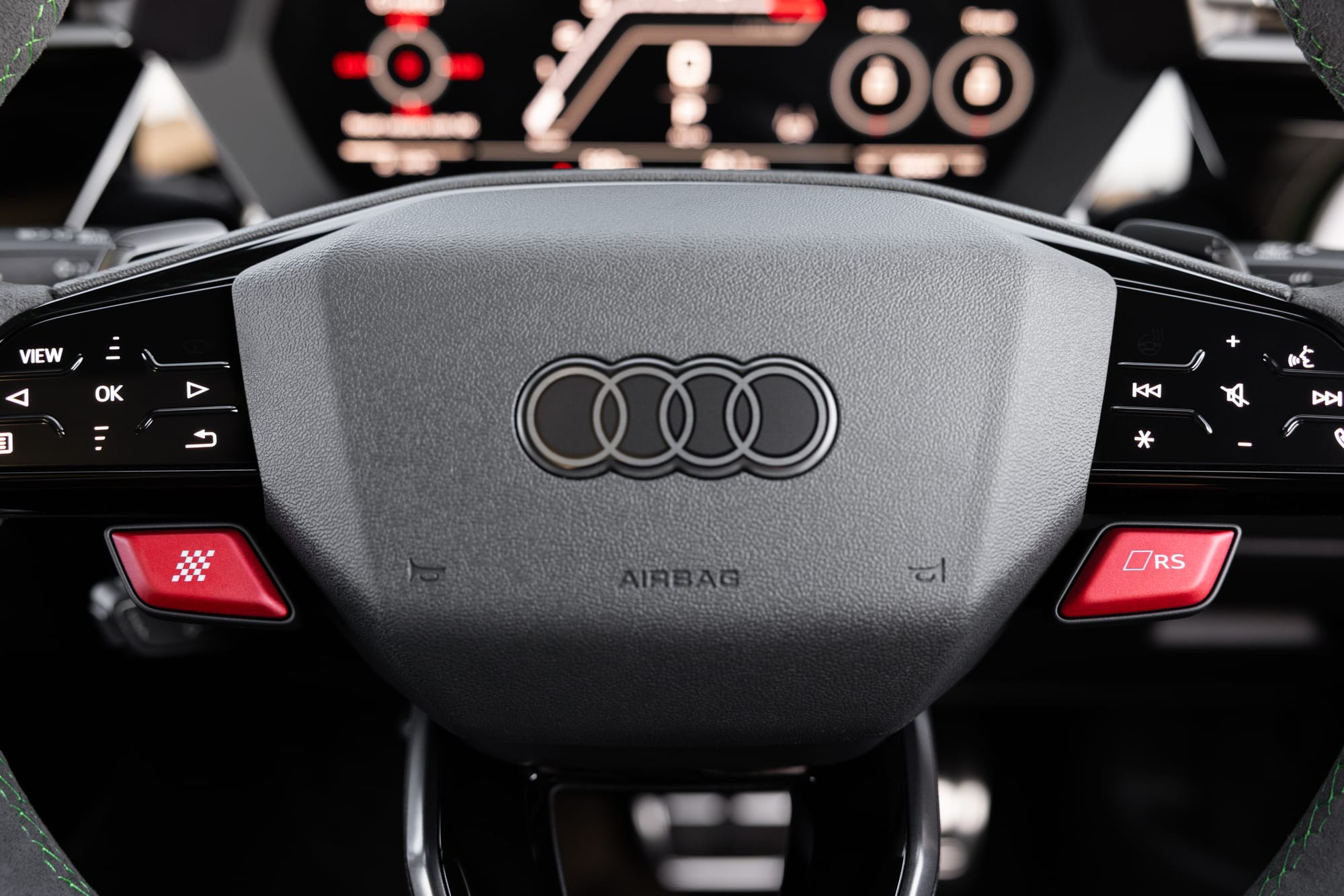
Thankfully Audi has had the sense to keep switches for its climate controls, requiring an instinctive move of the fingers to operate. The infotainment touchscreen is all-digital, while the rotary control knob on the centre console mixes haptics with physical controls.
While the undisputed highlight of the RS3 is the noise its engine makes, its biggest weak point from my personal experience is the lack of a good sound from its speakers.
Put simply, the 15-speaker SONOS sound system – complete with 680 watts of power – sounds worse than the 10-year old Canton system in my Skoda, not only while driving but at a standstill.
Somehow they’ve managed to create a system with no good bass, tinny treble and just about nothing in between. Using Apple CarPlay and Spotify, I leave my device’s equalisers off and use a car’s native system, and it saddens me to say the RS3’s is one of the worst.
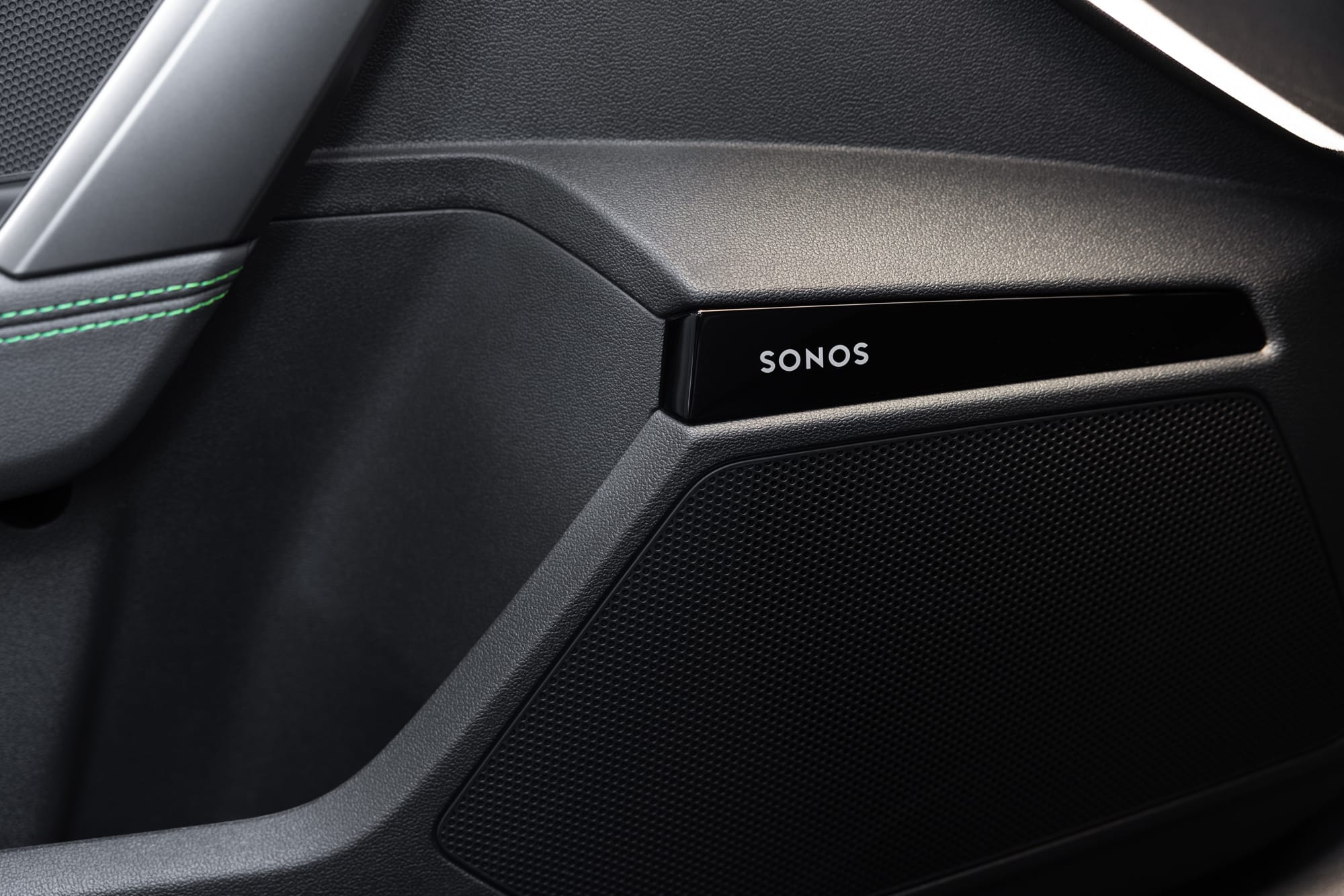
No amount of setting fiddling could produce the right sound, which would be beyond disappointing to buy a premium product such as this only to find you get a worse listening experience than what’s offered in a Toyota HiLux.
It’s a shame too, as the bigger Audis such as the RS7 have Bang and Olufsen systems which deliver on the hype.
Sure, the five-cylinder engine is worth listening to, but sometimes you just want to hear the highs and lows of your favourite songs.
Should you buy an Audi RS3?
So, the Audi RS3. A complex genius, albeit one with flaws.
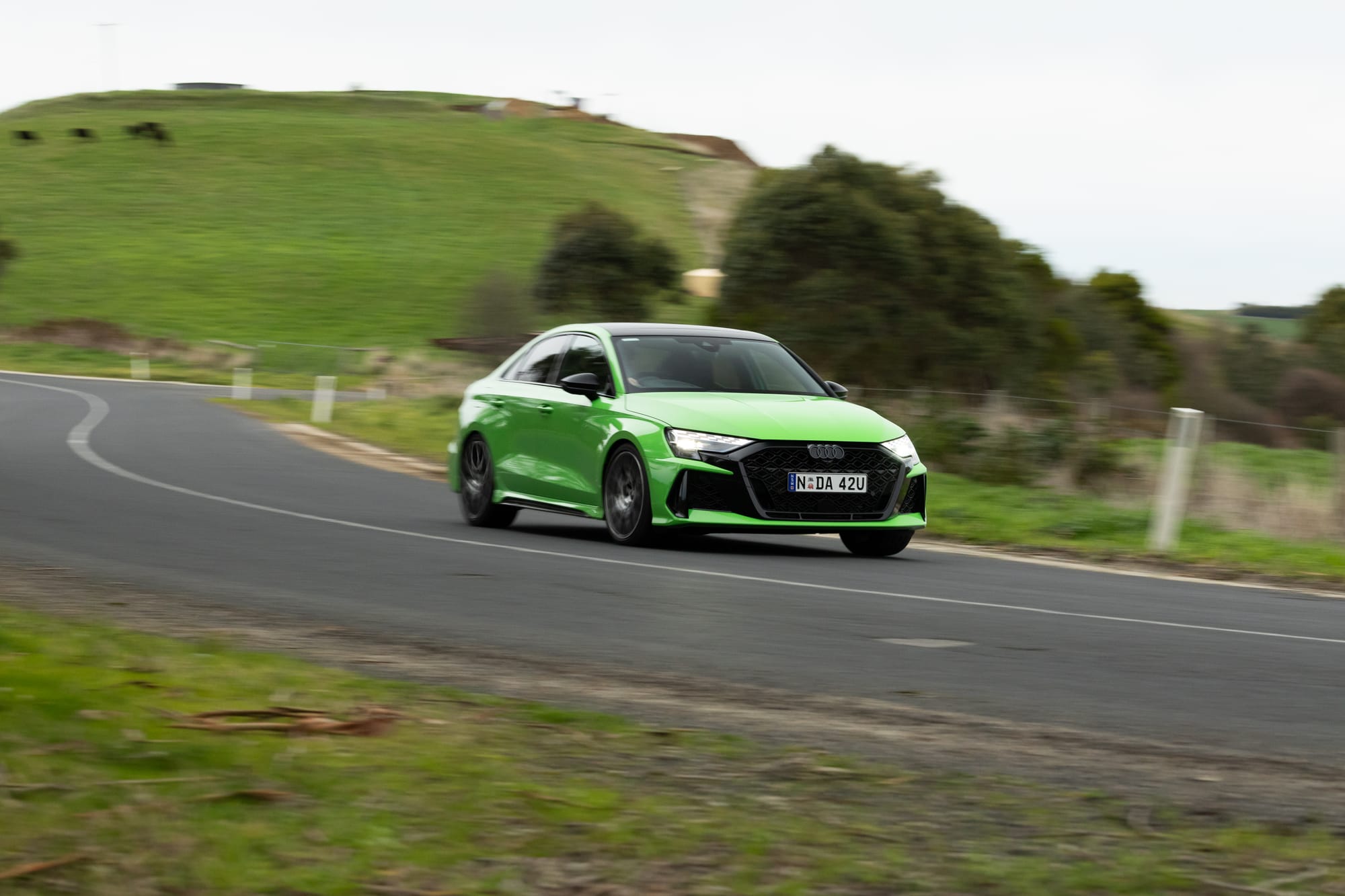
The driving experience is, justifiably, one of the best you can get in this class of car, but you’ve got to pay the extra money to get it.
There is no doubt the five-cylinder engine under its bonnet will go down as one of the greats, and we can only hope it gets as long of a lifeline as possible to keep the smiles on more dials for longer.
It’s hard to sit and nitpick what is such a great driving package, though for those who will be spending a lot of time behind the wheel, those aforementioned flaws may well be a deal-breaker.
At the same time, the continually rising cost of the RS3 can also be seen as a turn-off, which coupled with its shortcomings mean you’ll have to want its engine and chassis pretty badly to want one.
Do I count myself in that club? Absolutely.