
Ford Mustang Dark Horse T8-Spec Pack review
Ford’s Triple Eight-branded Mustang Dark Horse costs $138,888 plus on-roads and is limited to 250 cars. We tested it at Sydney Motorsport Park.


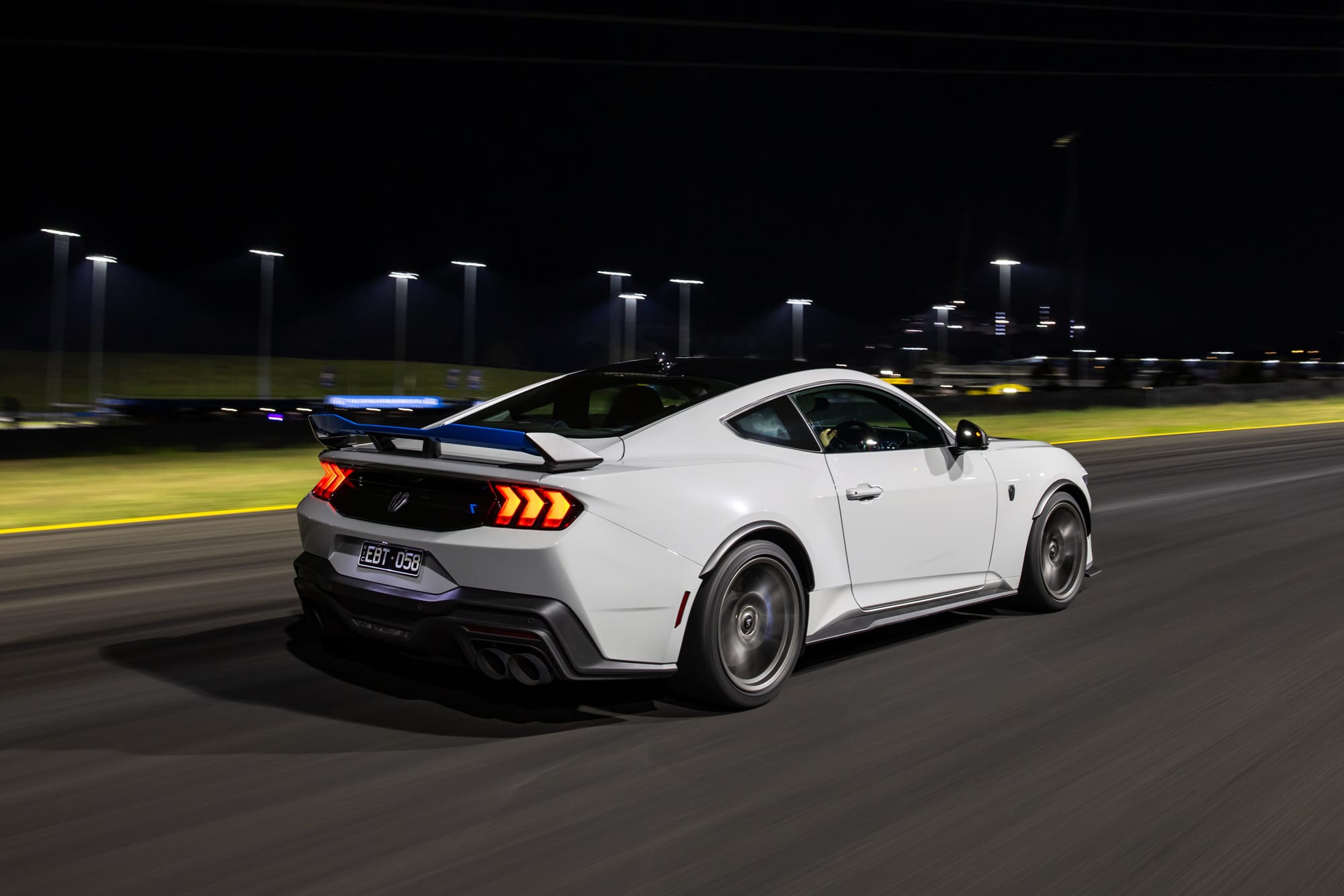
The most track-capable Mustang ever offered in Australia. That’s the promise Ford made with its new, limited edition T8-spec Dark Horse.
As the name suggests, the car is a collaboration between Ford Australia and its Supercars homologation team Triple Eight Race Engineering.
Triple Eight has a tumultuous history with the Blue Oval. It started life in Supercars running Falcons and, as it became a powerhouse, was brought into the Ford factory fold.
That was until the late 2000s when Ford’s management butted heads with Triple Eight over things like the fact its Vodafone-backed Falcons were red, not blue.
When the Ford money was slashed Triple Eight initially responded by replacing the Blue Ovals on its cars with Hog’s Breath Cafe logos (yes, really), before Holden came calling and Triple Eight switched to Commodores in 2010.
15 years later, Ford healed the rift and wooed Triple Eight back to the blue side to not only run Mustangs, but act as the factory racing team in this part of the world.
And to celebrate Triple Eight’s triumphant return, the T8-spec Dark Horse was born.
The car is effectively a locally-focussed version of the Dark Horse's Handling Pack available in the US. The powertrain is unchanged from the already very capable Dark Horse, although the T8 version is available in manual only, with automatic fans having to settle for the 'standard' model.
Instead, it’s under each corner of the car where the magic happens.
The T8-spec Dark Horse features the same MagneRide dampers as the base Dark Horse but tuned to be more aggressive in a track setting. They are paired with stiffer springs, a more robust rear anti-roll bar and adjustable strut mounts at the front.
The jewel in the T8-Spec Pack's crown, however, is the rubber. As anyone with a motorsport background knows, the most effective way to go faster is better tyres.
T8's first recommendation was a revised steering rack with a 15.5:1 ratio that cleared the way for wider, stickier tyres.
The result is a factory-fitted set of Pirelli P-Zero Trofeo RS semi-slicks that are 50mm wider each side on the front and 40mm wider each side on the rear, measuring 305mm wide up front and 315mm at the back.
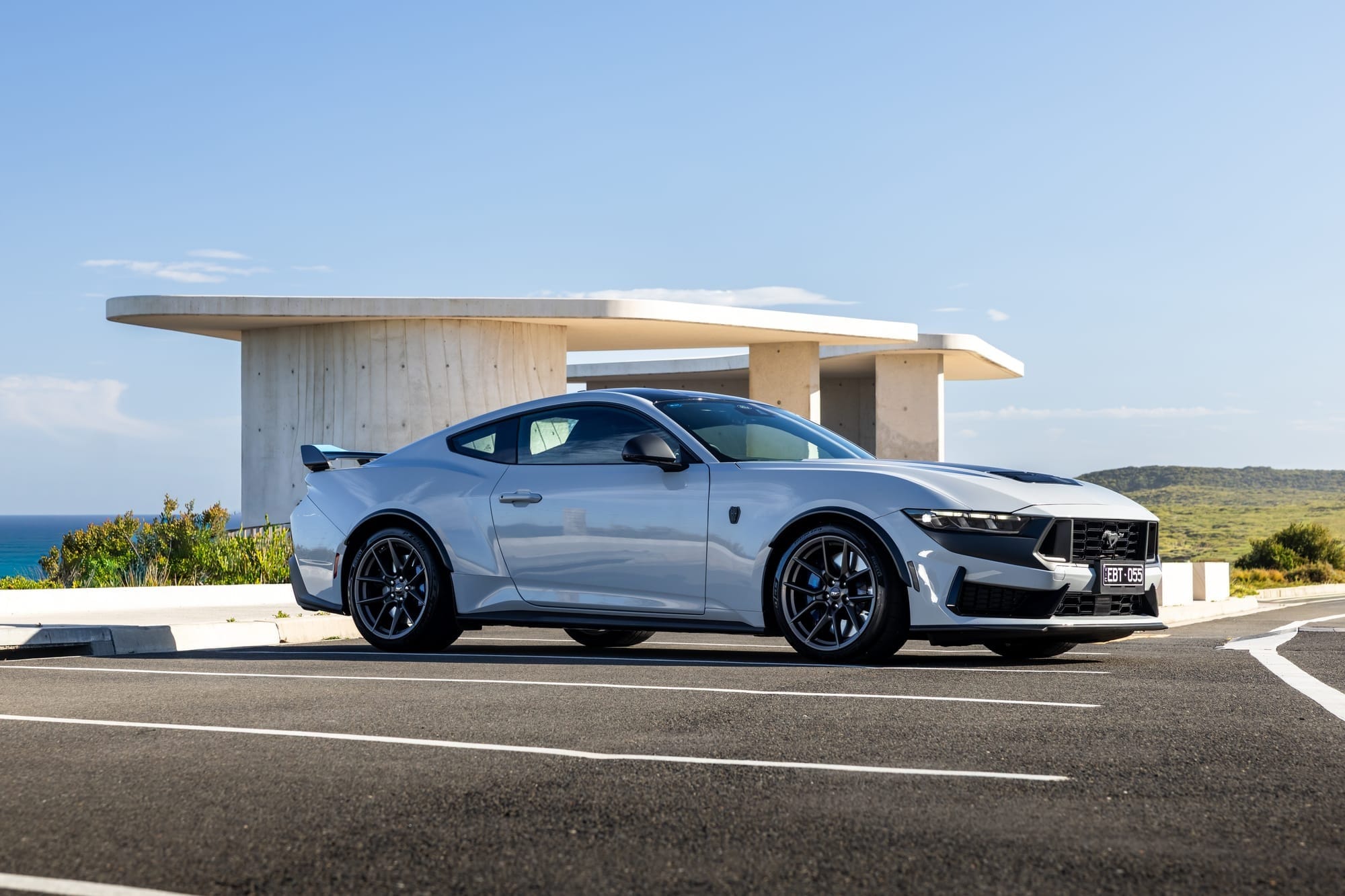
Coupled with its new lightweight wheels, there is also a total weight saving of 5.6 kilograms across the four corners.
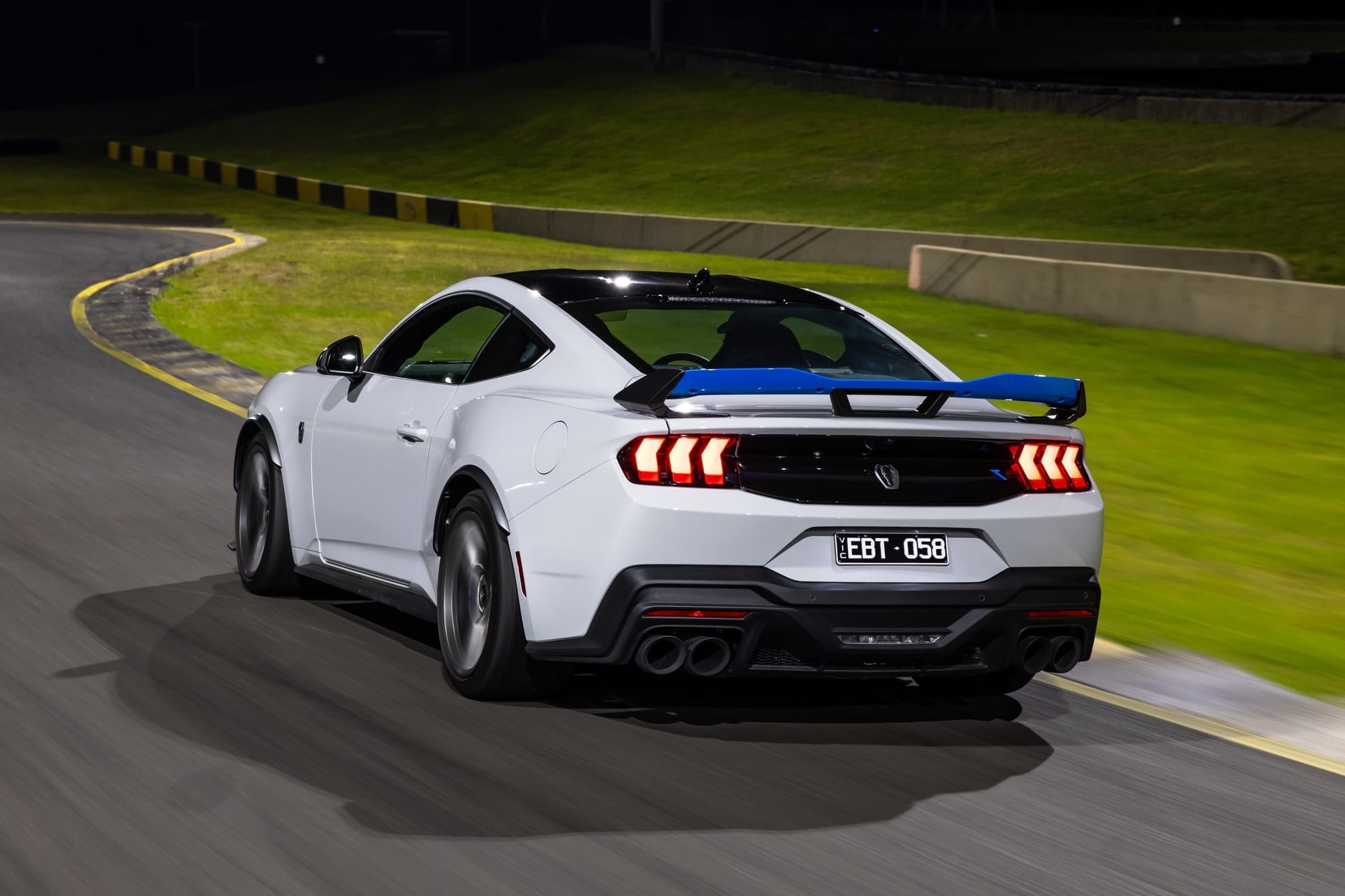
Then there is the aero. The T8-spec DH generates more downforce than its standard counterpart via revisions both front and rear.
At the front there is a larger front splitter that accelerates airflow underneath the car. That is complimented by a rear wing with a Gurney flap. Even the attachments to the wheel arches to accommodate the wider rubber create downforce.
Stiffer suspension, better tyres and more aero – perfect ingredients to turn a Dark Horse into a serious track weapon.
But there are some quirks involved in the process. For starters, when you take delivery of your Dark Horse T8-Spec Pack, it won’t come in full ‘track’ mode. Instead it will be in ‘street’ mode, which is effectively less camber at both ends to make the car a little easier on its tyres.
The thing is, if you’re buying one of these cars you probably aren’t thinking about tyre economy. You’re thinking about going fast, so you’ll want to take the provided set-up sheet and have the full suite of T8-suggested changes applied to the suspension at your local tyre shop, or mechanic, or race team, or wherever is capable of doing it.
The car also won’t be delivered with the T8-specific front splitter attached to the car. You get the splitter, it’s just not attached. That’s because it doesn’t meet ADRs, and Ford will be very clear with you that it is for track use only.
So, technically, that means putting it on when you get to the race track, and taking it off if you want to drive the car home again.
Wink wink.
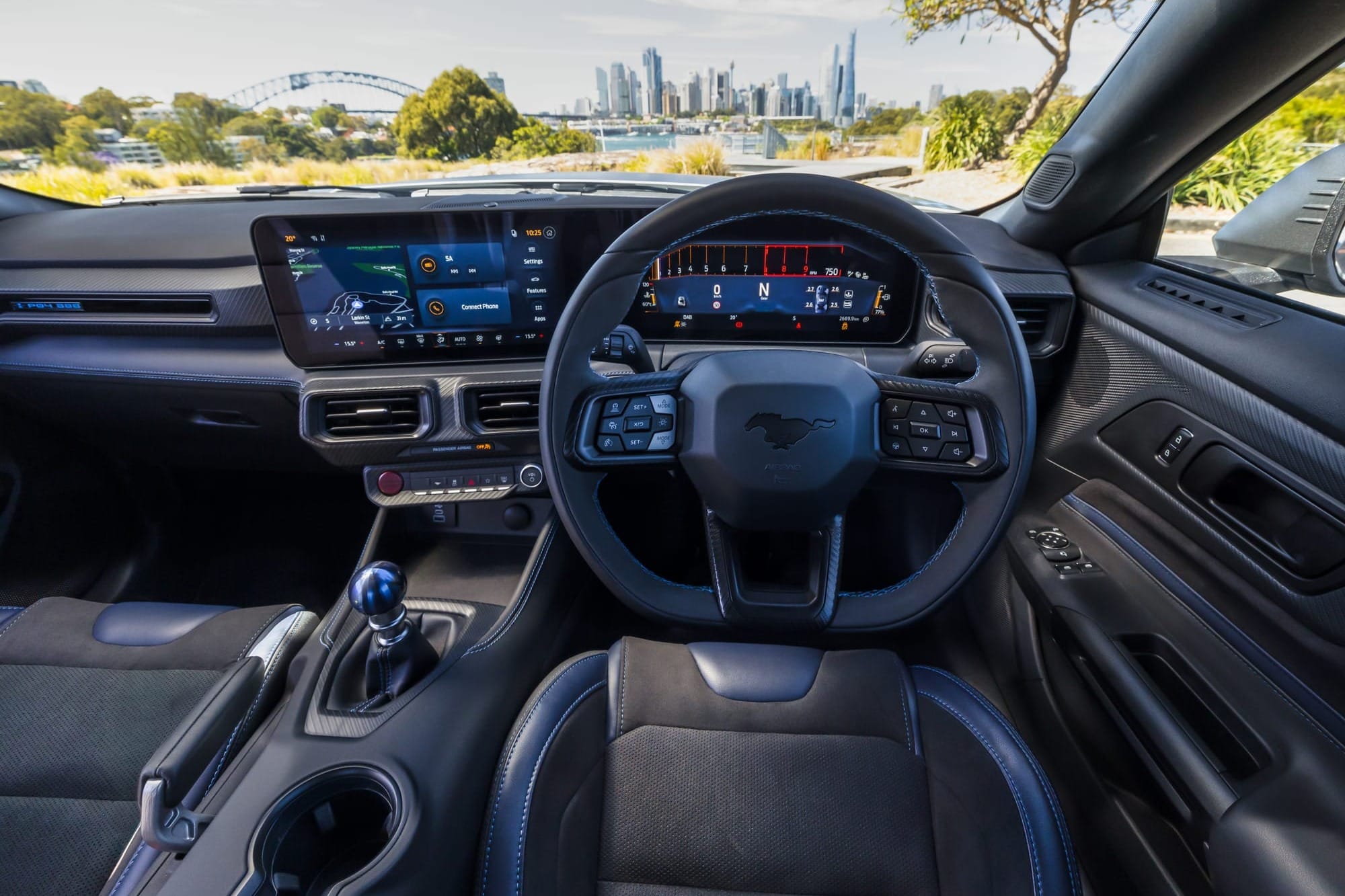
So, have Ford and Triple Eight delivered on the promise of this being the most track-capable Mustang ever sold in Australia?
The short answer is yes.
The put this to the test we spent an evening at Sydney Motorsport Park. Cleverly, we were able to put the standard DH through its paces before jumping immediately into the T8-spec car for a true back-to-back.
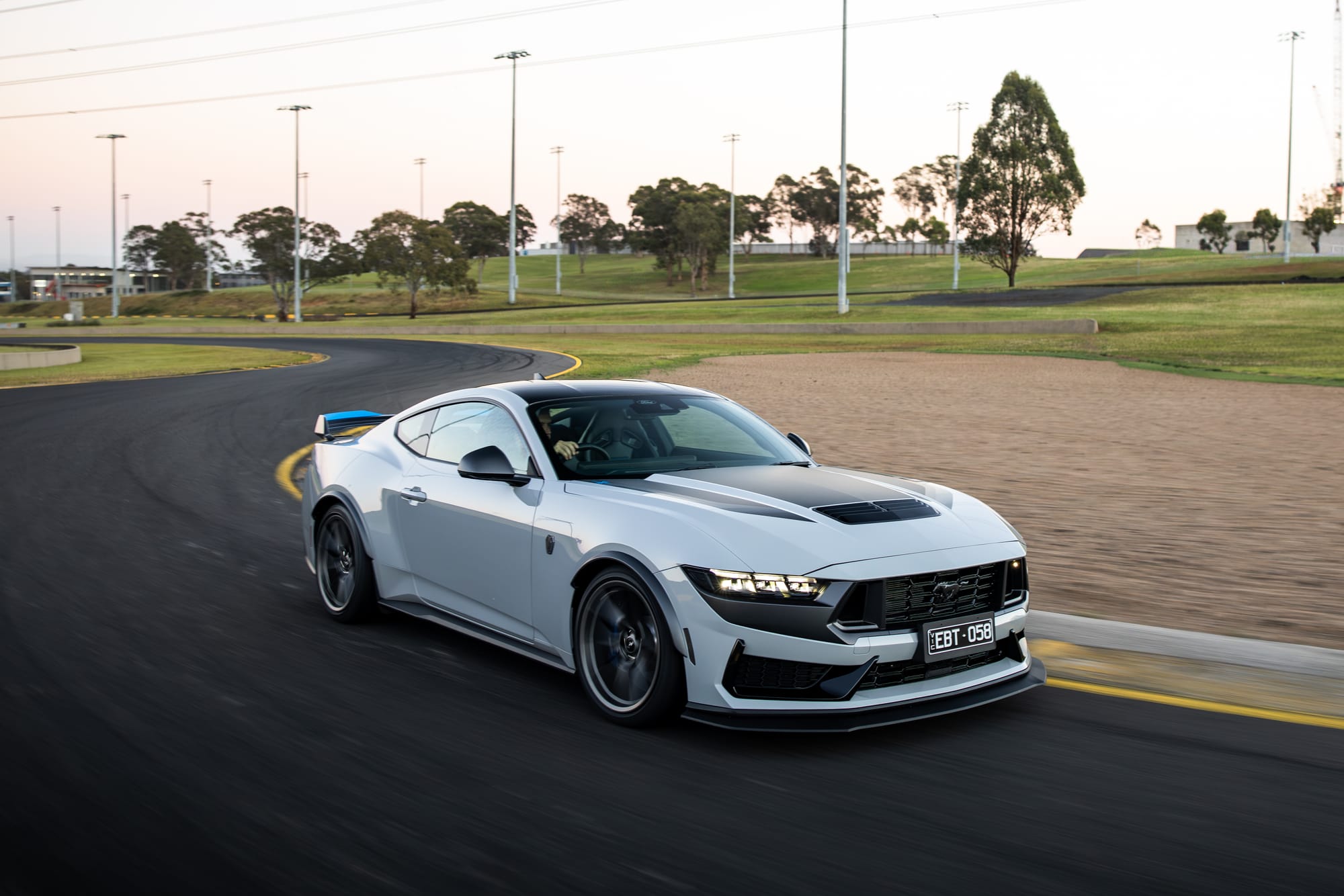
And the difference in ability is instantly noticeable. The moment you tip the T8-spec car into the fast, sweeping first corner at SMP you can feel the immense amount of tyre grip. And that, as Ford predicted, is the most obvious improvement.
Between that, and the more subtle improvements via the suspension (we were in full track mode, by the way) the car is simply better, faster and easier to drive hard. You don’t feel like you’re beating up on it in the same way that you do with a standard Mustang or DH.
It’s not quite a race car, but it definitely feels like a proper track car.
It’s a little surprising that Ford didn’t opt to give the 5.0-litre Coyote V8 a little more power, even just for marketing purposes alone – though Australian examples are already choked compared to left-hand drive Mustangs.
Thanks to the positioning of the steering rack in right-hook Dark Horses, our cars only make 350kW and 550Nm, rather than the full-fat 370kW and 567Nm outputs of those in North America.
But realistically, the T8-Spec Mustang doesn’t need it from a performance viewpoint. The engine and gearbox are incredibly capable, and playing with the power and torque on offer is even more satisfying when there’s more grip available.
To ensure we had the full picture of the T8-spec DH’s capabilities there was also a ride along with seven-time Supercars champion, and now Triple Eight managing director, Jamie Whincup.
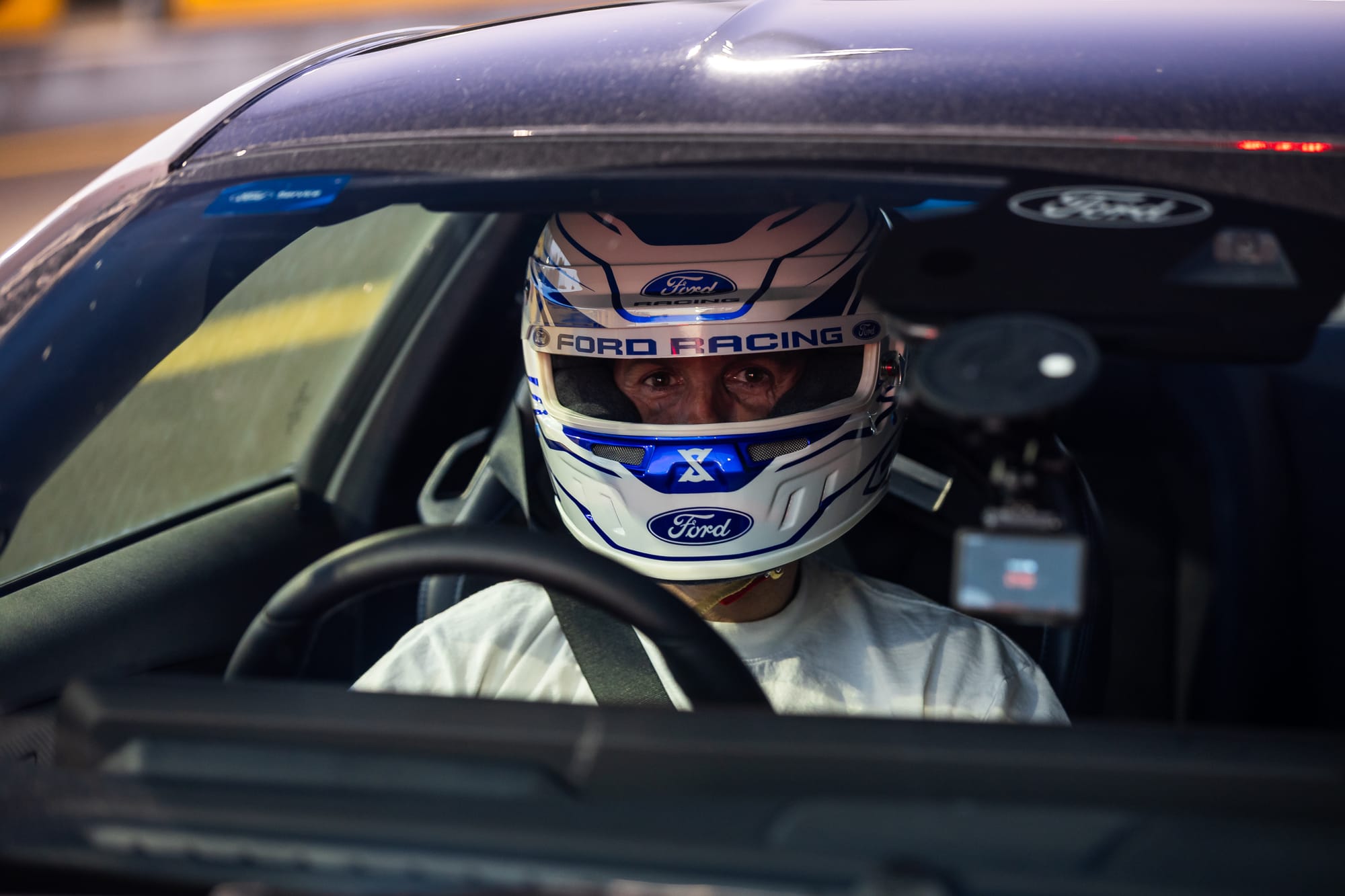
He was a key part of the collaboration in terms of driver feedback and was recently used to set the performance benchmark of the finished product.
That took place at Sandown Motor Raceway in Melbourne, where Whincup had a standard Dark Horse tapped out at one minute and 25.72 seconds, before banking a one minute and 23.16s-second lap in the T8-spec car.
Between his general driving ability, and how familiar with the car is, sitting alongside the GOAT was the best possible insight into how aggressively the T8-spec DH can be driven.
He obviously believes in the product, as he’s bought one himself (at full price). Triple Eight’s star driver Broc Feeney has too, as well as one of Triple Eight’s owners, Steve Blackmore.
 Jordan Mulach
Of course, there is always a trade-off when it comes to on-track performance. And as usual it’s the on-road experience.
That stiffness does make the car less pleasant on the open roads, both in terms of ride comfort and little things like cabin noise, with a few more rattles throughout the interior.
But again, are you really buying one of these cars for comfortable Sunday cruising?
Aesthetically, there’s little doubt that it’s a hot looking Mustang. There is only one colour available, Avalanche grey, which is not available on any other variant.
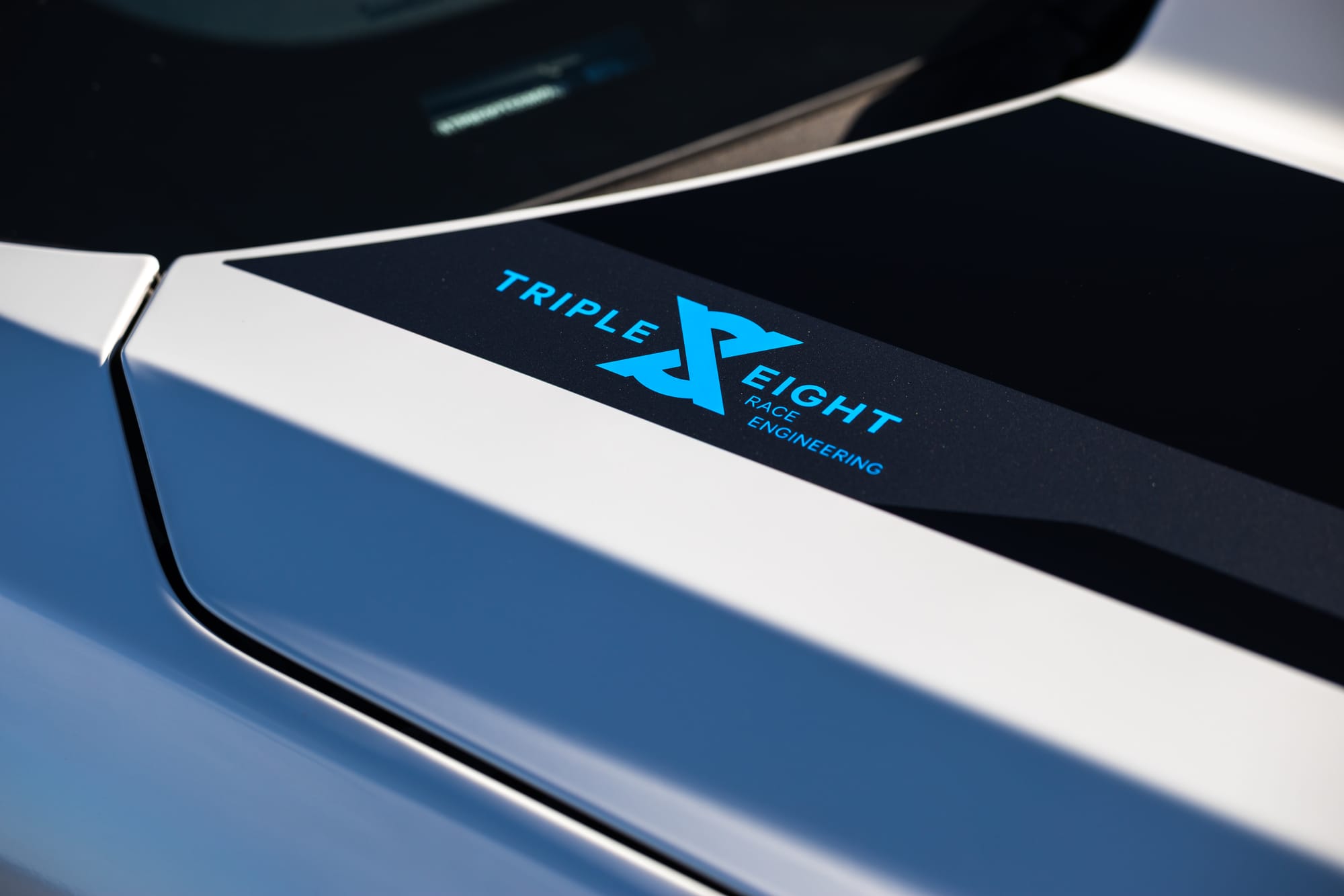
It’s a subtle look, sure, but paired with the Grabber blue accents on the Gurney flap and black detail on the bonnet and side skirts, it’s aggressive enough.
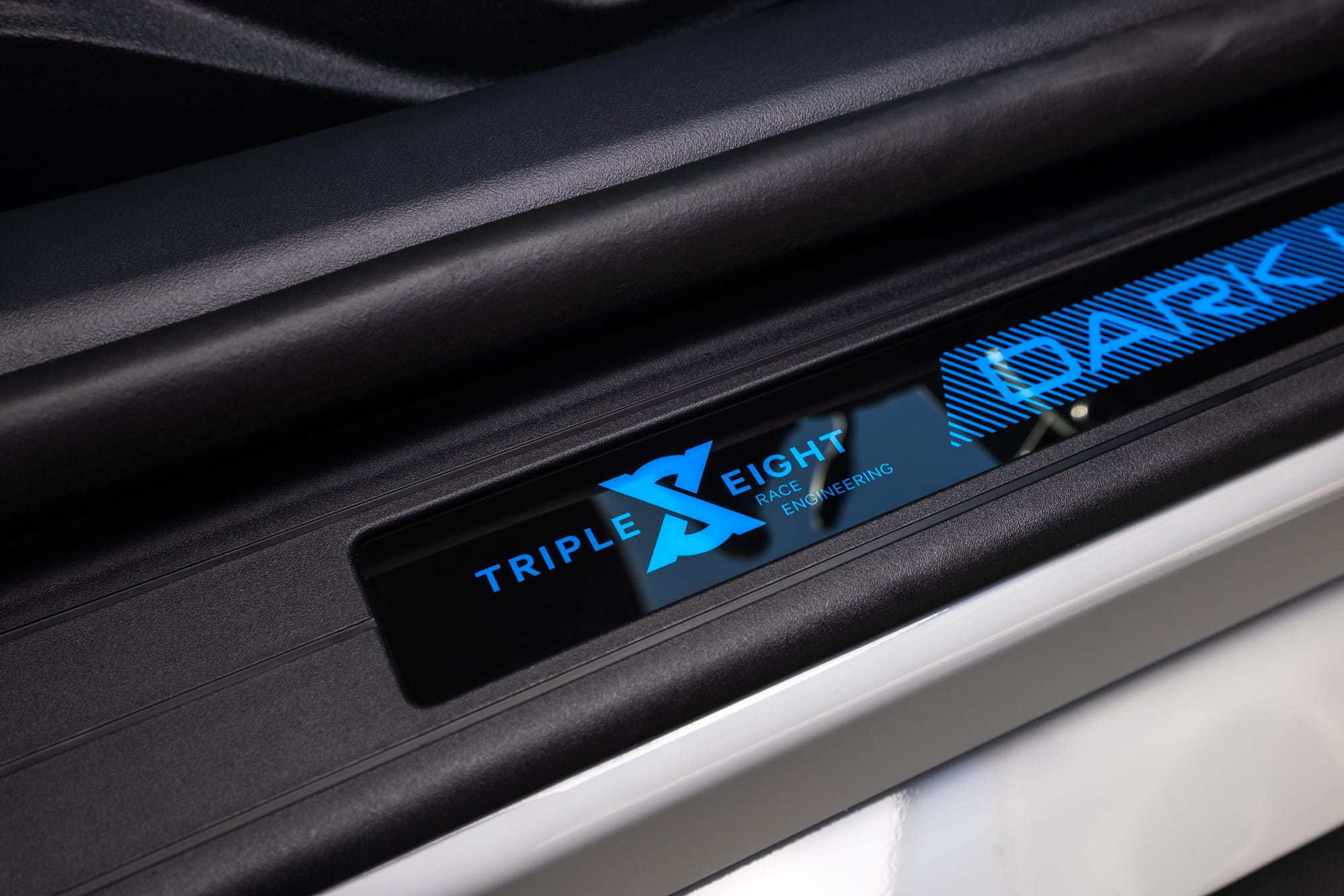
The T8 detail continues with lettering on the bonnet and a badge on the boot as well as interior signage inside the door sills and a cool looking engraved, blue gear knob.
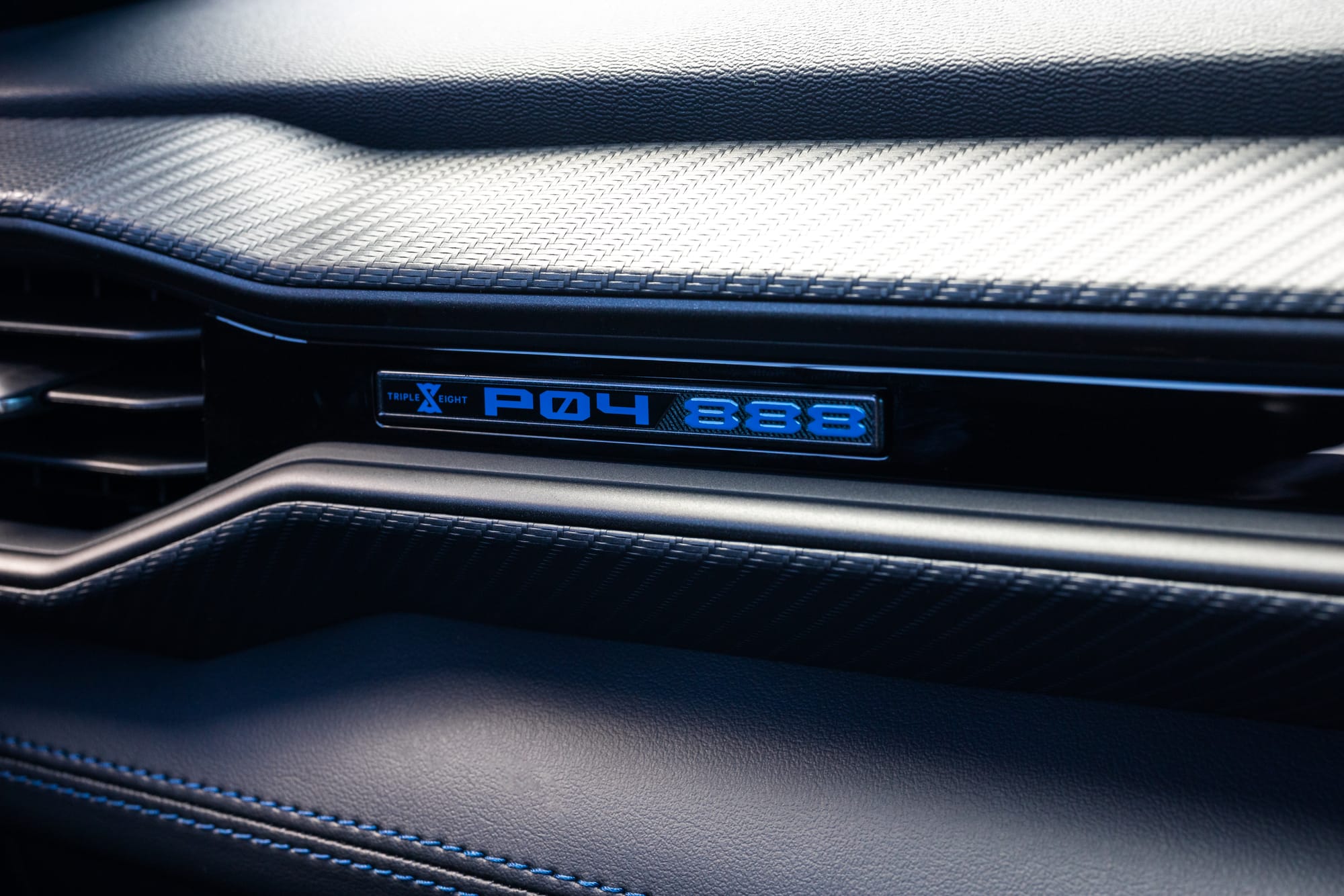
Perhaps the biggest nod to the car’s motorsport roots is the numbered chassis plate on the glove compartment.
Purchasing a T8-spec DH also comes with a T8 track experience, where owners and a guest aged 16 or over will head to Queensland Raceway midway through next year for hot laps, professional driver instruction, set-up demonstrations and meet-and-greets with the Triple Eight Supercars drivers.
None of it comes cheap, though.
You don’t need to bring a donor car, these things roll straight off Plant 2 in Broadmeadows, but it will set you back $138,888 before on-roads. That’s a decent chunk of change beyond the roughly $105,000 you’ll spend on a non-T8 Dark Horse.
Despite that eye-watering price tag, the T8-spec Dark Horse has seemed to strike a chord in the enthusiast market.
According to Ford, around three quarters of the 250 cars have been sold with the full allocation expected to be gone this side of Christmas.
And Ford is adamant that once the allocation is exhausted, there won’t be any more.


