
Koenigsegg crafts incredible tribute to unrealised racing project
Swedish car manufacturer Koenigsegg has unveiled the CCGT1, a limited run tribute to the iconic CCGT.


Koenigsegg began building the CCGT for the GT1 regulations in the late 2000s with a view towards winning the 24 Hours of Le Mans.
Working alongside engineer and fabricator Dag Bolenius, Koenigsegg designed a homologation special made to push to limits of the regulations.
The car came in underweight with strategic space for ballast and a naturally-aspirated 5.0-litre V8 coupled to a magnesium sequential gearbox.
But before the car could be homologated and raced, the FIA flipped the script on the GT1 regulations.
It banned carbon monocoques and homologation rules meant that manufacturers went from a minimum 20-car production to making at least 350 cars, which spelt the end of the project.
Only one CCGT was built and unveiled in 2007.

GT1 eventually succumbed to high costs and morphed into what became the highly successful GT3 regulations.
A little less than two decades on, Koenigsegg has paid tribute to its unrealised dream with the CCGT1.
The CCGT1 is a modern-day, road legal interpretation of the CCGT based on the CC850.
"This is something truly special – our first creation that's designed deliberately as a track-optimised circuit scalpel as well as an extraordinary daily driver,” said Christian von Koenigsegg.
“It has been so rewarding seeing the original CCGT come back to life over the last few years. This seems like an appropriate way to celebrate.
“I'm very excited to drive and explore its full capabilities, and I can't wait for the wider Koenigsegg family to do the same.”
Unlike the naturally-aspirated CCGT, the CCGT1 is twin-turbocharged. Instead of a six-speed gearbox, the modern interpretation has a nine-speed transmission. However, customers who want a different experience can have the CC850’s ESS six-speed gated shifter fitted.

“The CCGT1 is a creation with two clear identities,” said von Koenigsegg.
“On the road, it's a sublime megacar that's both comfortable and incredibly capable.
“But its origins are rooted in endurance racing, and that’s where the CCGT1 reveals its full character as a true celebration of the original CCGT – with or without its roof.
“The CCGT1 offers something compelling to the weekend racer who also wants a daily driver with genuine extended capability on track.
“That’s what our optional track package allows. Fit it for race day through your local Koenigsegg dealer, and the character changes completely – from an exceptional weekend tourer with respectable track credentials into a true circuit weapon.”
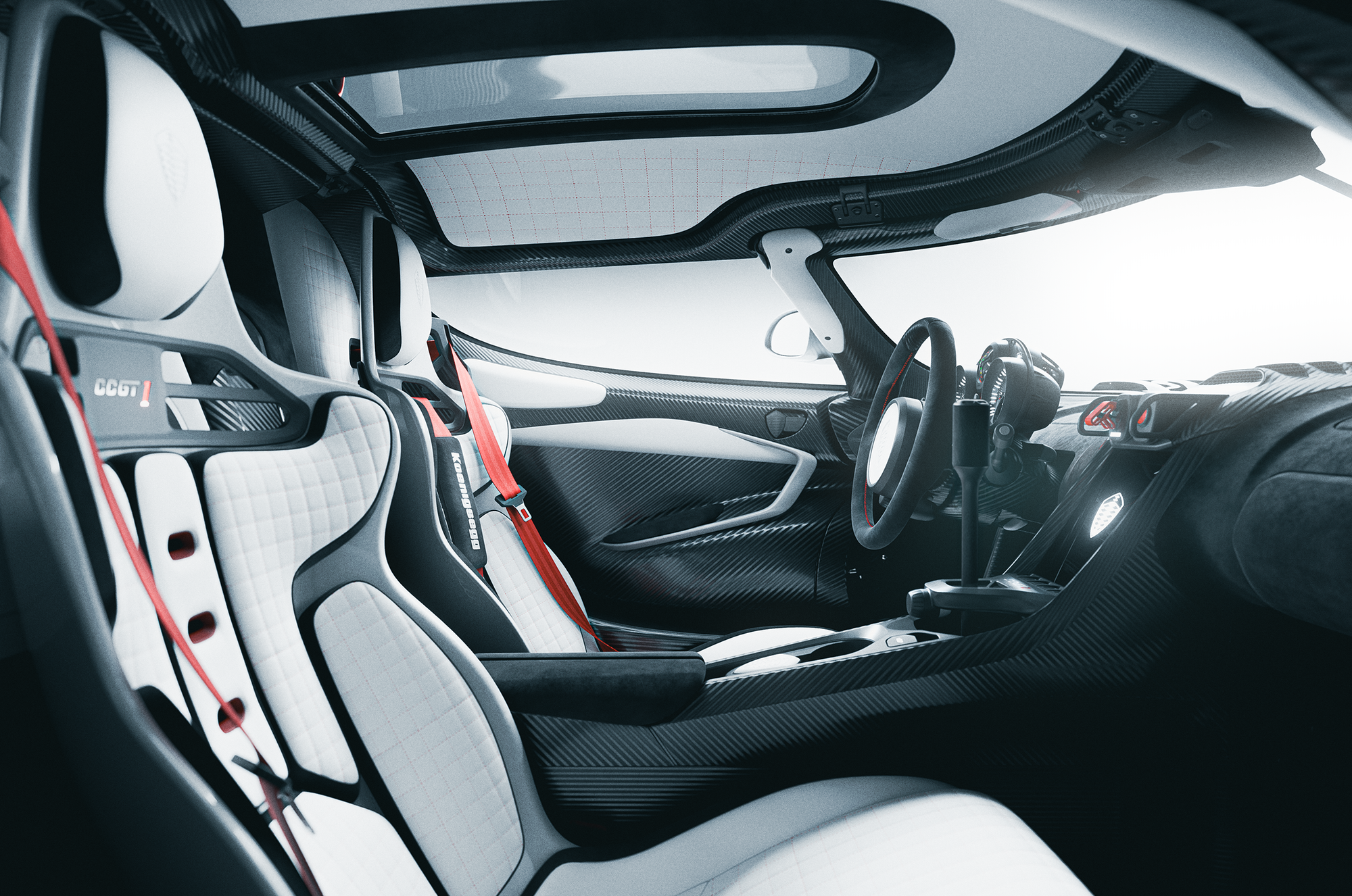
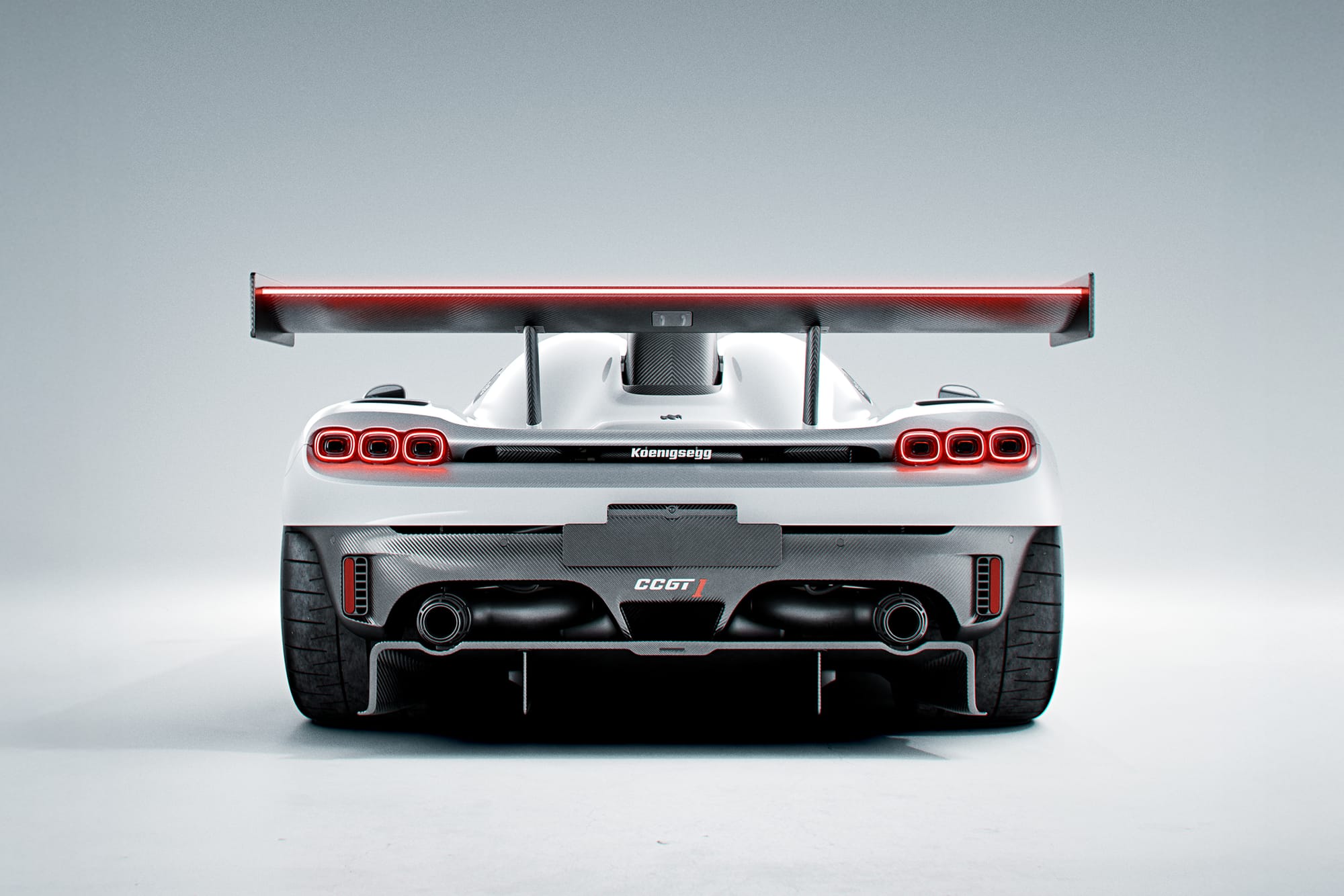
While the CCGT1 is based upon the CC850, only the removable roof and doors carry across, body-wise.
The rear wing is an active element that has 30 degrees of adjustability and adapts between a low-drag straightline mode, an air-brake mode, and a high-downforce mode in corners.
“Everything in aerodynamics is about balance,” said CFD engineer Andreas Tjernberg Persson.
“The rear wing works beautifully and is both a visual and functional nod to the original CCGT, but it would be pointless on its own. We had to address the balance at the front of the car, too.
“The rear wing is big, yes, but it actually has a tiny surface area compared with the floor.
“The floor is much bigger and therefore much more efficient at controlling and directing airflow.”
The CCGT1 arrives from the factory for the road, but an optional track package is available.
The option includes a carbon roll cage, HANS-compatible racing seats, a fire-suppression system, race exhaust, air jacks, track-specific suspension and brake setup, a second set of wheels and enhanced aerodynamics.
A total of 70 cars will be built, all of which have been allocated before being publicly debuted.


