
Reborn performance brand wants to use F1 technology
The Stellantis Street and Racing Technology (SRT) division wants its turbo-sixes to feel like supercharged V8s.

When the American division of Stellantis launched its twin-turbo 3.0-litre straight-six engine in 2023, it made the point of it being more potent and fuel efficient than the 5.7-litre ‘Hemi’ V8 it replaced.
Despite this, the vehicles it’s available in haven’t been selling like hotcakes, and some – in the case of the Ram 1500 – have even had the Hemi V8 revived after customer feedback.
In order to reduce criticisms of its six-cylinder ‘Hurricane’ (Ram, Jeep) and Sixpack (Dodge) engines, Stellantis Street and Racing Technology (SRT) division has launched a new electric turbocharger concept, aimed at cutting lag and increasing power.
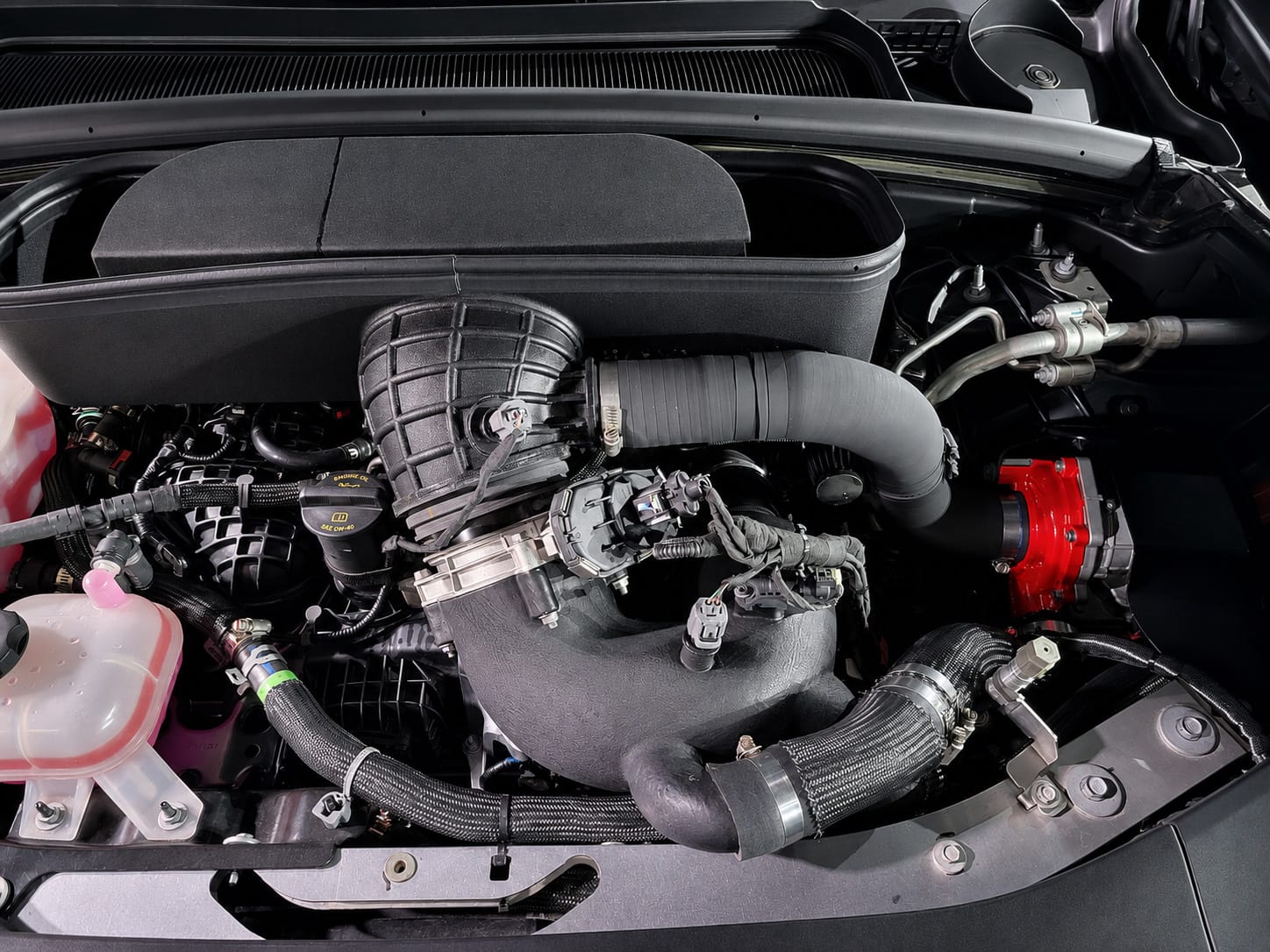
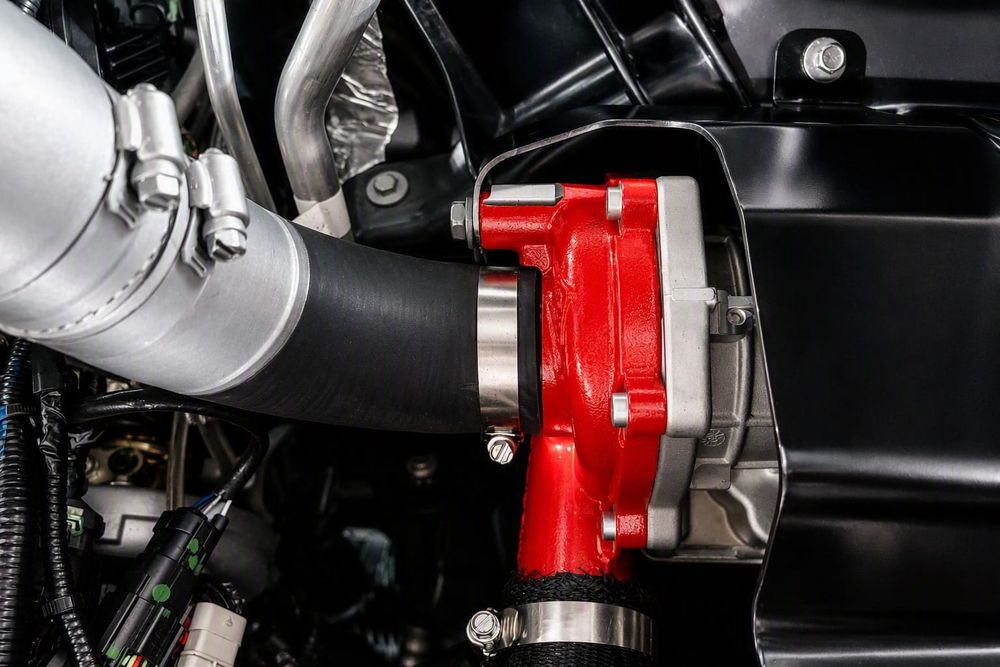
Called an ‘eBoost Air’ e-compressor, the technology is similar to Porsche’ 911 T-Hybrid and the now-defunct MGU-H system on Formula 1 cars, where the compressor is driven at low engine speeds by an electric motor, rather than having to wait for enough air to ‘spool’ it up like a turbocharger.
This eliminates turbo lag, delivering a more linear power response which SRT says “resembles the instant, linear feel of a supercharged V8”.
“Enthusiasts aren’t interested in technology for the sake of technology. But when technology improves performance with no downside, they’re all in,” said Stellantis’ head of American brands, Tim Kuniskis.
“eBoost Air delivers exactly that kind of tangible benefit. It's a smart, simple idea that attacks turbo lag head-on and reflects what SRT does best – moving fast, challenging assumptions and chasing more performance.”
 Jordan Mulach
This system has also been used on certain four-cylinder Mercedes-AMG models, where the electric compressor is fed by the car’s 48-volt mild-hybrid system.
Though SRT didn’t offer revised outputs for engines with the eBoost Air system, Motortrend – which attended its launch – said the Jeep Grand Cherokee concept fitted with the tech made 462kW and 813Nm, up from its standard 410kW and 720Nm outputs.
Stellantis is yet to announce when the technology will be fitted to production models.