
Toyota GR Yaris review: The WRX STI and Lancer Evo that should be
The spirit of our favourite rally-bred 1990s machines is alive and well in the Toyota GR Yaris.

My taste in cars has undoubtedly changed – or at least evolved – since I was younger.
From starting out in Japanese mainstays like the Toyota Corolla, Nissan Pulsar SSS and Subaru Impreza WRX, I’m now firmly in the “relaxed” period of my life, more focused on family comfort than outright performance.
While I often revisit my younger years in my head or my camera roll, mainly looking at those old WRXs and STIs I enjoyed so much in my early 20s, the reality is that my life has moved on, and my current garage is designed to suit that.
As it turns out, I didn’t need to find a DeLorean to act as a time machine to transport me back, as the Toyota GR Yaris gave a throwback to the good – and the bad – of the cars I once loved.
What is the Toyota GR Yaris?
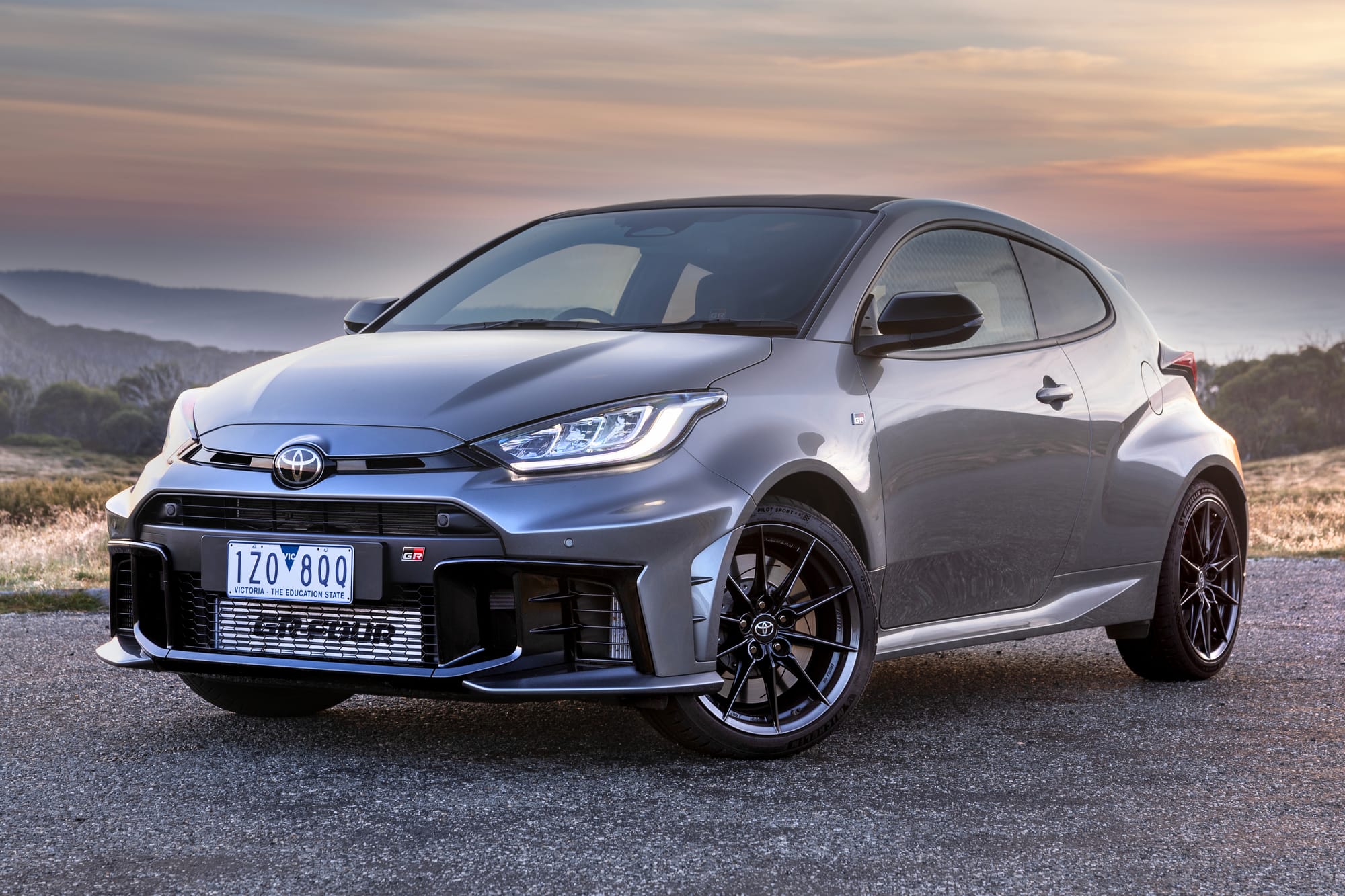
If you’re unfamiliar with the GR Yaris, I’ll paint a quick picture. It effectively launched Toyota’s Gazoo Racing family of road-going, motorsports-inspired cars in 2020, serving as the homologation base for the brand’s WRC challenger.
With its three-cylinder 1.6-litre turbocharged engine, it represents something of a departure to the vast majority of hot hatches, not being a four-cylinder and not using the full allotment of a 2.0-litre engine.
When it first launched, the GR Yaris was arguably criminally cheap, with prices starting from only $39,950 drive-away for the first 1000 customers. That price didn’t last long, with those who got in early receiving one of the best deals on the market.
Once that allocation was sold out, buyers had to fork out $49,500 before on-road costs for the base model, and $54,500 plus on-roads for the better-equipped Rallye, the latter fitted with better tyres and trick differentials.
I had the chance to briefly drive a Rallye in 2022, and though my time behind the wheel was limited and on roads I was unfamiliar with, I got the sense it was something special – though I didn’t actually like it at the time.
The seating position was way too high, the manual transmission felt arcade-like (not in a good way), and it had so much grip that you had to push it hard to feel anything, at which point you’d be at risk of losing your licence – or control if there was any miscalculation.
Fast forward to 2026, and a handful of under-the-skin revisions have been made, such as a bump up to 221kW and 400Nm (from 200kW and 370Nm), while the GR Yaris is also now available with an eight-speed automatic transmission, alongside the existing six-speed manual.
Prices now start from $55,490 for the base GR Yaris GT manual, $57,990 for the automatic, $60,490 for the GTS manual, or $62,000 for the GTS auto – the latter of which I got to drive most recently.
That’s a lot for a city-sized car, but this is not the Yaris your grandmother gets as her last car.
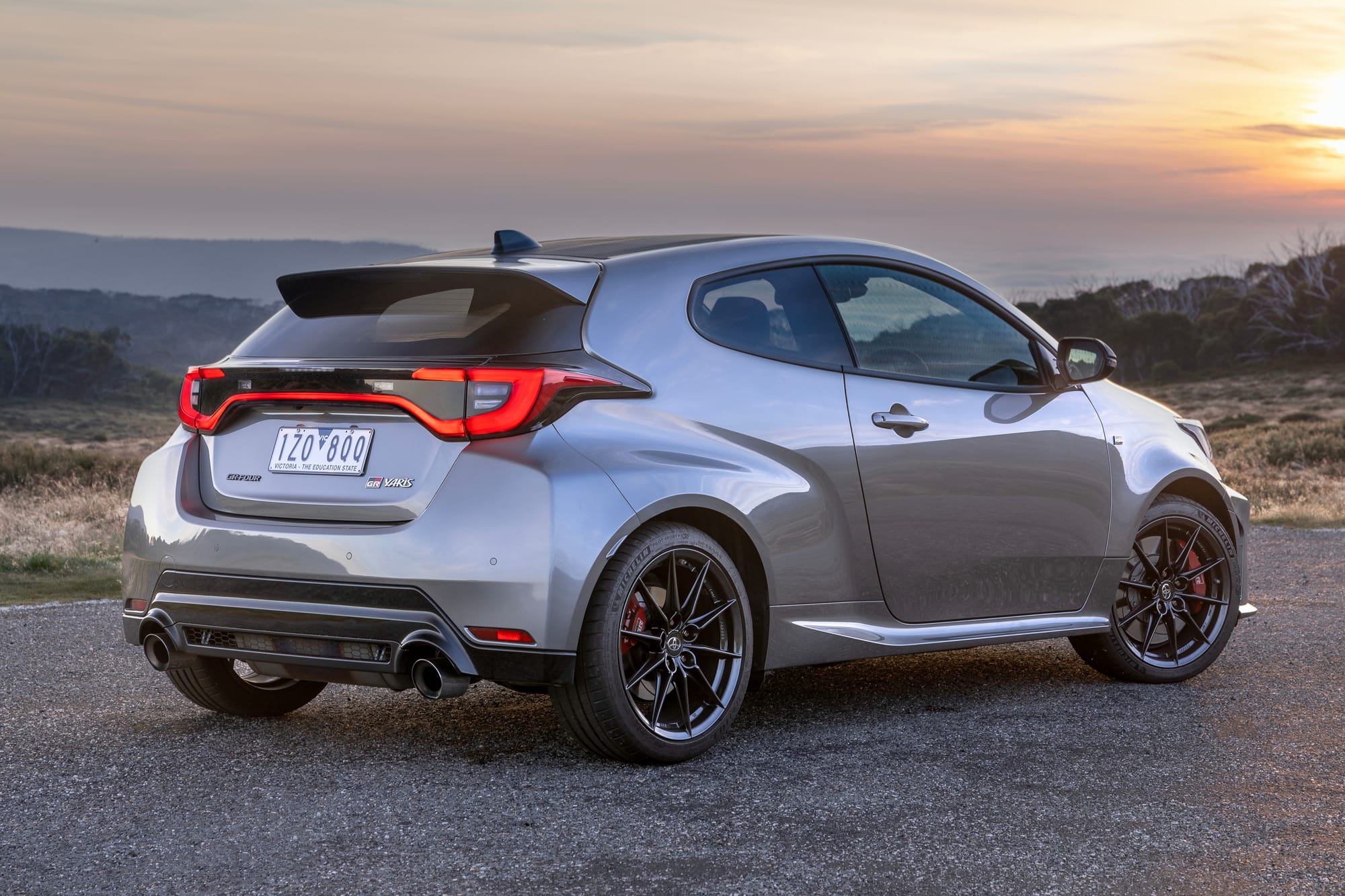
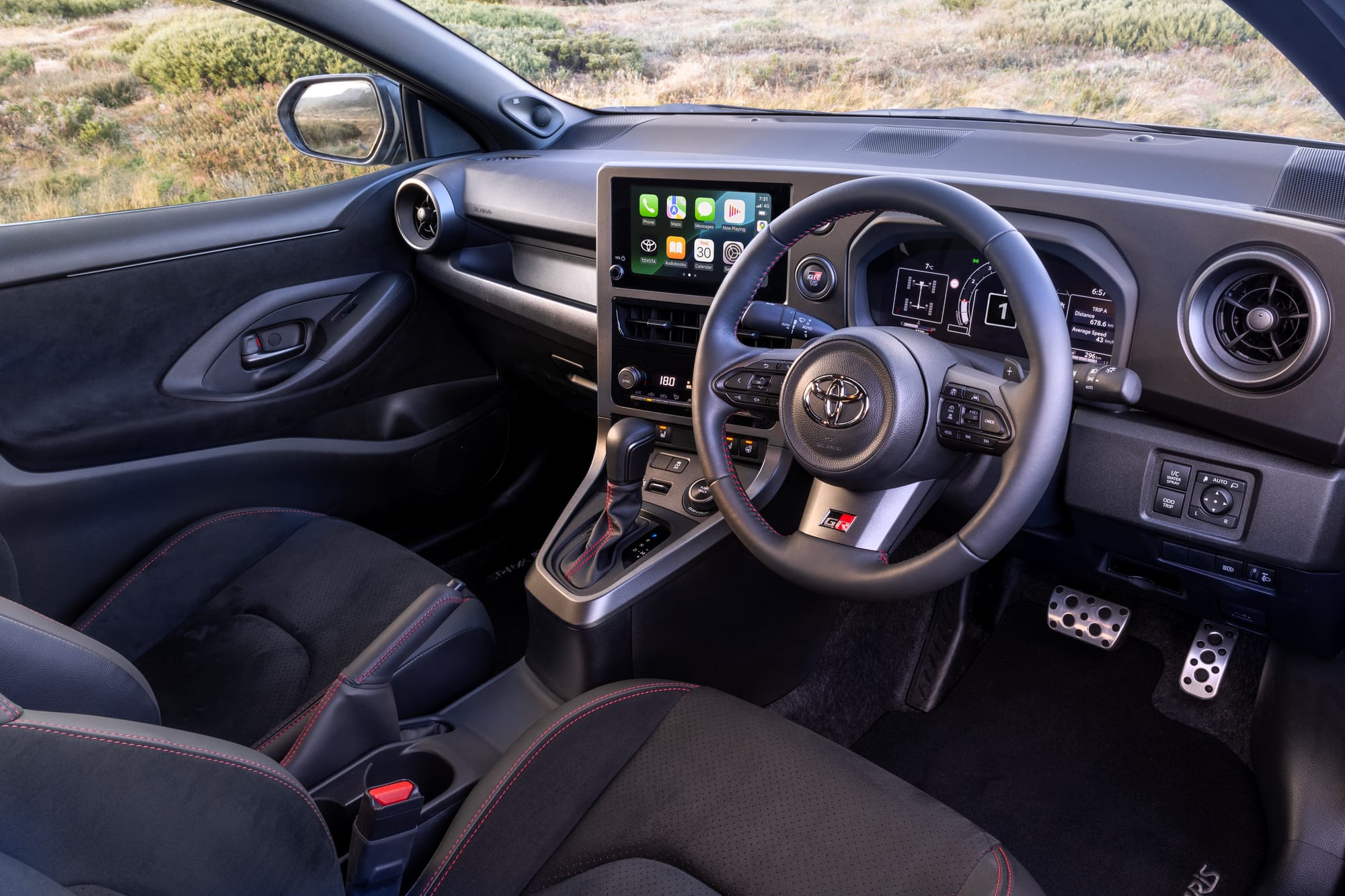
From the get-go, the new cabin layout is a very, very welcome change, with the seats positioned far lower to give six-foot-tall occupants like me plenty of room to stretch out.
While there are rear seats, you’d have to be desperate to use them as an adult, though my daughter’s car seat also just squeezed in there, as did I when having to buckle her in and out every day. A compromise some are willing to make.
But if you’re looking at buying a GR Yaris, it’s unlikely you’re desperate to know what it’s like on the Ikea run: you want to know how it drives.
How does it drive?
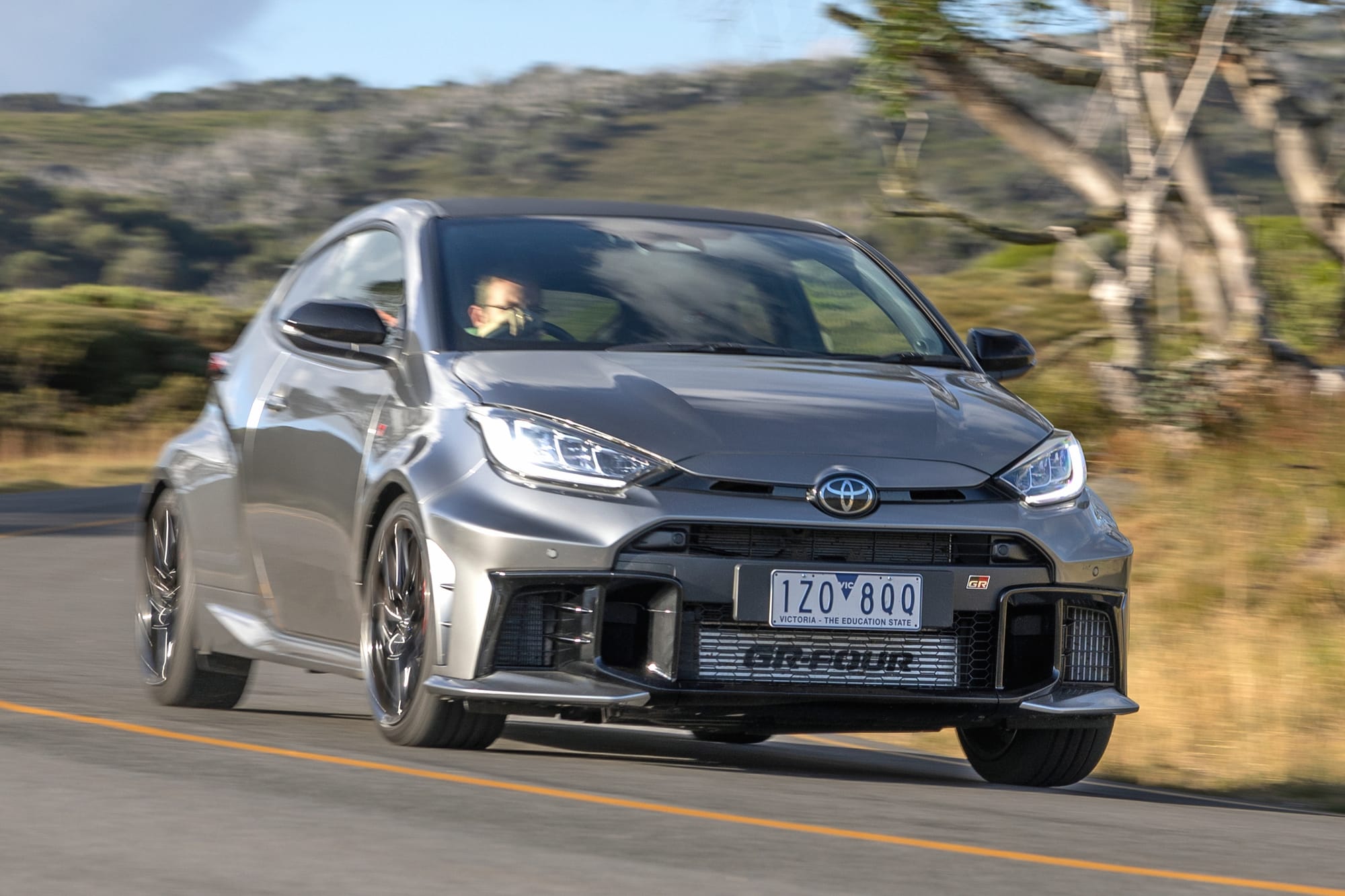
Starting out on what should be its weakest point, its ride on the highway – even with Michelin Pilot Sport 4 S tyres with 10,000km on them – was surprisingly pleasant, with no major concerns about road noise in this rally-bred, three-door box on wheels.
I’d even go as far to say the ride itself and how it handled bumps was compliant, a shock to the system given its spiritual forefathers such as the Impreza WRX and Lancer Evolution were never regarded for their comfort on road trips.
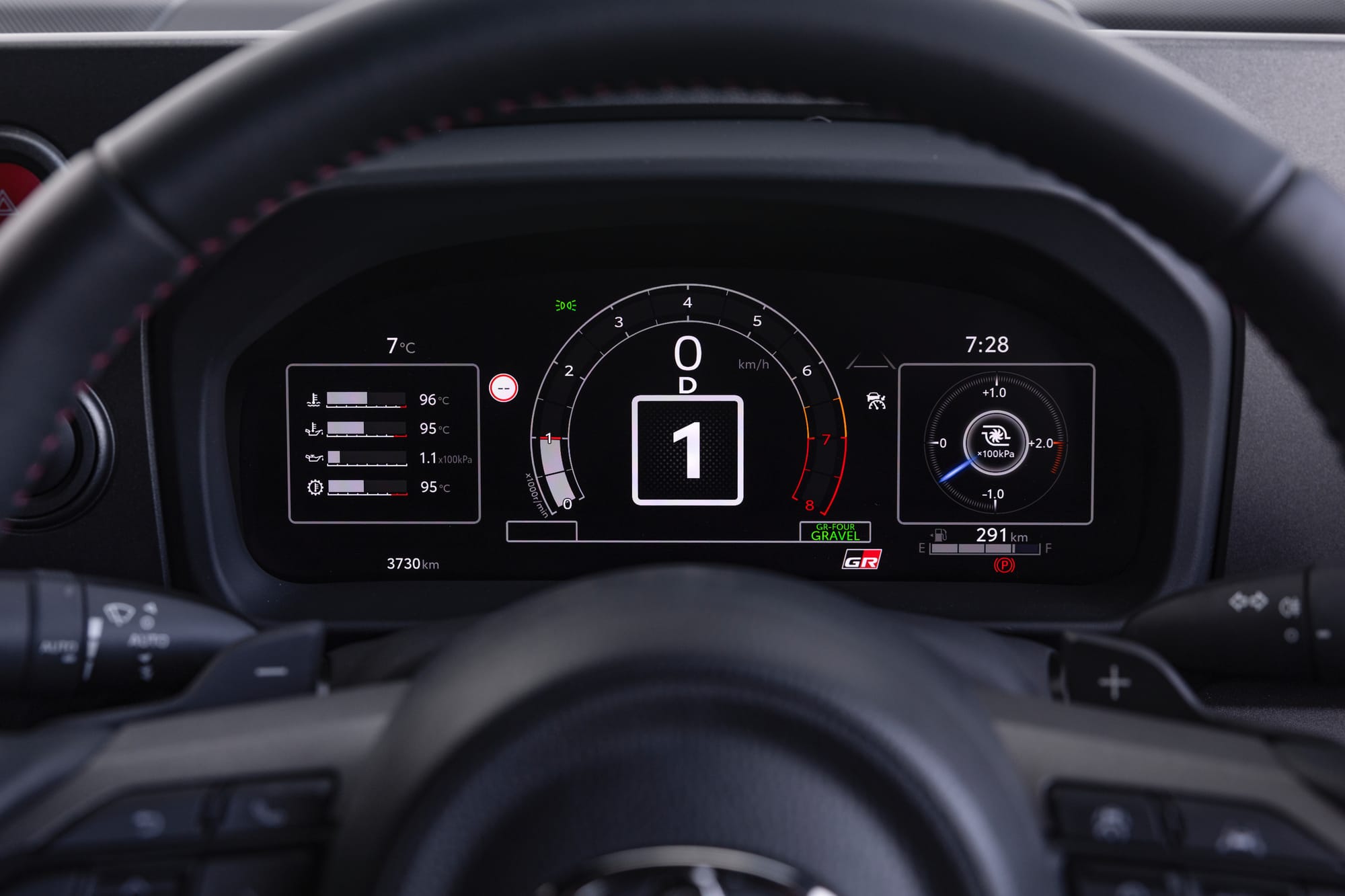
The fully digital instrument cluster is a huge improvement on the old analogue unit which looked like it was printed on black A4 paper, and can be configured to one of three layouts, with multiple customisation options for the dashboard.
I’m also going to say something controversial, that I myself wouldn’t have thought I’d be writing a year ago: the eight-speed auto is a better transmission than the six-speed manual. Cue slander.
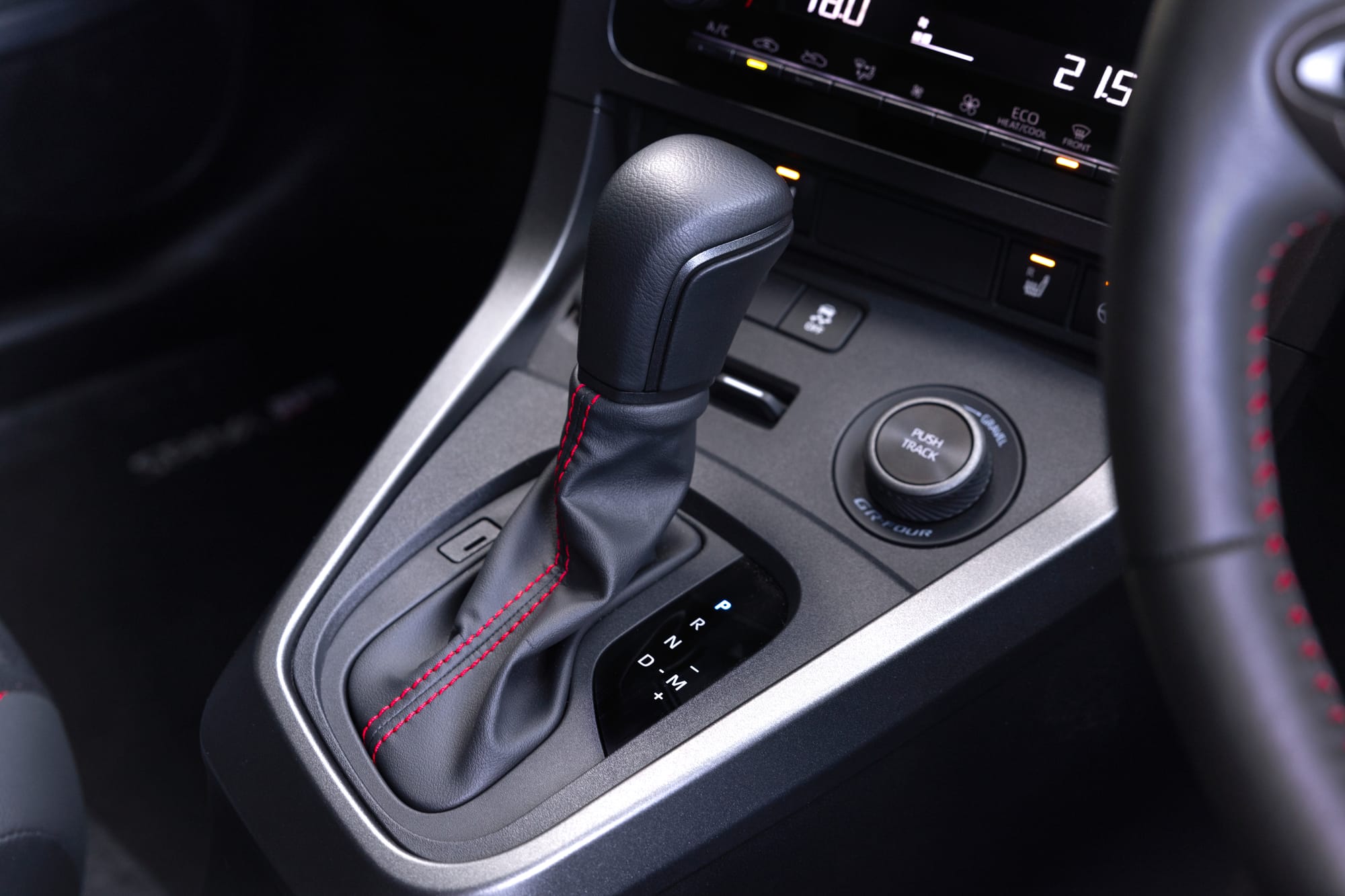
I love the engagement of driving a manual, rowing through the gears on a spirited drive or even just around town, but as briefly mentioned before, the GR Yaris wasn’t as engaging as I wanted it to be, and was a fair way away from what I consider one of the best: the Mazda MX-5.
Now call me a traitor, but the automatic – though possessing some pesky traits of a torque-converter system – is actually quite good, despite being a bit slow to accept the request of an up or downchange, requiring a bit of pre-planning if you don’t want to leave it in the perfectly capable Drive mode.
The GR Yaris is, as you’d expect, at home when the road gets twisty, and its all-wheel drive system does a fantastic job of pulling it out of corners regardless of the conditions.
Steering feedback is linear and communicative, and is well tuned with the brake package that can take an absolute hammering.
This is most evident on track, where – despite its rally roots – the GR Yaris truly shines.
How does it perform on track?
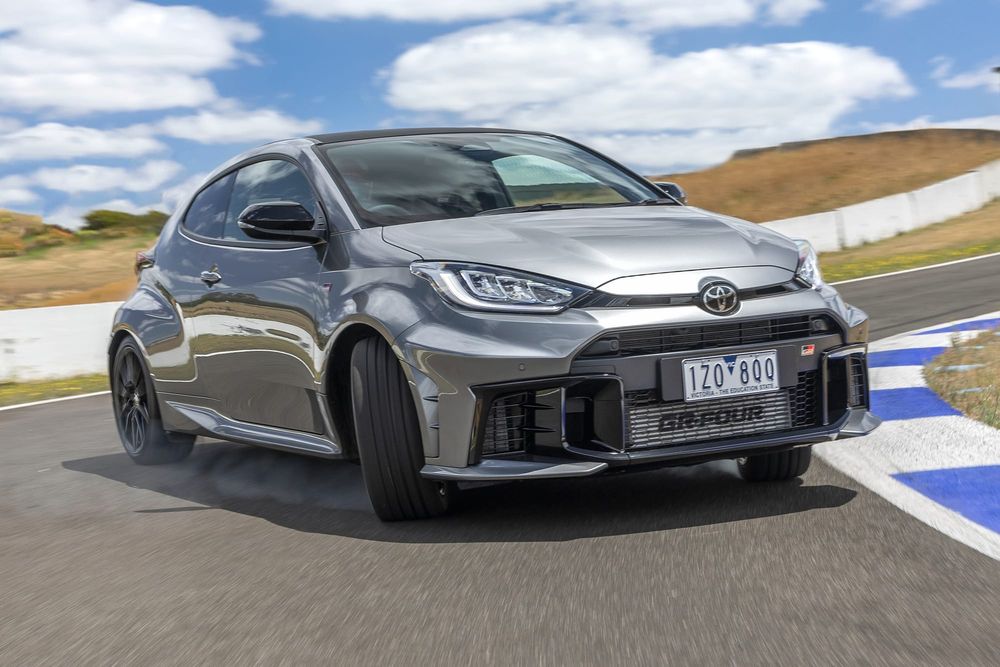
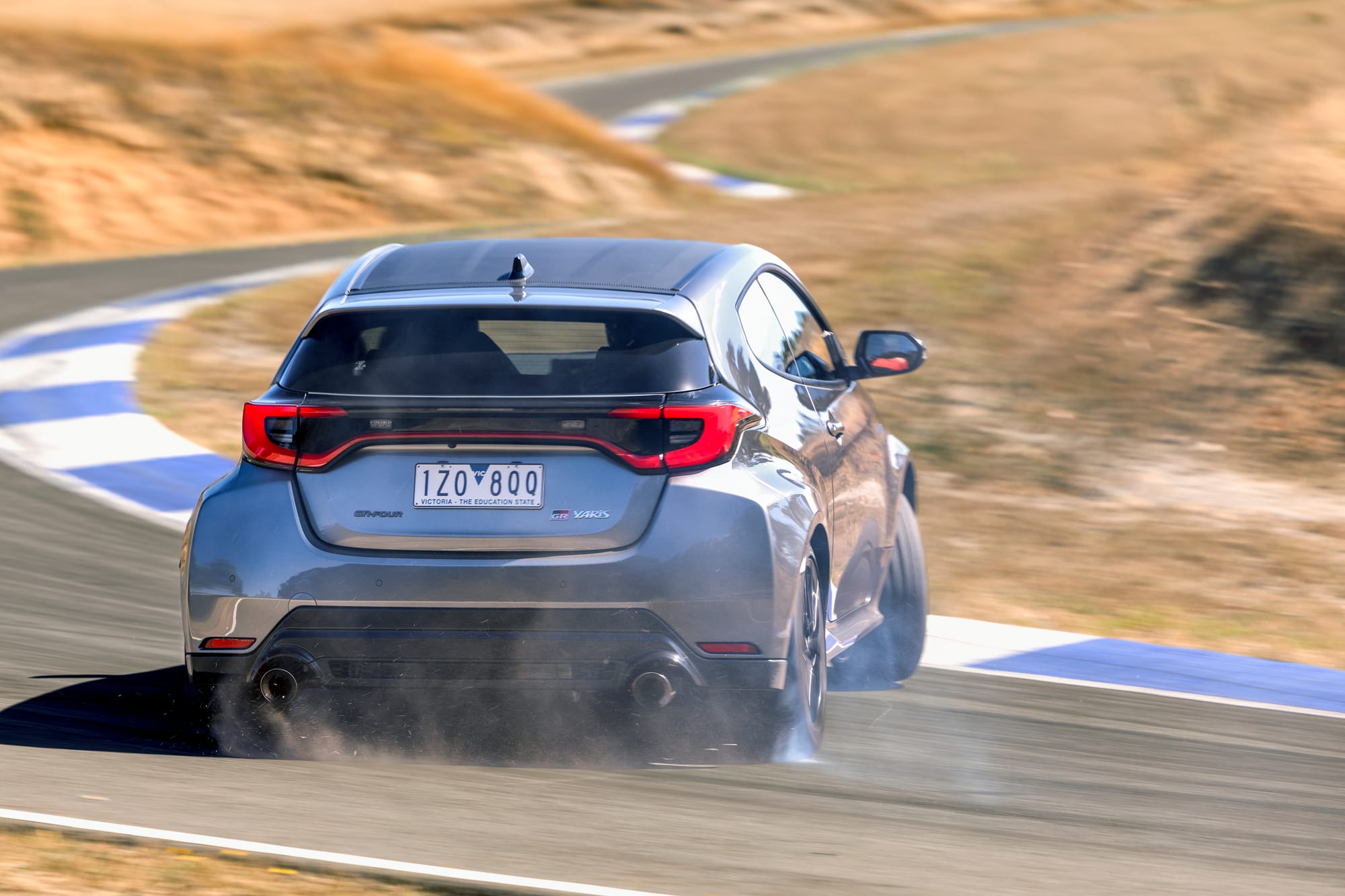
Around Queensland Raceway’s short Clubman circuit, on my first time around the track, it was happily setting times in the 1:03 to 1:04 range, almost endlessly with no brake fade, the only hindrance being the road-biased tyres which eventually started to cry enough.
The GR’s short wheelbase and ‘Track’ diff mode – where it can change between a 40:60 and 30:70 torque split on the fly – means it is playful as any all-wheel drive car can be, rewarding drivers for getting loose and balancing its grip on the edge.
More than a few times I had the steering wheel pointing the opposite way into the fast turn one, only to be able to get on the power and easily straighten it up.
Though it’s far safer, the standard drive mode sees 60 per cent of the power going to the front, making it more prone to understeer and torch the front tyres.
To truly link it to the 1990s Group A rally heroes, there’s even a manual intercooler spray button that the driver can press, cooling the charge temperature and giving the engine more power for longer.
Should you buy a Toyota GR Yaris?
Driving the GR Yaris on track reminded me a lot of my old ‘bug eye’ WRX STI, a car which was about as powerful, weighed about the same and had all the same credentials to make it a future classic.
The GR Yaris is now priced on par with some of the more premium hot hatches in the market, and it doesn’t offer the same level of practicality as the larger GR Corolla, it’s truly in a league of its own for the performance it delivers out of the box.
Of course it’ll never be a full-time family car, but for couples or the well-heeled looking for a track-capable car that can do it in all weather conditions, the GR Yaris is hard to pass by.