Race on Sunday, sell someday: Japan’s car giants turn to racing
Japan’s Super Taikyu Series is now being used as the testbed for not only future vehicles but also upcoming car technologies.

The old adage of ‘Race on Sunday, Sell on Monday’ tends to get overused and isn’t quite as relatable as it once was, with most high profile racing series using cars you can’t rock up to your local dealer and buy as their competitors.
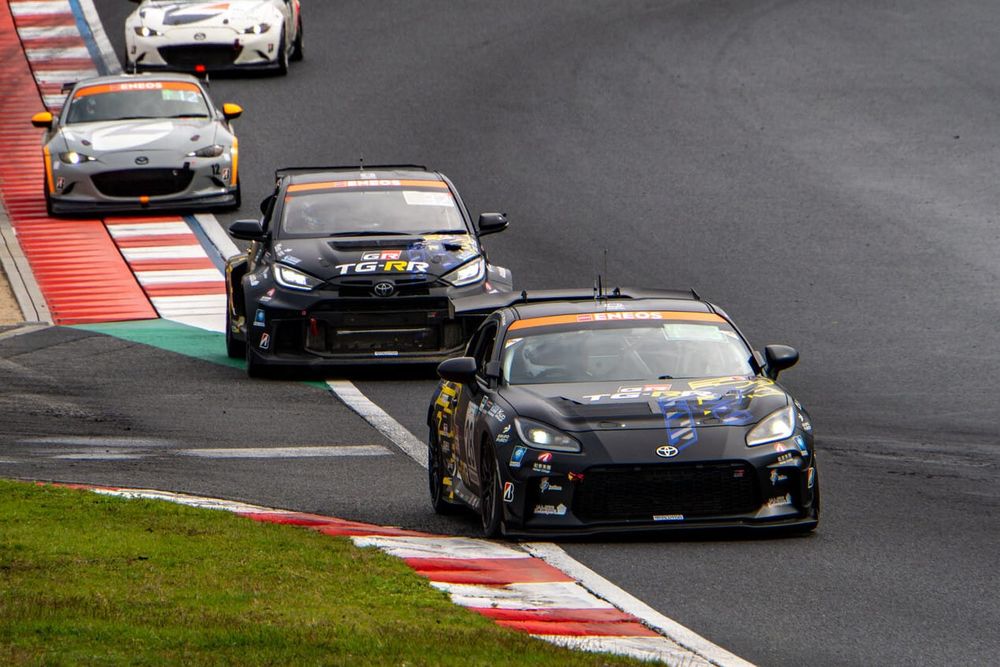
In Japan, that hasn’t seemed to phase the likes of Toyota, Subaru and Mazda much, with all three brands competing in an experimental class of the Super Taikyu Series, all wanting to learn very different things from their entries.
At the most recent round of the championship, the series headed to Fuji Speedway for a 24 hour race, and while much attention was on the front-running GT3 cars, those campaigned in the ST-Q exhibition class were arguably even more interesting.
Toyota has been well documented as campaigning the TGRR GR Yaris M Concept in the Super Taikyu Series, powered by a mid-mounted turbocharged 2.0-litre four-cylinder engine, rather than the front-mounted 1.6-litre three cylinder as found in the standard GR Yaris.
 Jordan Mulach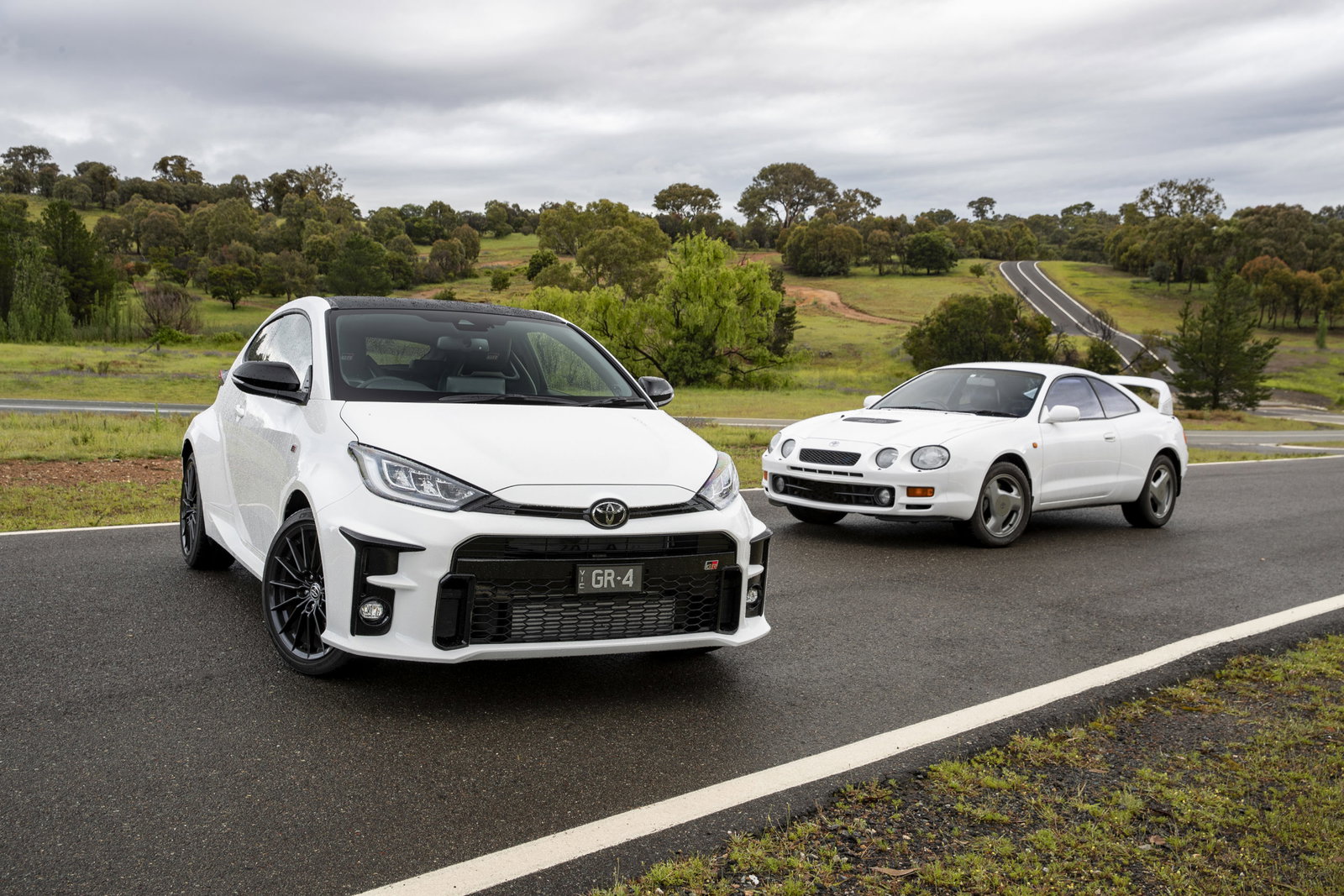
Understood to be the testbed for a new MR2, it’s been out and about for the best part of two years, but at this most recent round more attention was on Toyota’s hydrogen-powered GR Corolla.
Also in service for the past handful of years, Toyota initially started with the GR Corolla running on hydrogen gas, later liquid hydrogen, and now with a superconducting liquid hydrogen pump, the first racing vehicle to adopt the technology.
The pump compresses the liquid hydrogen in the fuel tank and transports it to the engine, and had previously been an electric motor but is now a superconducting motor, allowing it to be fitted inside the tank.
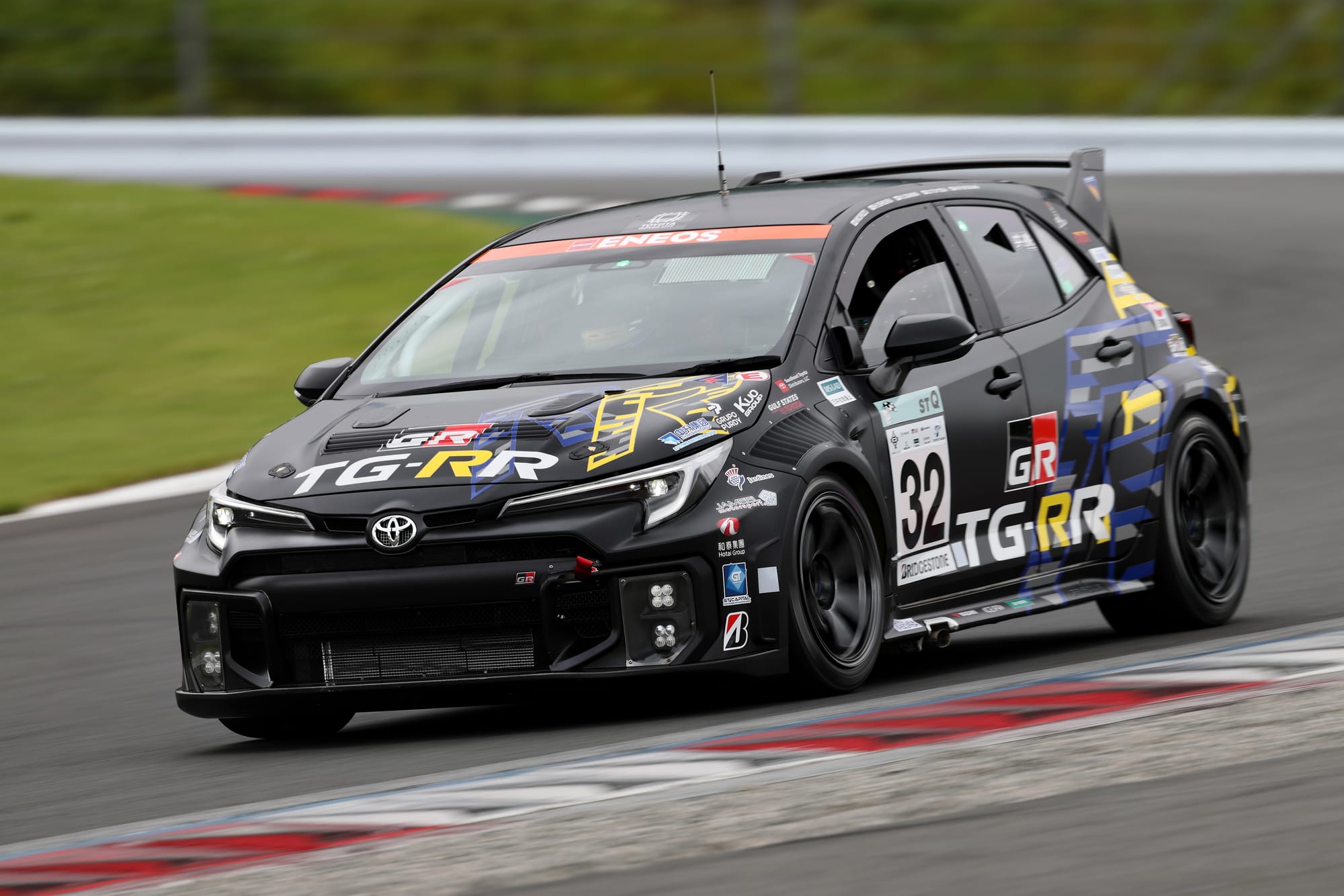
This raised the fuel tank capacity from 220 litres to 300 litres, and saw the motor unit mounted lower down, improving the centre of gravity.
Toyota also changed the GR Corolla’s transmission, swapping out the standard six-speed manual transmission for its newly released eight-speed automatic, allowing the car to lap more consistently.
For Mazda, the Fuji 24 Hour race was the debut of a new version of Mazda 3, dubbed the Mazda Spirit Racing 3 Future Concept.
Featuring a diesel engine, the hatchback runs on Hydrotreated Vegetable Oil (HVO), a biodiesel substitute to traditional diesel fuel.
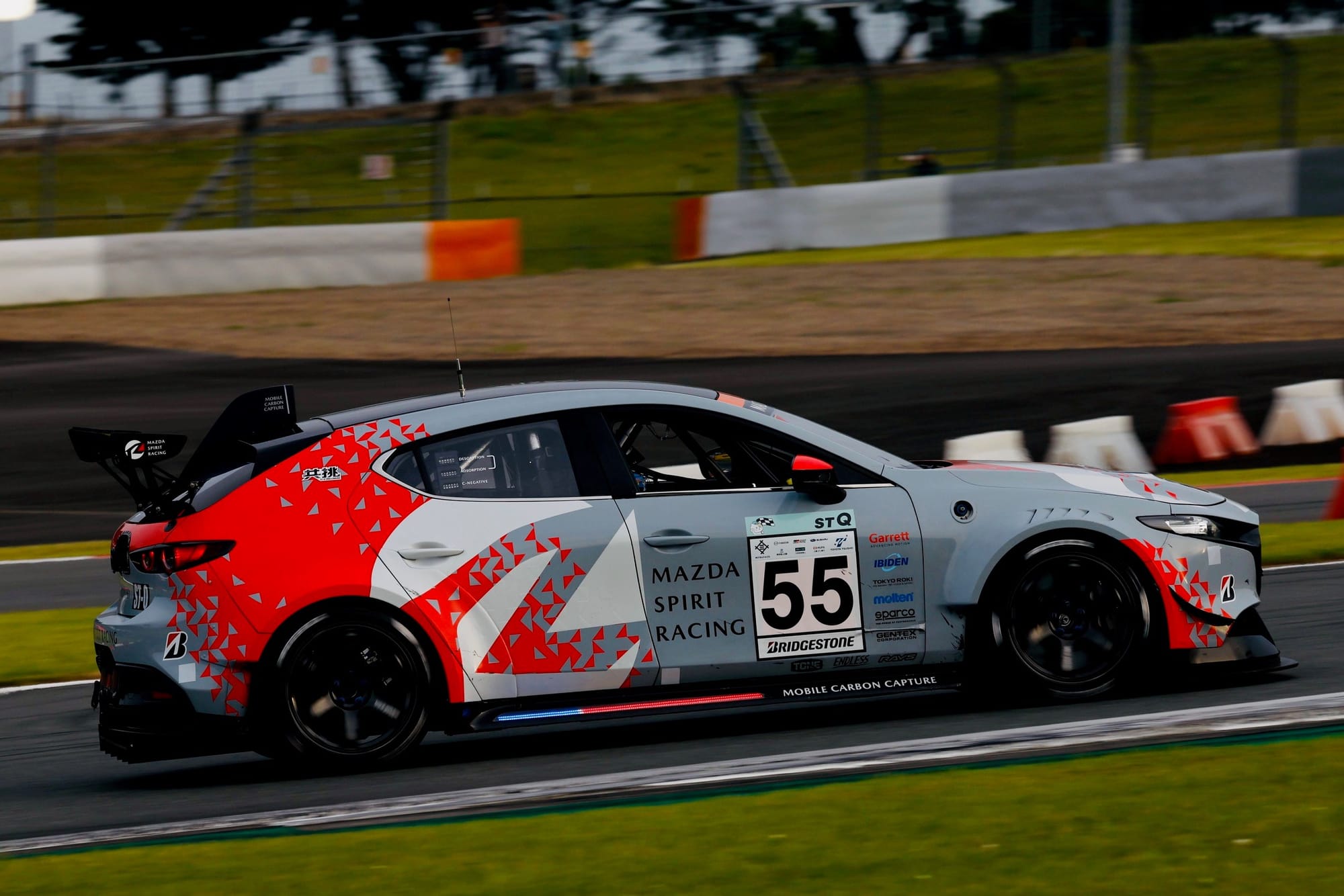
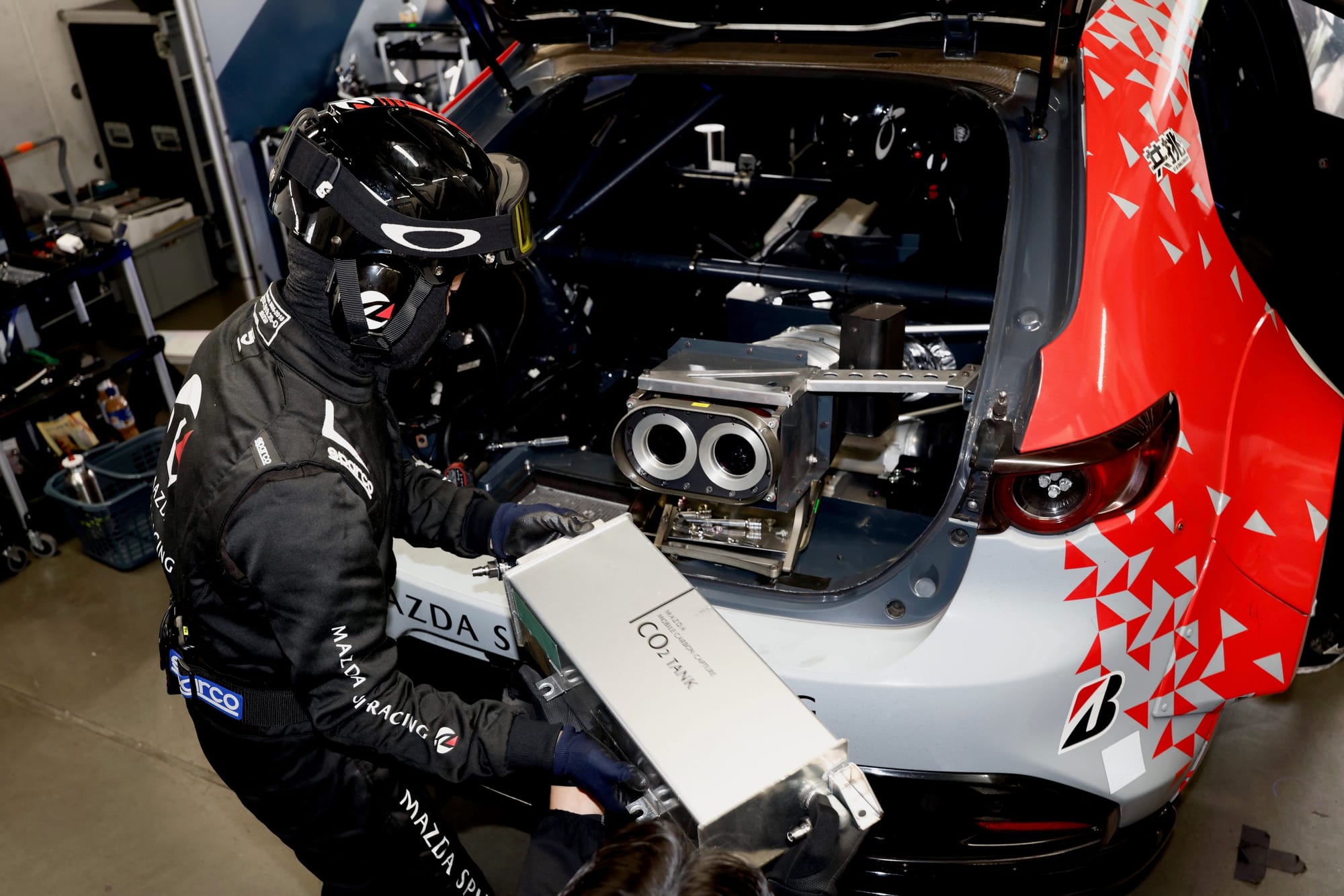
The car also features an onboard CO2 (carbon dioxide) capture system, with Zeolite used as an absorbent which desorbs when heated, eventually compressed and stored in an onboard tank, rather than spat out of the tailpipe.
According to Mazda, across the 24-hour race, a total of 804 grams of CO2 was captured, far more than in its previous test where only 84 grams were captured.
Mazda claims the “combined effect of the CO2 reduction achieved through HVO and the amount of CO2 captured by the system temporarily exceeded the target recovery level assumed for typical use in Mazda production vehicles”.
“Building on these results, Mazda is entering a new phase of development focused on further testing and refining the system in racing cars, which operate under high loads and more demanding conditions.
“Specifically, Mazda aims to further evaluate the potential for reducing net CO2 emissions in its race car at Round 7 of Super Taikyu Series in November.”
Finally, Subaru might not be heading down the same path of emissions reduction as Toyota and Mazda, but its Super Taikyu entry should be even more appealing to enthusiasts.
Earlier this year it revealed the High Performance X Version II (or HiPerfX2), based on its existing WRX-sourced racer, but using the body of the Impreza hatchback.
Subaru has confirmed it’s got three new manual models on the way, one of which is a production version of the Performance-B STI Concept, which in turn inspired the HiPerfX2.
It’s been more than a decade since Subaru last sold a WRX hatchback, though that drought is likely to be snapped when its upcoming model comes out.
 Jordan Mulach