
We drive the most powerful Subaru ever sold in Australia
It’s not a WRX, but the Subaru Trailseeker boasts the title of being the most powerful production model in the brand’s history. Here’s what it’s like to drive.

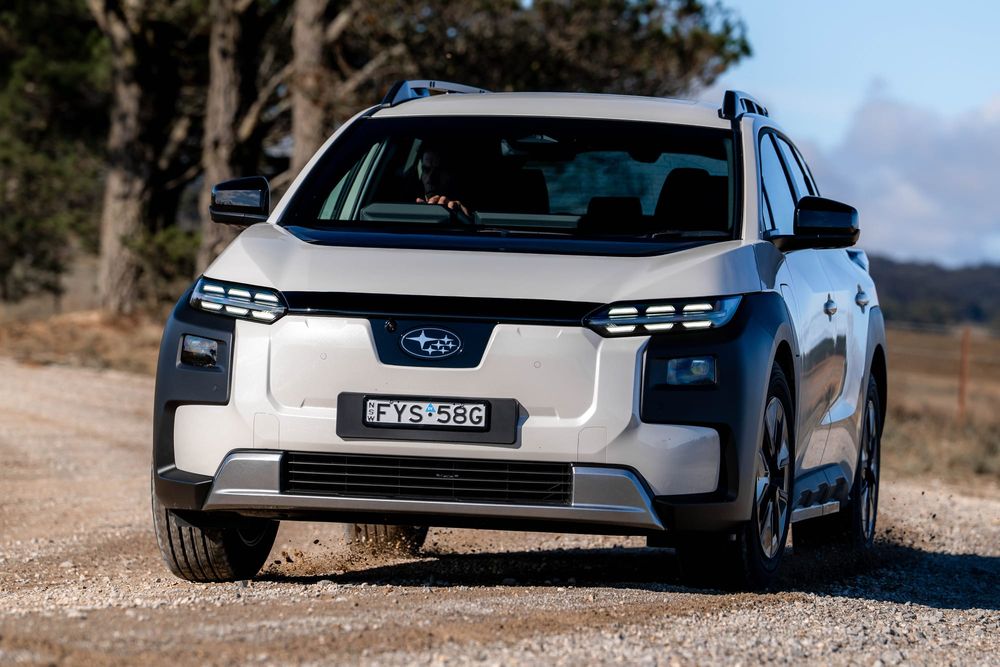
What do you get when you combine the practicality of a Subaru Outback, with a powertrain that’s more potent than a WRX, and lessons learned from the Solterra? The Subaru Trailseeker.
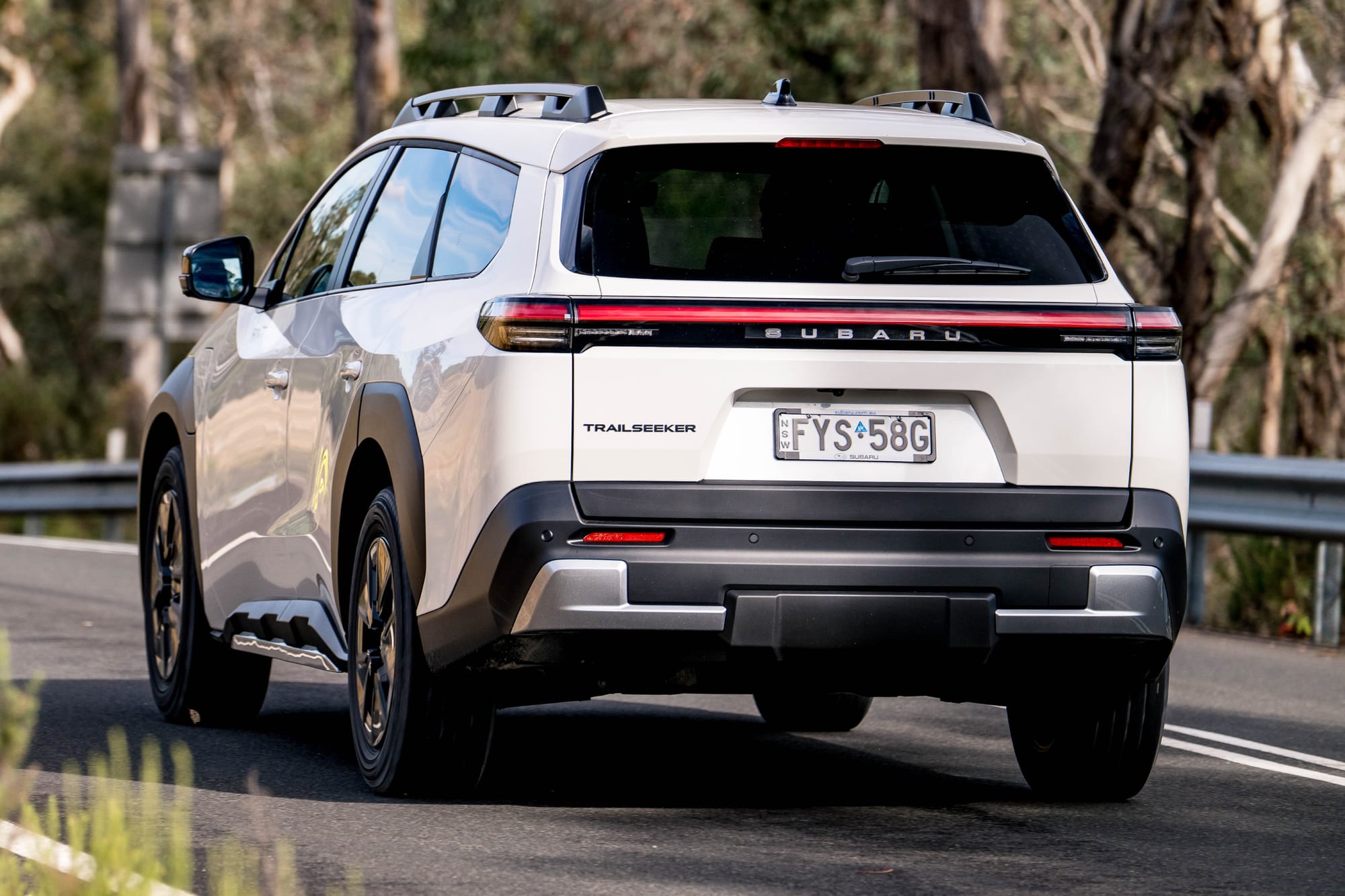
Known as the E-Outback in some other markets, the Subaru Trailseeker is now on sale in Australia as the brand’s second-ever EV, joining the updated Solterra upon which it’s based, but with the wagon-style body which has long made the Outback a popular choice.
Twinned with the Toyota bZ4X Touring, the Trailseeker has more power than any other Subaru produced for Australian roads, making 280kW – 78kW more than the WRX – and accelerating from 0-100km/h in approximately 4.5 seconds.
Prices start from $63,990 plus on-road costs in the entry-level, self-titled Trailseeker AWD, while the better-equipped Trailseeker AWD Touring (not to be confused with the bZ4X Touring) is priced from $69,990 before on-roads.
So, with the key numbers out of the way, what’s the Subaru Trailseeker like?
To find out, Subaru’s launch drive took us from Canberra to the New South Wales south coast, specifically Mollymook, via mixed roads, giving ample opportunity to see how the Trailseeker performs as an electric sibling to the Outback.
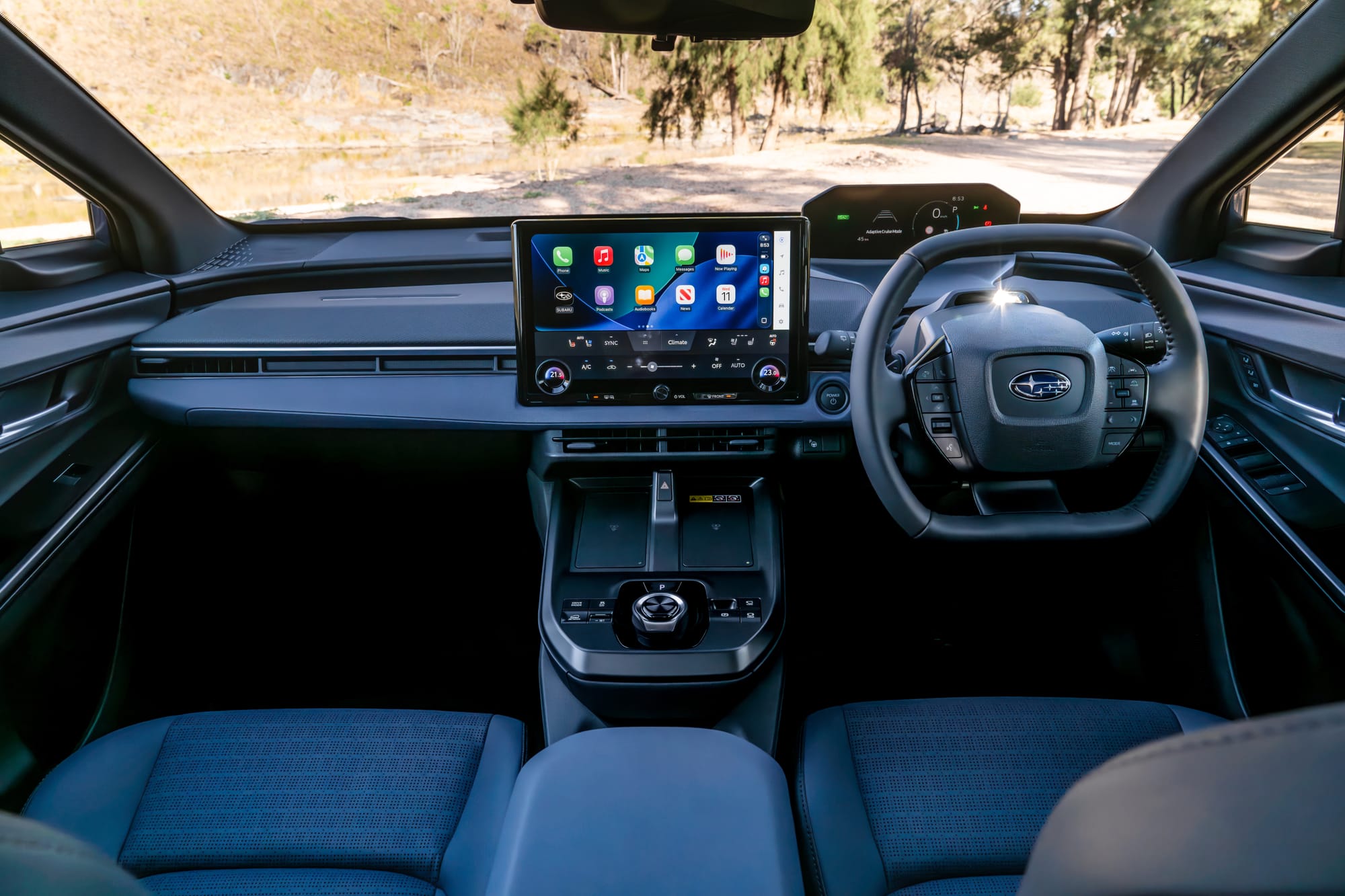
Thankfully, unlike the glut of other EVs entering the market, Subaru has gone light-on with the deletion of physical buttons from the Trailseeker’s cabin, with the main temperature controls still featuring as knobs, though specific adjustments for the climate control are done via the touchscreen.
The semi-rectangular steering wheel continues to have a large number of controls on either side of the horn pad, while its top section – in my driving position at least – blocks the view of the lower part of the digital instrument cluster, though not any of the critical information.
In the base Trailseeker, what’s immediately noticeable is the relative lack of road noise penetrating the cabin, with its 18-inch wheels and tyres not impeding on the driving experience, even across some coarse tarmac.
The difference between the two Trailseeker grades was realised very quickly when in the Touring, which utilises larger 20-inch wheels, delivering higher levels of road noise and less refinement over bumps – there’s no crashing, but it’s a far less supple ride than on the standard 18s.
For the amount of power beneath your right foot in the Trailseeker, it never feels overwhelming. The standard drive mode feels extremely linear, almost akin to the Outback’s CVT automatic, but with the added bonus of being able to call up even more power when needed.
Like a number of other EVs, the Trailseeker’s regenerative braking can be adjusted to suit the conditions via paddles behind the wheel, going from no assistance to engine-like braking to near one-pedal driving easily.
All of these levels are well calibrated and intuitive to call up, though for the bulk of the drive we left it in the most ICE-like mode, which gave a predictable feeling every time the throttle pedal was released.
But it’s when it’s pushed all the way down that the Trailseeker shows off its party trick, with its 280kW propelling the circa-2000kg SUV with ease, even when entering an intersection on a low-grip surface.
I know it’s easy to fall for the marketing response, but the reaction of how the dual electric motors react to tricky conditions is reminiscent of Subaru’s respected symmetrical all-wheel drive systems, while the well-calibrated traction and stability controls mean drivers aren’t fighting the wheel when not needed.
Surprisingly, we were even able to take the Trailseeker to the Pheasant Wood Circuit (formerly Marulan) for some guided laps, allowing the full gamut of power to be exploited, as well as the brakes and tyres tested.
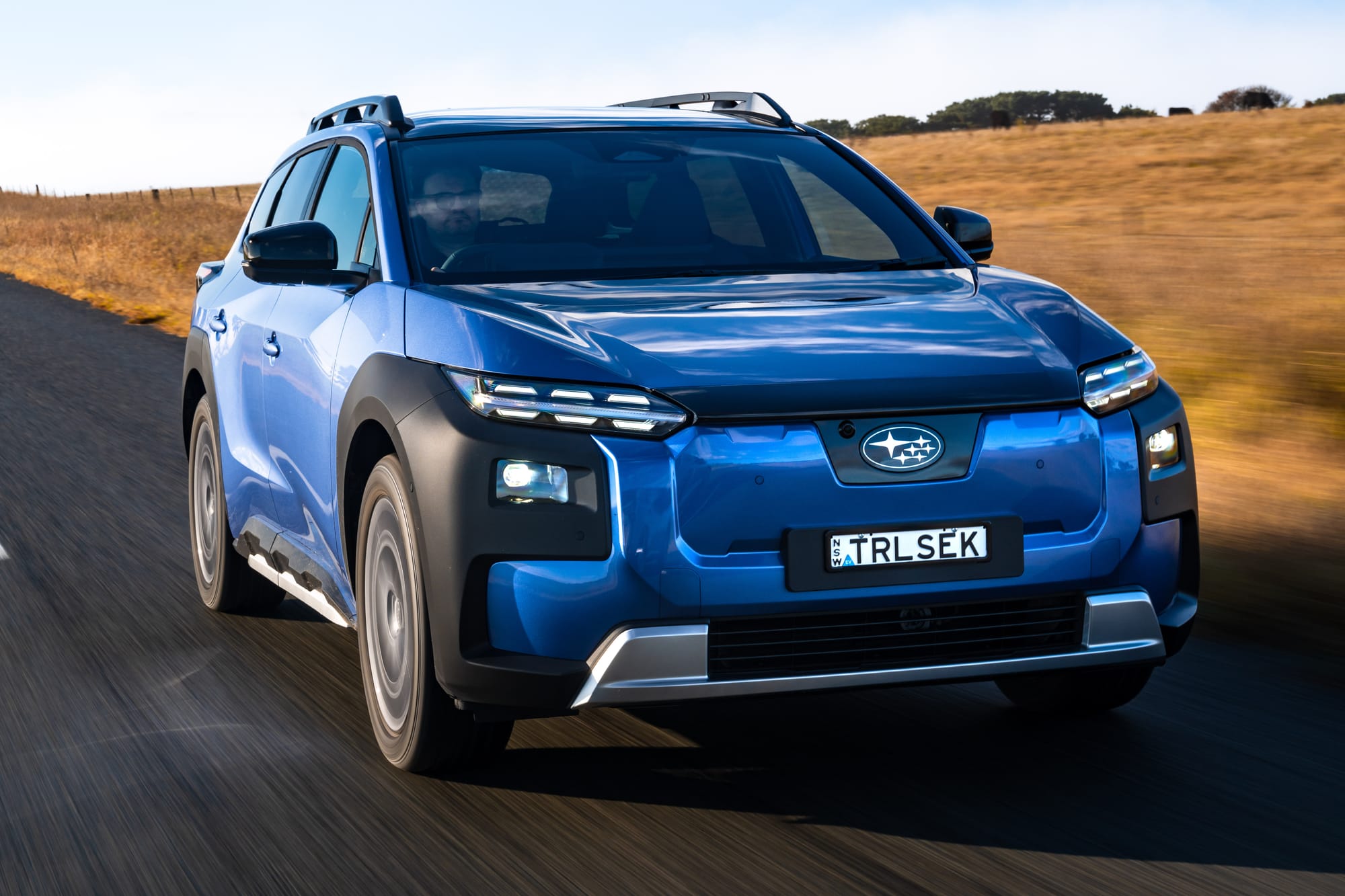
You won’t be setting any lap records in the Trailseeker, but for those who expect their cars to go above the limits of what some would normally ask of them, it will remain sure-footed even when pushed at a decent lick.
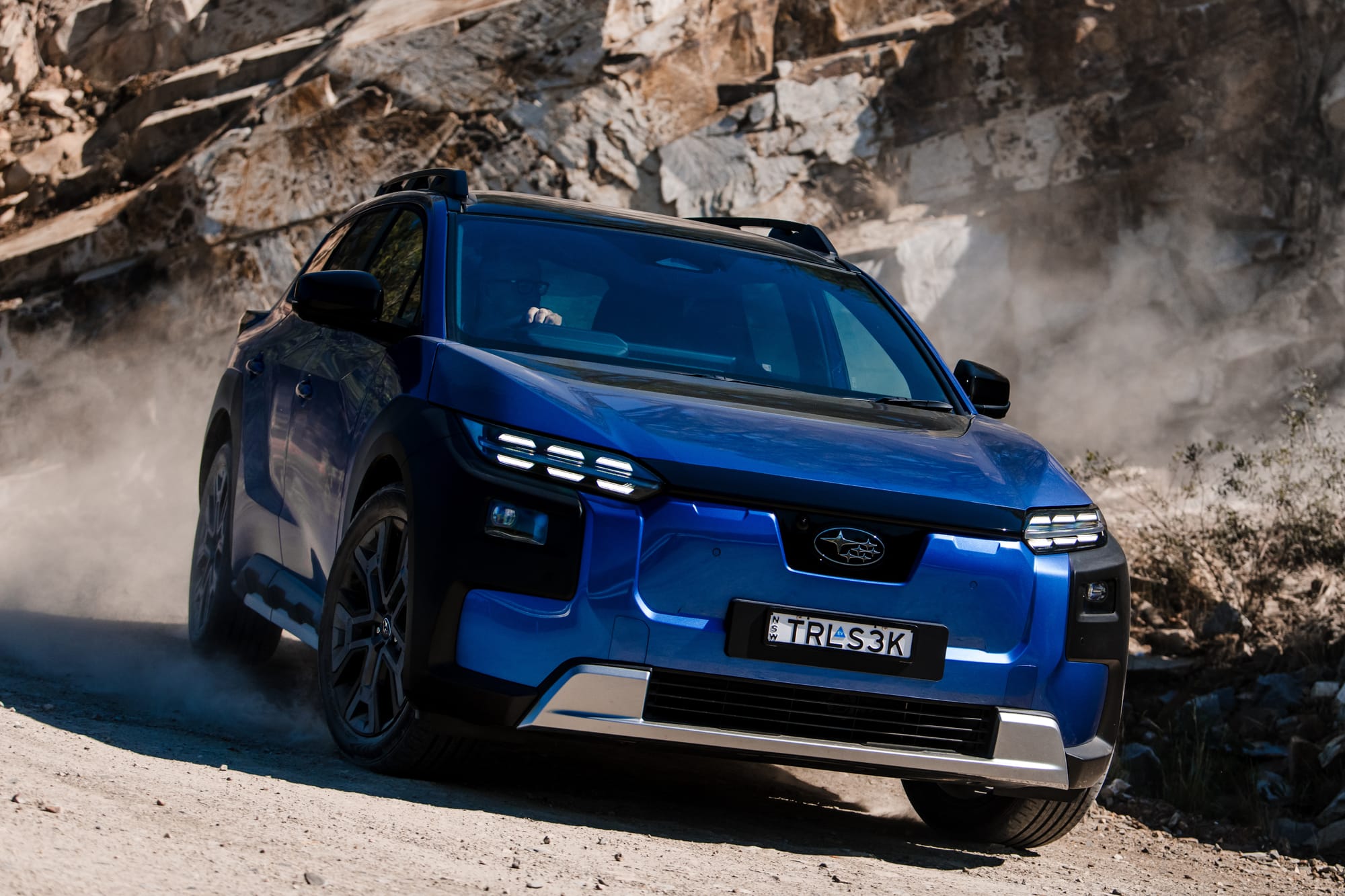
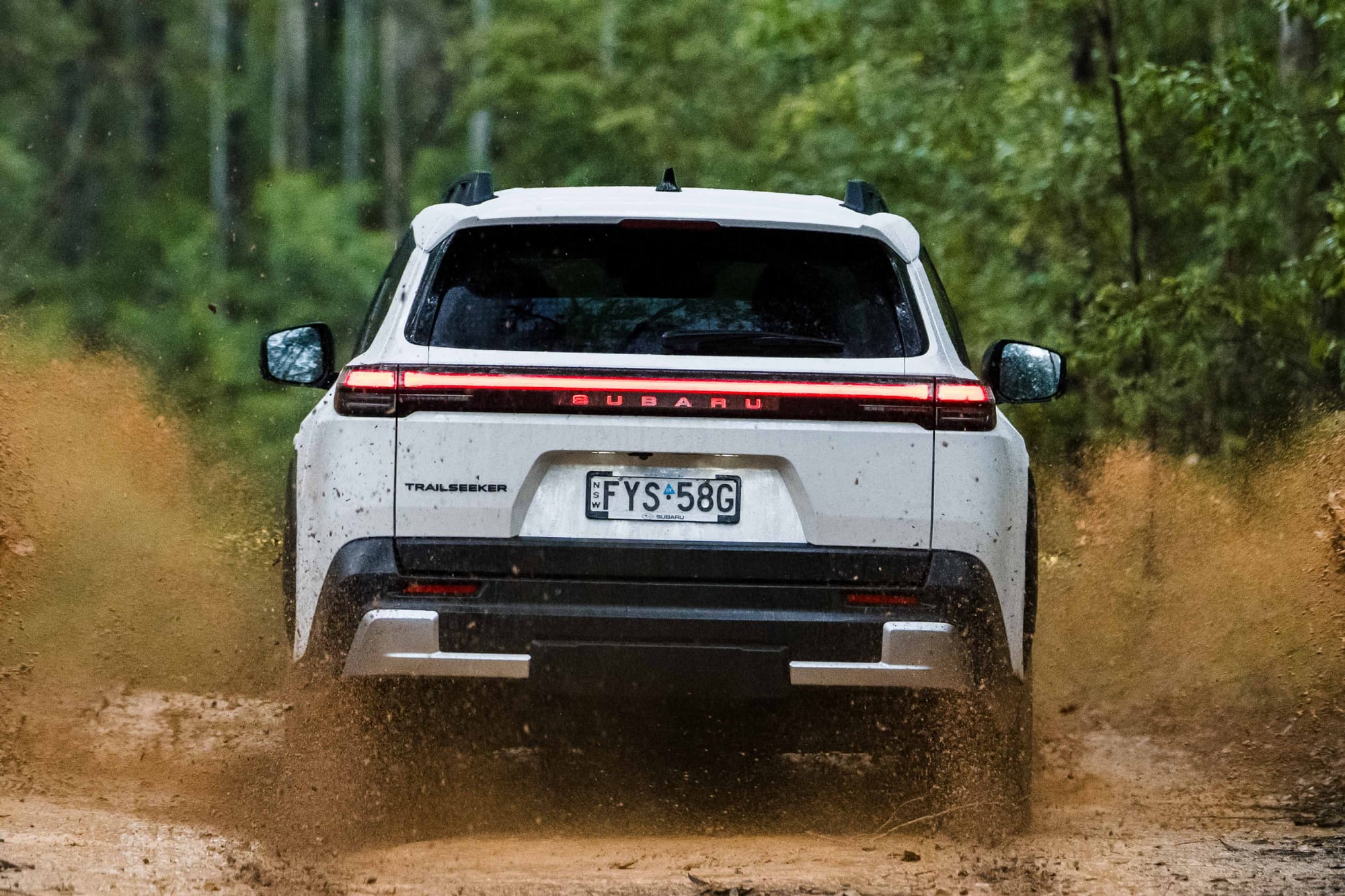
Of course, it would’ve been remiss not to take the Trailseeker off-road, given its name does a good job of making a claim that it’s capable to do so.
You likely won’t see one of these climbing up Beer O’Clock Hill, though the lighter side of off-roading is still within reach, thanks to its 211mm of ground clearance (just 9mm less than the new Outback).
However, there is one large caveat to the Trailseeker if you are taking it on long trips, and it’s not the driving range.
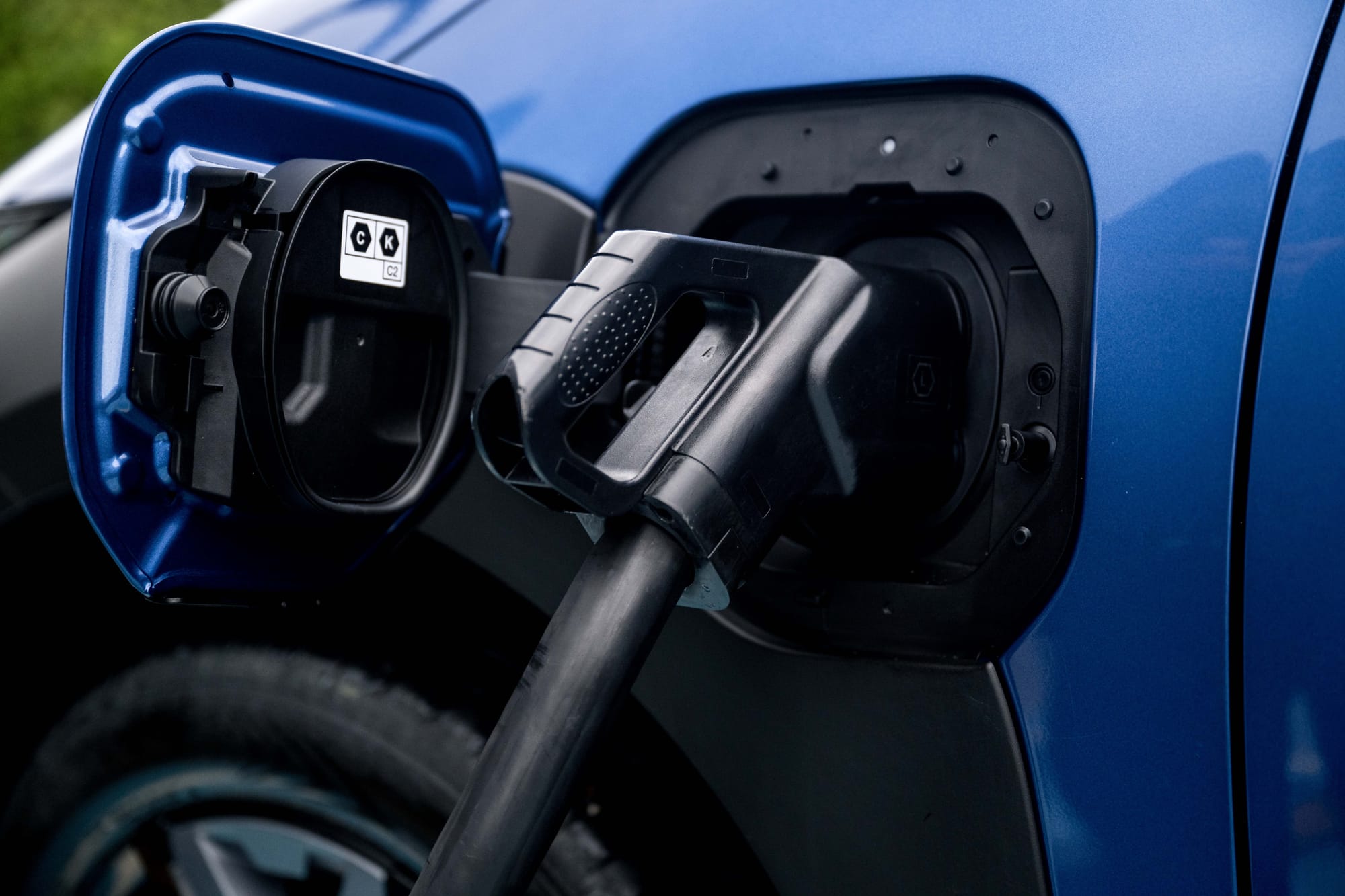
Like so many other EVs, the Trailseeker doesn’t have a spare wheel, instead it features a tyre repair kit – handy for small punctures, not so much if you’ve got a tear in the sidewall from hitting debris on the road, or hitting a rock at the wrong angle driving down a trail.
The Trailseeker’s energy consumption was close to claimed through the majority of the trip, hovering around 16-17kWh/100km for the majority of the driving, aided in part that it was overall downhill.
Though we weren’t able to test the Trailseeker’s boot space, its circa 600-litre storage capacity is about on par if not bigger than the Outback.
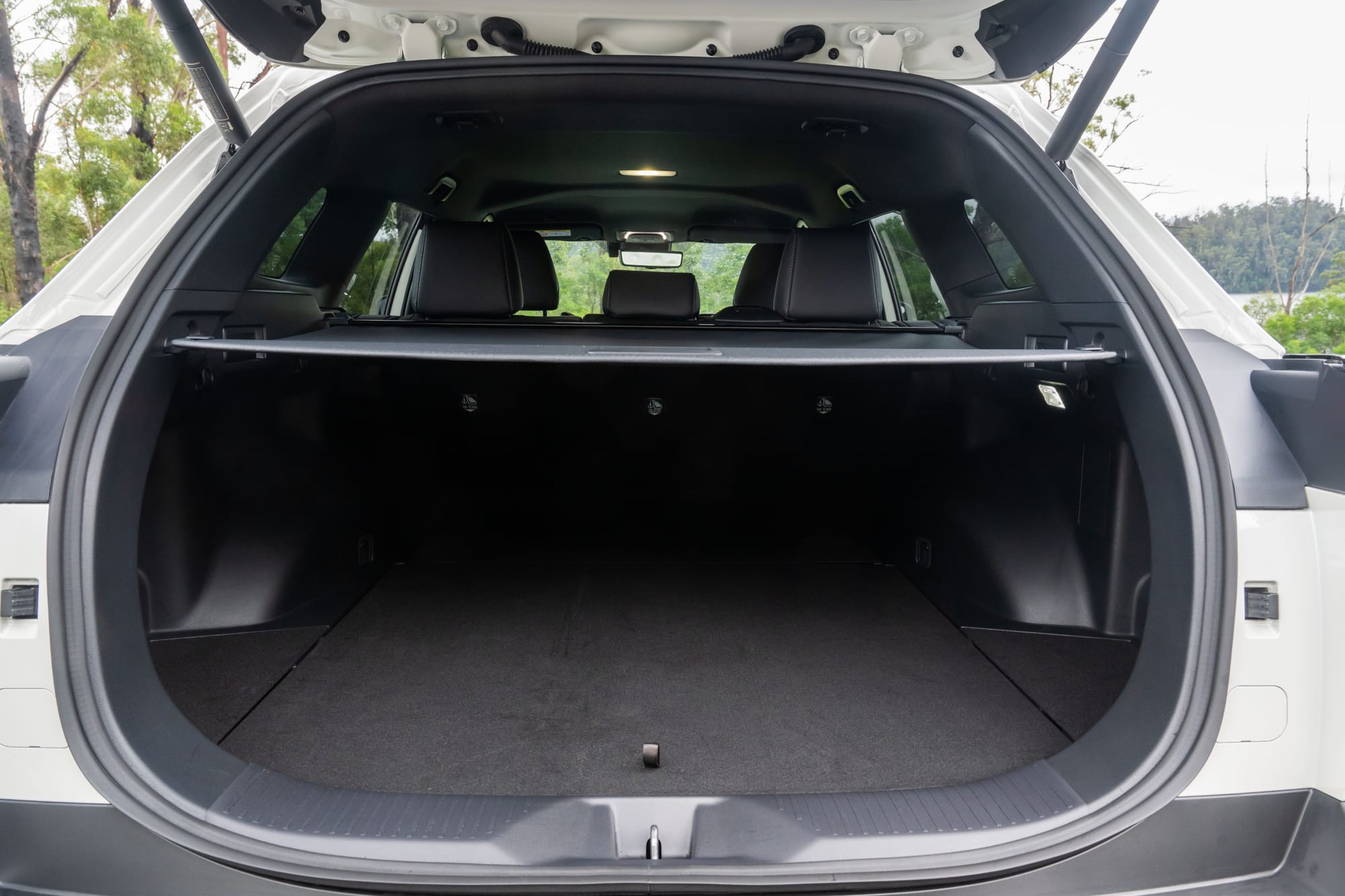
Opting for the Touring gets you vehicle-to-load (V2L) capability with a 220V/1500W power outlet in the boot, rather than being able to use the charging port as its power supply.
While it may seem tempting to spend the extra $4000 on the Touring – which gets you semi-autonomous parking assist, V2L, a panoramic glass roof, memory seats and mirrors, ventilated front seats, leather-accented upholstery and a 10-speaker sound system – the base model is the pick for me.
Not only does it have an extensive equipment list, but the ride advantage on the smaller 18-inch wheels is truly noticeable, and also unlocks a greater claimed range.
So is the Subaru Trailseeker a viable alternative to the Outback?
It appears to cover most of the bases that made the Outback popular for many years, all without reverting to the polarising styling of the new-generation petrol SUV (or lifted wagon, if you must).
The Trailseeker is a rare family EV that doesn’t feel or at least look like another generic SUV, and certainly will be on the consideration list for many buyers of Japanese vehicles who are looking to go electric.
It’s not the perfect package and its price point puts it above some of the more popular rivals on the market, but it can provide a happy middle ground for those used to the Subaru driving experience but wanting to convert to plugs.