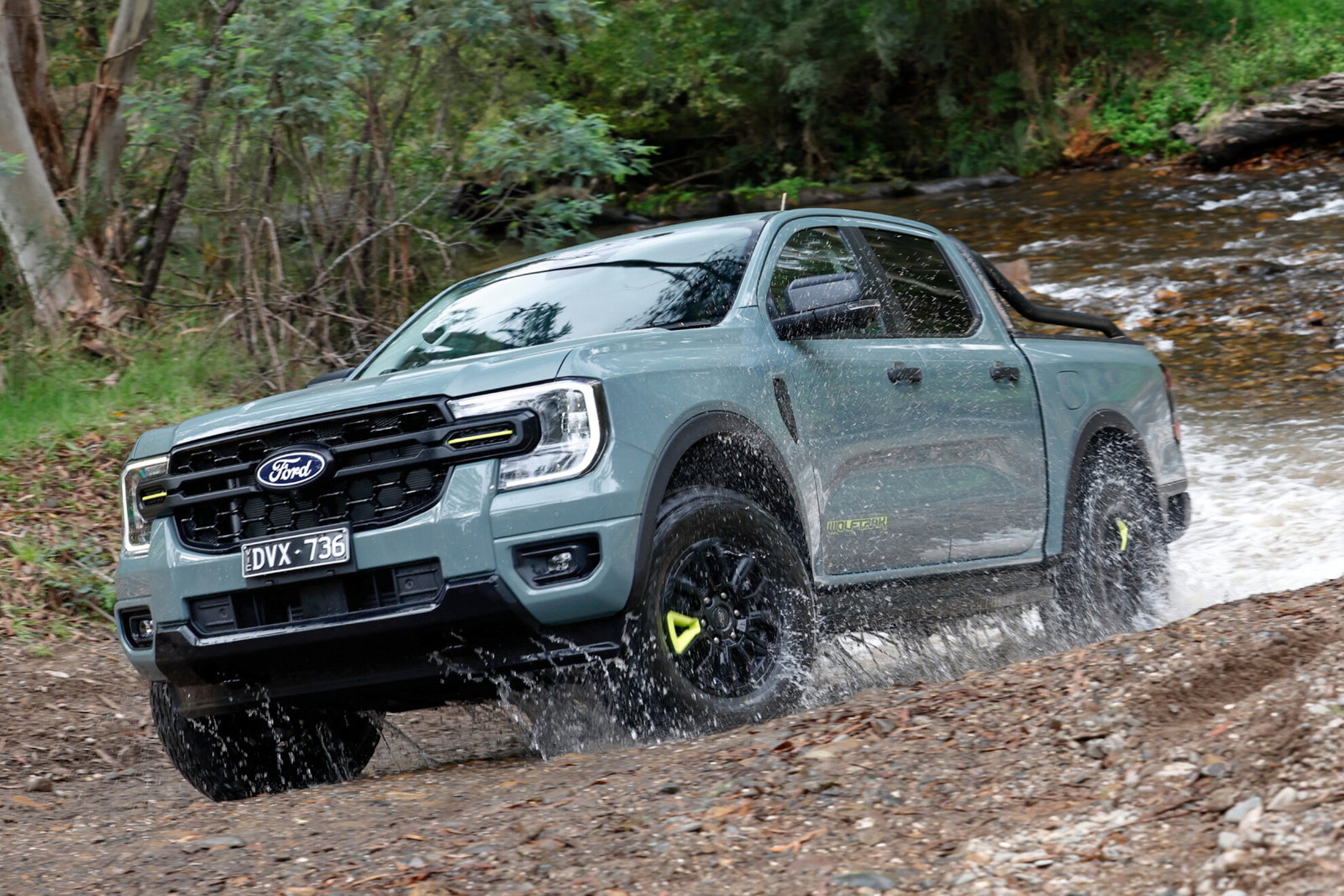
Ford Ranger Wolftrak review
A revised Ford Ranger lineup now includes the Wolftrak in the middle of the pack. Is it good enough to be the leader?

Ford’s current Ranger is now four years into its lifecycle, as is only now being threatened to be knocked off the top spot as Australia’s best-selling vehicle, amid a stop in deliveries and soaring sales for the Tesla Model Y.
As a part of a recent refresh released earlier this year, Ford cut the bi-turbo engine from the Ranger’s lineup, while adding the V6 to more variants, and also throwing in a few more grades for buyers to choose from.
One of those is the new Ranger Wolftrak, sitting in the middle of the lineup, between the trade-spec XLT and the ever-popular Wildtrak.
Priced from $70,990 plus on-roads, the Wolftrak is $3000 more than the equivalent V6 dual-cab pickup XLT, and just over $4000 less expensive than the Wildtrak.
Thanks to Ford New Zealand, I got to have a drive of the Ranger Wolftrak through parts of the North Island on my honeymoon, though given my passenger was slightly more interested in the landscape than the ute, all of the photos here are from Ford’s press pack – no, we didn’t decide to do any off-roading or river crossings to test it out.
So, with a ute that’s so popular in Australia and New Zealand among families and adventure buyers, how does the Ranger Wolftrak perform?
Put simply, it’s no major surprise that it is a best-seller in either country. Cynics ask how a ladder-frame, leaf-sprung ute can really be comfortable, even when so much local development time and money has gone into the chassis, but the hallmarks of what make the Ranger stand out amongst its peers continue to ring true in the Wolftrak.
Despite riding on Bridgestone Dueler all-terrain tyres, the ride is impressive over all manner of road surfaces, continuing to be as compliant as you’d expect from a vehicle of the Ranger’s size on rough tarmac, with surprisingly little road noise entering the cabin.
Our ute was unladen, but there were a handful of occasions where the front end ‘floated’ over consecutive bumps, never to a point of feeling unsafe, but a bit of a surprise given the usually planted feeling at both ends.
Of course, it’s not a sports car, though even on some tight and twisty roads the Ranger still felt manoeuvrable, within the bounds of what you’d ask a ute to do.
A standout of the Ranger package continues to be the pairing of its 3.0-litre V6 turbo-diesel engine to a 10-speed automatic transmission, which seems to always find the right way to make use of the available 184kW and 600Nm outputs.
It’s not the most frugal of powertrains, with our 1040km journey returning an average fuel consumption figure of 9.0L/100km, across 15 hours and five minutes of driving, at an average of 69km/h.
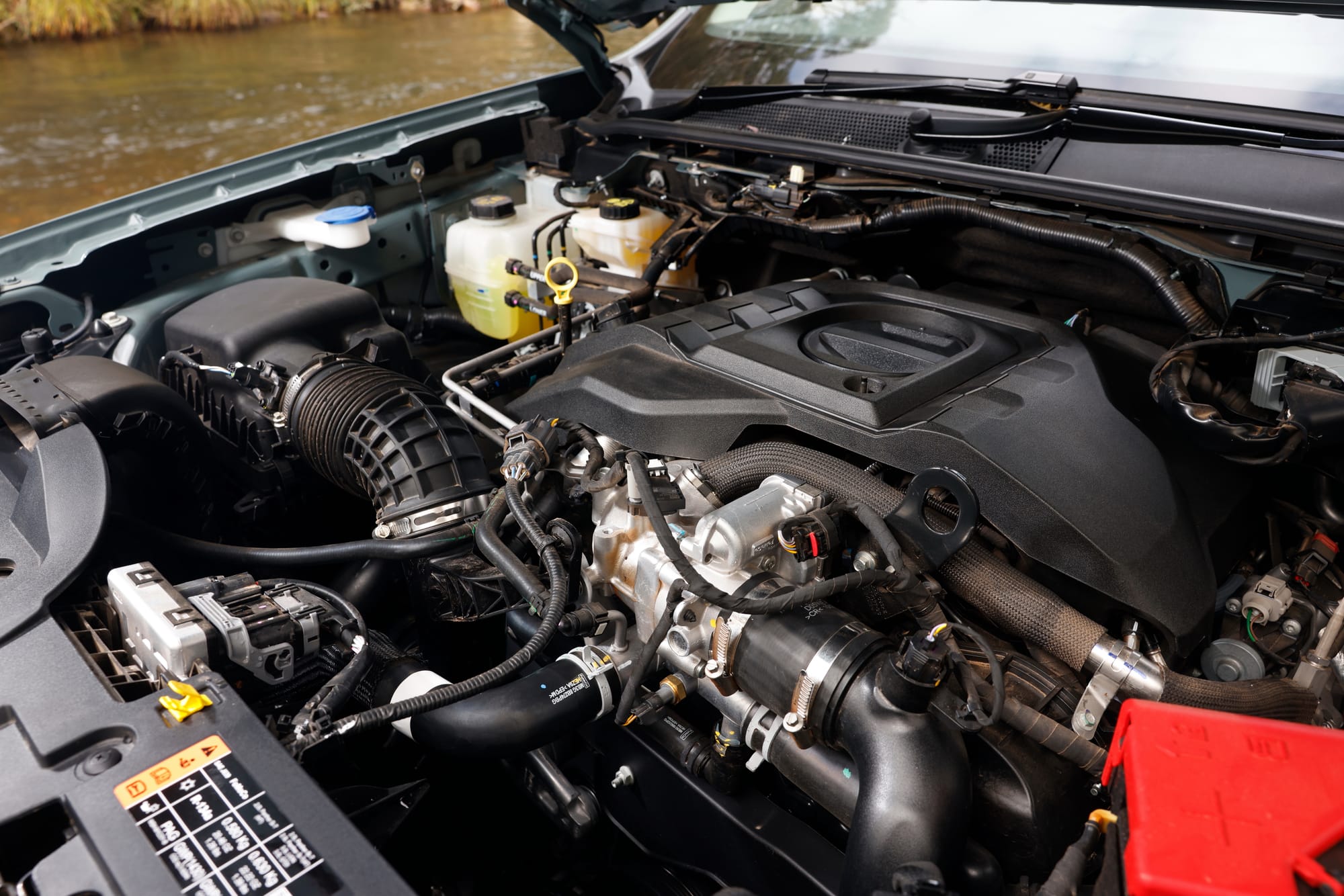
If it weren’t for that 10-speed automatic, I’d hate to think about how much thirstier it would be, and it must be noted that there was a decent amount of uphill driving taking place, especially climbing up from Taupo to Mount Ruapehu.
In the case of the latter, the conditions didn’t require the need for snow chains but did call for using the four-wheel drive auto mode (4A) in the Ranger, rather than leaving it in rear-wheel drive (2H).
Akin to an all-wheel drive system, leaving it in 4A splits power between the front and rear wheels depending on where it needs it the most, without having to worry about damaging the transfer case by having it in true four-wheel drive mode (4H and 4L).
Though not entirely necessary – as there were a plethora of JDM people movers and rentals which made the same ascent – it was good to have for peace of mind, and has previously shown itself as an important feature in off-tarmac testing.
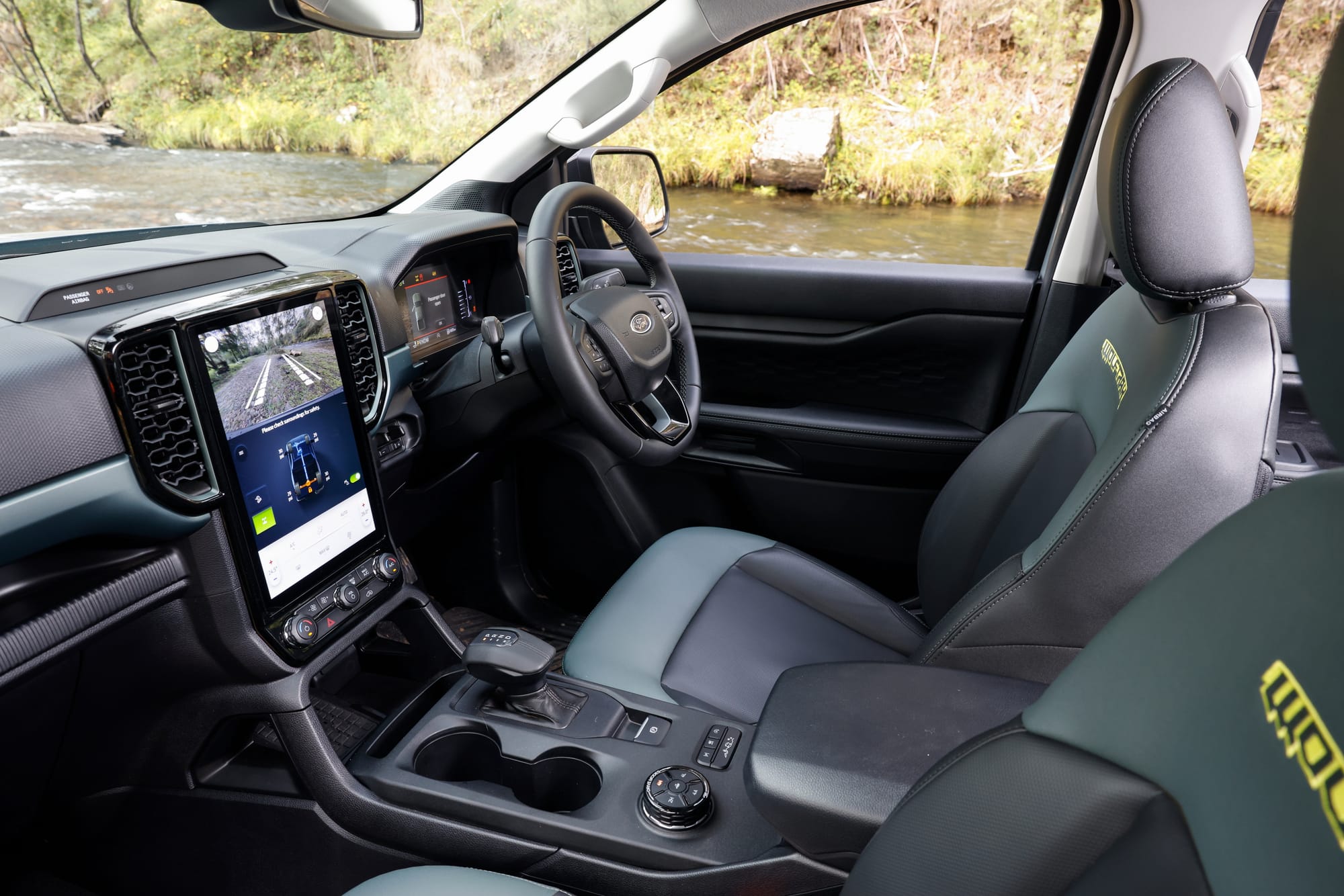
In the cabin there’s enough equipment to keep occupants happy, with a 12-inch infotainment touchscreen, dual-zone climate control, and rear air vents for dual-cabs. Ahead of the driver sits an 8.0-inch digital instrument display, which sadly misses out on information in the Super Duty such as additional temp gauges and boost display.
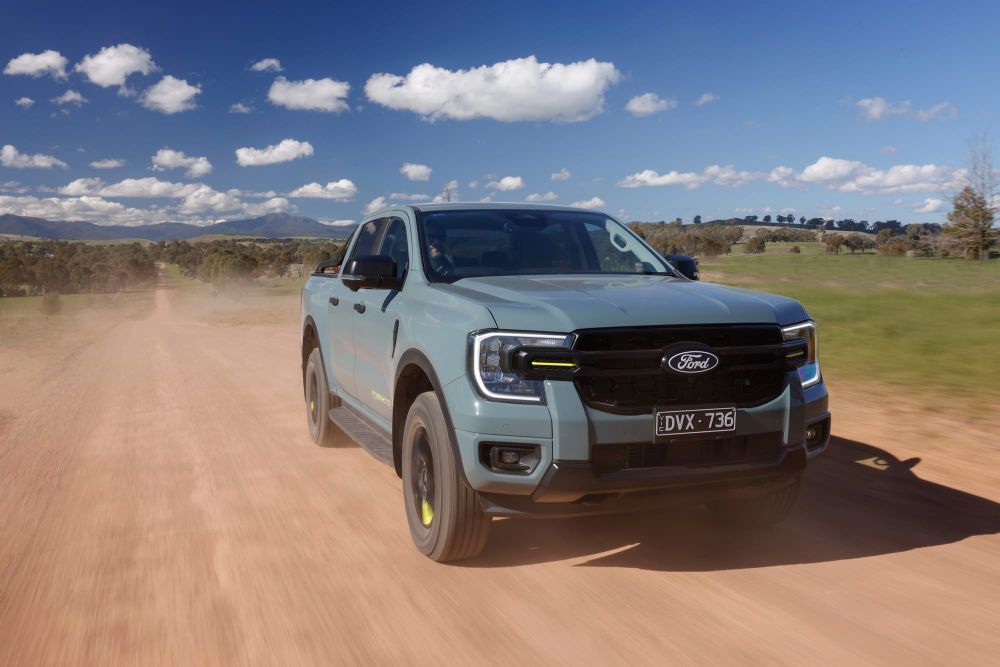
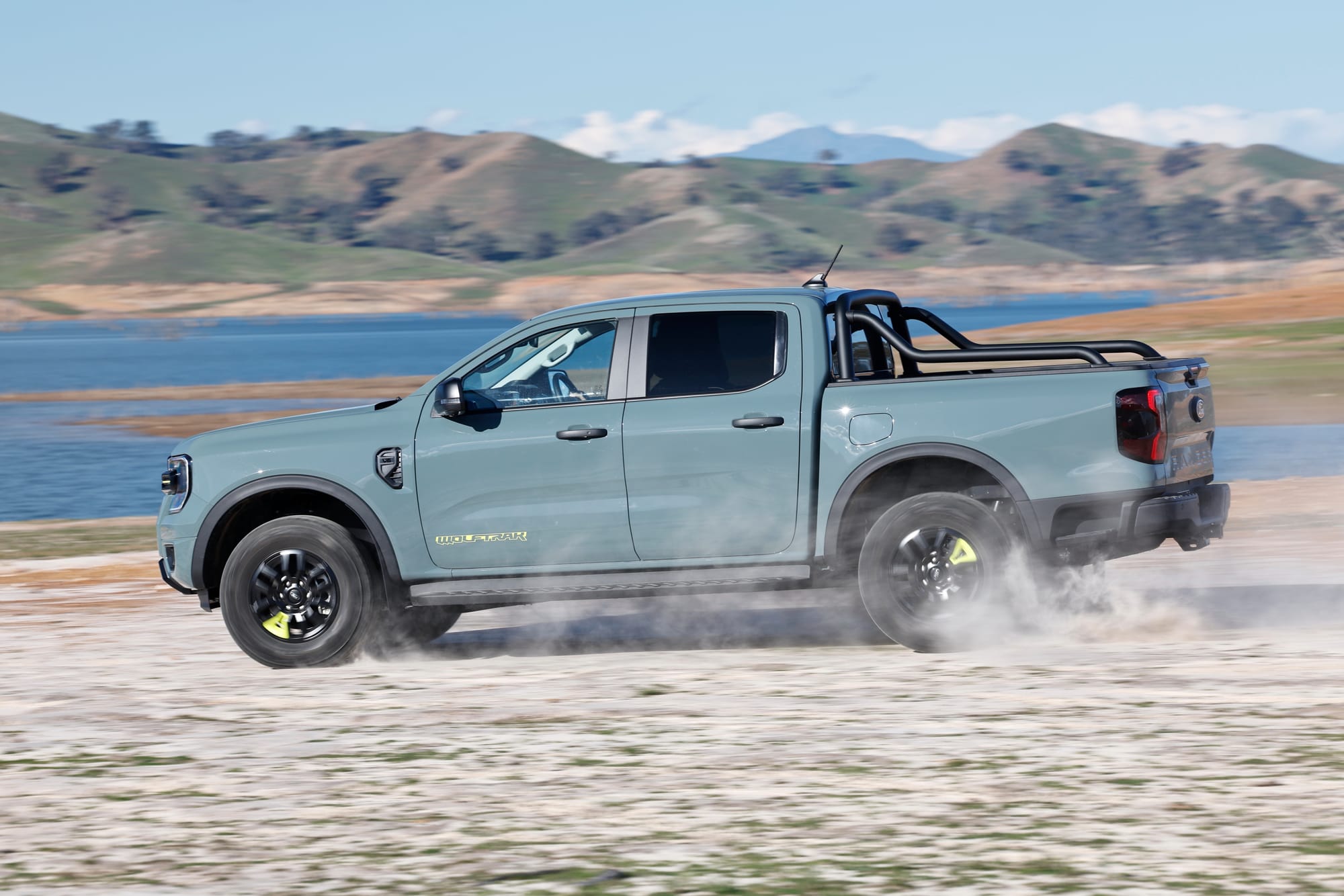
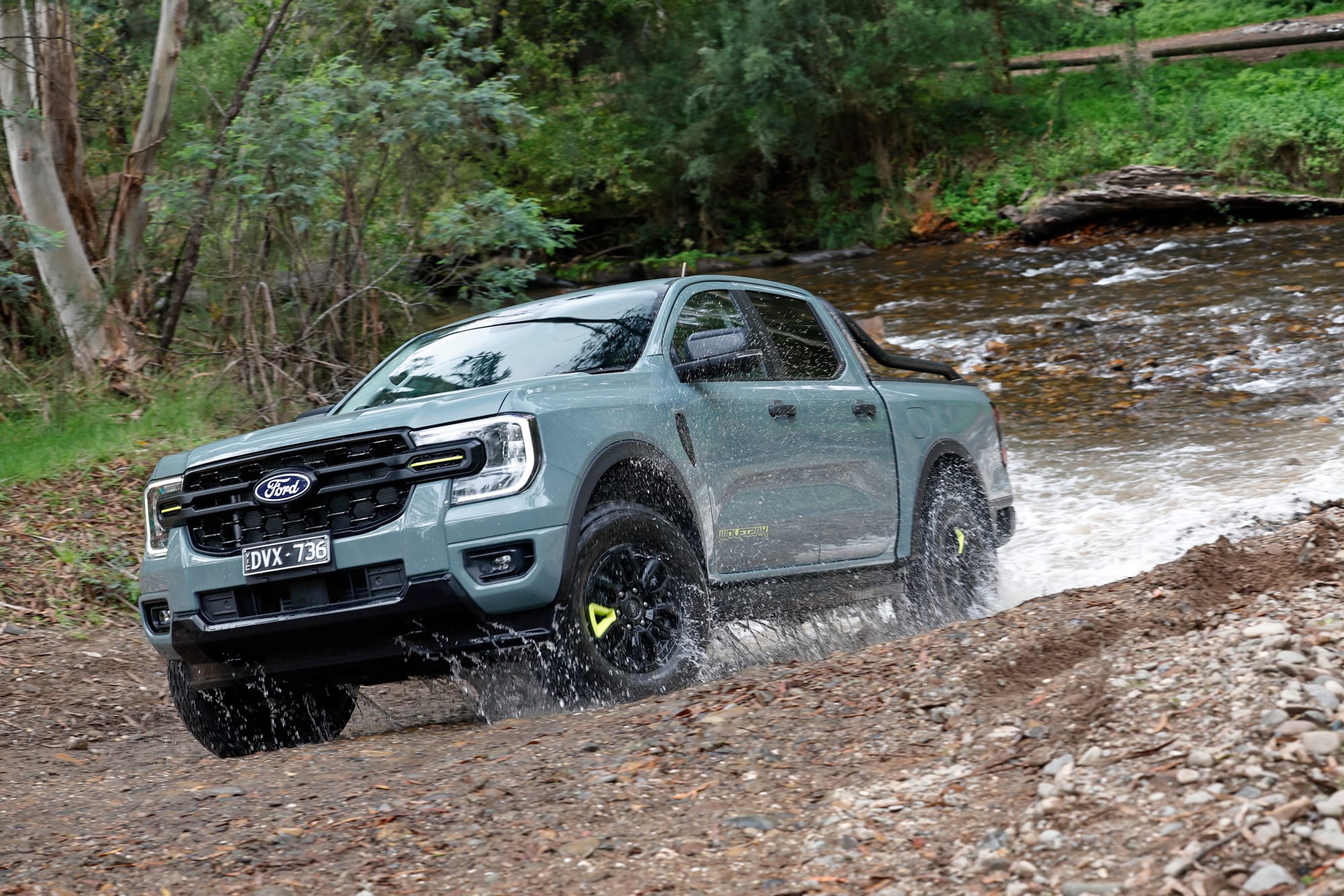
If you haven’t already guessed, the theme of the Wolftrak is zest, with lime green ‘Zest’ accents on its grille and within its black 18-inch wheels, while the black highlights continue with the rear sports bar.
Buyer preferences vary, but it's a shame the Wolftrak misses out on a power roller shutter or any other kind of cover for the tub, which meant our suitcases ended up in the backseat, though this is likely something most who needed it would add after the fact.
While the Traction Green interior accents add some colour to the cabin, the vinyl seats are a bit of a throwback to the olden days of utes, and with their lack of heating, can be a bit on the chilly side to sit on if you’ve been out in the wet and cold conditions.
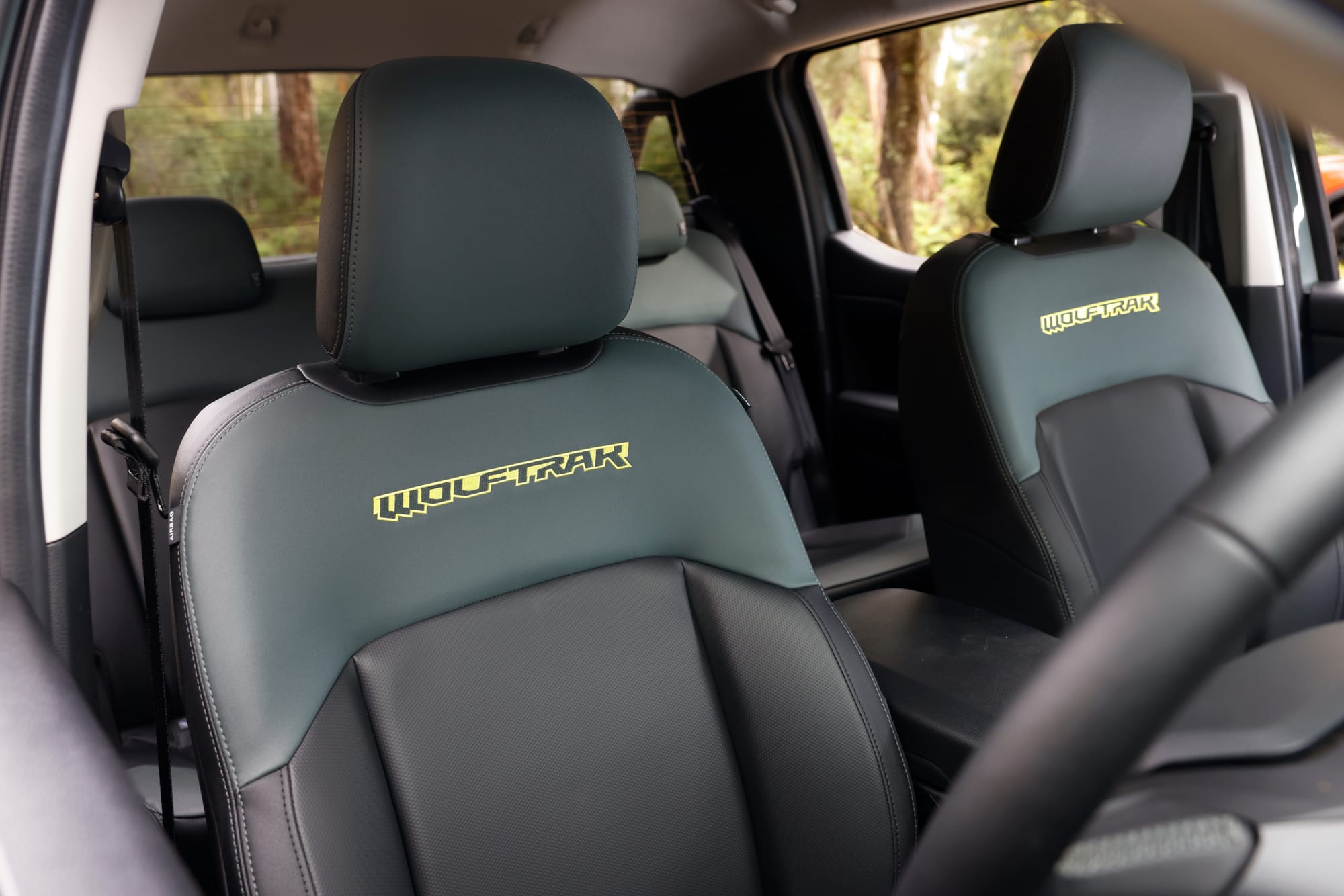
Again, those who want these niceties can step up to the Wildtrak, which starts to cut away into the Wolftrak’s buyer base when you consider what additional equipment it offers.
The same could be said for the standard six-speaker sound system. It does an alright job, but lacks in comparison to the Wildtrak’s 10-speaker B&O system.
All up, the Ranger Wolftrak is a tempting, if not unique, buying proposition, giving some features you’d want over the XLT for not much more, but missing out on some from the Wildtrak for circa $4000 in savings.
It’s a solid performer though, and continues to help showcase why the Ranger is a popular buy.
 Jordan Mulach