
Audi’s five-cylinder could get stay of execution
The turbocharged five-cylinder engine which powers the Audi RS3 was all but set to be axed within the next 18 months, but hybrid tech could keep it alive.

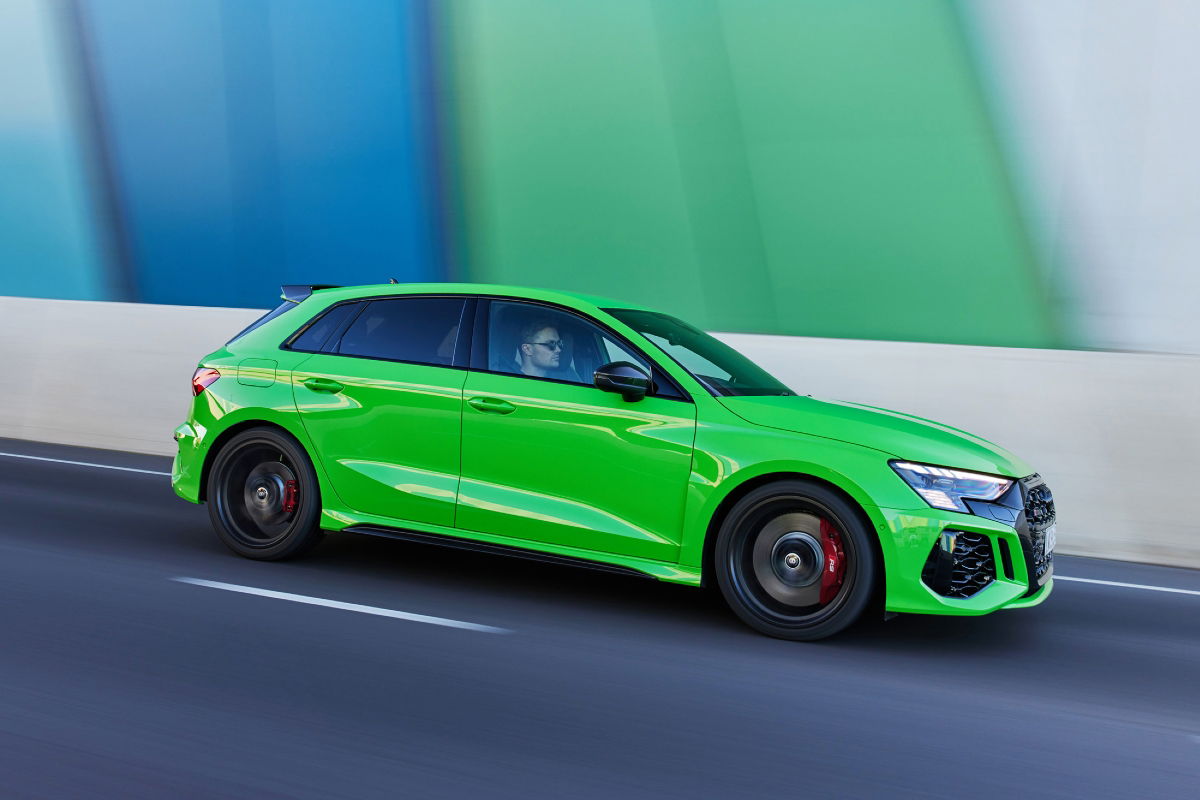
Audi last month confirmed the five-cylinder turbocharged RS3 performance hatch and sedan would end its current lifecycle in Europe by late 2027, due to its engine not meeting more stringent emissions standards.
An Audi spokesperson told Automotive News Europe in March the five-cylinder engine will be phased out of production at its plant in Hungary by mid-2027, as all new cars sold on the continent will need to comply with new Euro 7 emissions regulations by November next year.
At the time, Audi said the potential cost of making the engine compliant with the new standards is too high, resulting in the premature end of the RS3 in Europe and likely the UK, the latter of which will impact Australia due to right-hand drive production of the car being limited.
While that all but set its execution date, Audi Sport boss Rolf Michl recently told the UK’s Autocar that it’s not off the table to keep it alive.
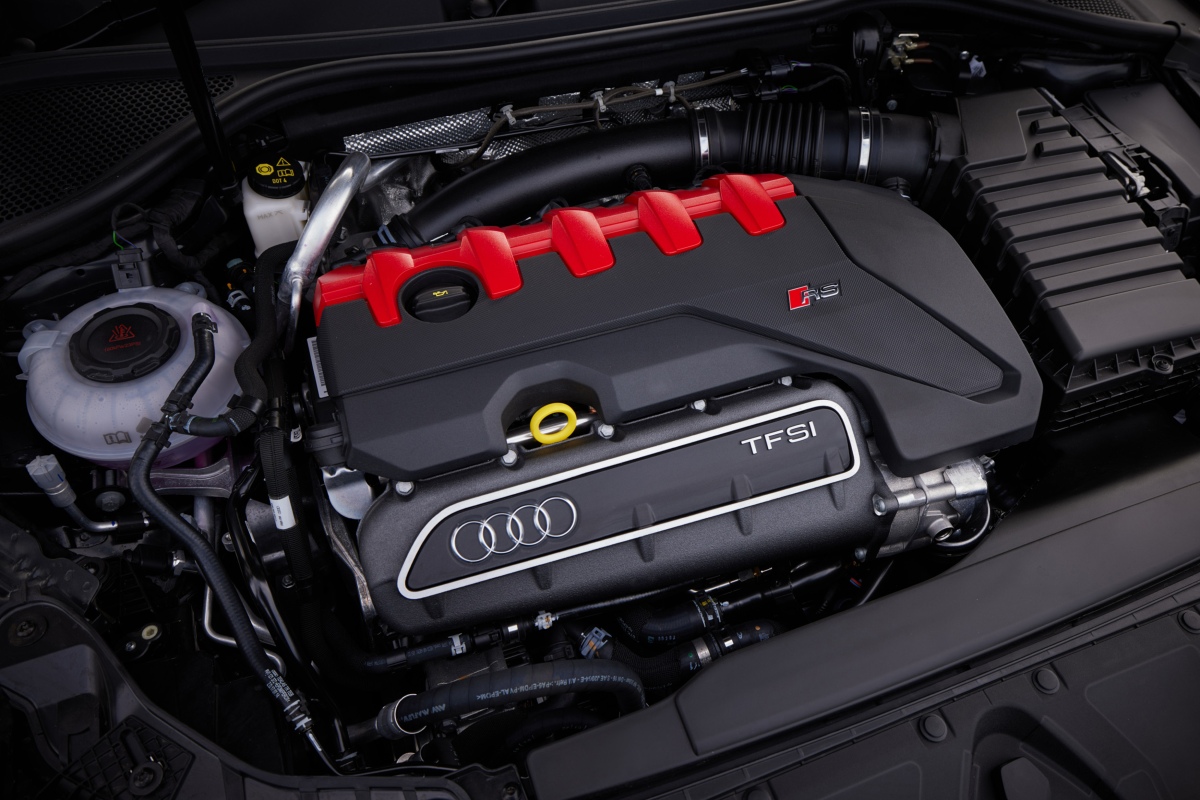
“We are open to every possibility,” Michl said when asked if the RS3 could go hybrid and keep the five-pot.
“The thoughts [on how to do that] will continue at our end. I can tell you we are still thinking in different technological possibilities.
“At the end of the day, the most important thing is the maximum amount of emotional driving experience for the compact segment.
“We are absolutely aware of the DNA of a five-cylinder engine and we are open to every possibility.”
As previously reported, the impending death of the five-cylinder RS3 - and the Cupra Formentor VZ5, which uses the same engine - in Europe won’t directly affect the global market, as it’ll still be allowed to remain on sale in North America.

After first debuting a five-cylinder engine in the 1976 Audi 100, Audi has used the unique layout in everything from its famous Quattro Group B rally cars to its US Trans-Am and IMSA challengers, standing out from the crowd with a growling exhaust note.
The RS3’s five-cylinder engine, a turbocharged 2.5-litre unit, sounds so similar to its racing predecessors thanks to an identical ‘1-2-4-5-3’ firing order, effectively emitting a noise many have likened to being like half a V10.
Currently the RS3 produces 294kW and 500Nm, a healthy increase on the more common four-cylinder 2.0-litre found in the likes of the S3 and Volkswagen Golf R, which develops 245kW and 420Nm.
The potential demise of the five-cylinder also put a question mark over reports of the Volkswagen Golf R receiving it as a limited-edition send-off.

Even if the five-cylinder engine does disappear, last year Audi CEO Gernot Döllner told Top Gear, “maybe it will come back virtually”.
The fake engine sounds could be teamed with simulated gear shifts, with Döllner admitting he’s a fan of the technology.
“We found that a virtual gearbox and sound really add something to driving an electric car. Even on the racetrack, I’m faster with a car with a virtual gearbox,” the executive said.
“We’re developing it, I think we’ll have one. The company is quite open to finding innovative solutions in this area.”